On this page
Key takeaways
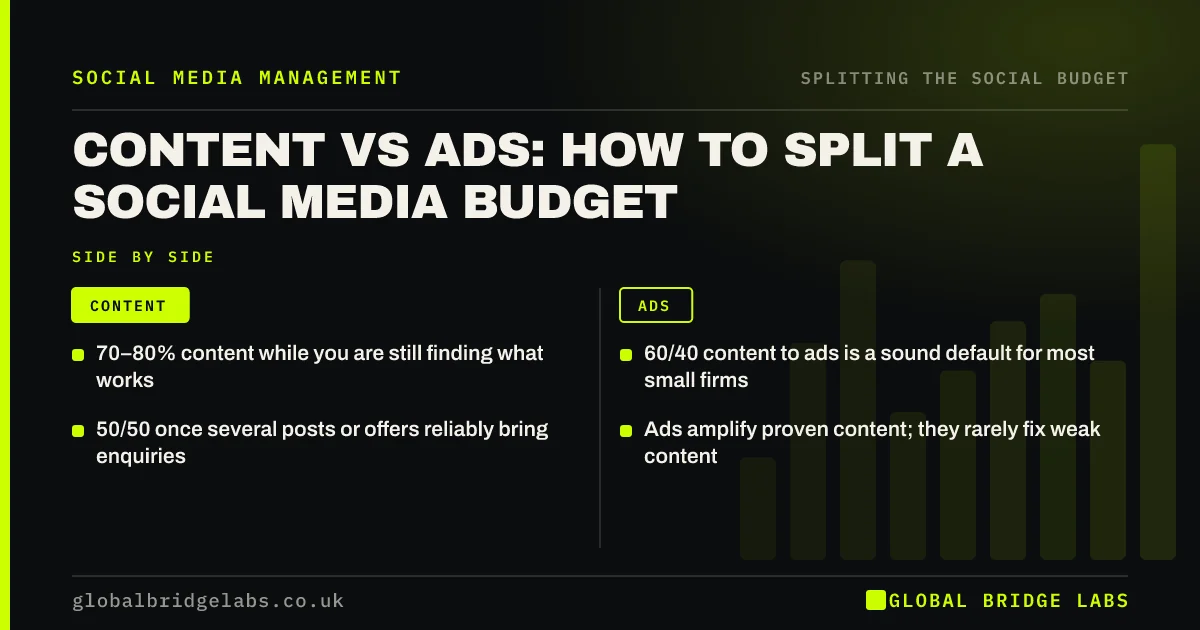
The content vs ad spend split should follow what you have proven. Until you know which posts earn enquiries, put most of the money into content, often 70–80%. Once several posts or offers work, move towards 50/50, because ads then multiply something that already sells. Ads cannot rescue weak content.
- 70–80% content while you are still finding what works.
- 60/40 content to ads is a sound default for most small firms.
- 50/50 once several posts or offers reliably bring enquiries.
- Ads amplify proven content; they rarely fix weak content.
Want your split set for your stage? Message us on WhatsApp.
Chat on WhatsApp →Why does content come first?
Ads show your content to more people. If the content does not persuade, more people see something unconvincing and costs rise. Organic posts are the cheapest test of a message: the ones that earn saves, shares and enquiries without help are the ones worth paying to show further.
What does each split look like in pounds?
On an illustrative £1,000 a month: early stage, £750 on content and £250 on ads; default, £600 and £400; proven, £500 and £500. Content includes people time, design, photography and video. Ads should not drop below about £300 a month if you want readable results, so very small budgets lean further to content.
- Early stage: £750 content, £250 ads.
- Default: £600 content, £400 ads.
- Proven: £500 content, £500 ads.
Send us your monthly total on WhatsApp and we will discuss your requirements.
Chat on WhatsApp →When should more money move into ads?
When two or three posts or offers consistently bring enquiries below your target cost, and you have capacity for more work. Move money in steps and keep enough content budget to refresh ads every few weeks. Ads that run unchanged for months usually become more expensive as people tire of them.
When is an ads-heavy split right?
Online shops with proven products and strong margins often run ads-heavy, because each pound of ads can be measured against sales. Even then, creative needs refreshing. Service businesses with long decision times usually need more content, because buyers look for proof over weeks before they enquire.
What does this look like in practice?
A pattern we see: a business spends most of its budget on ads using three images made a year ago, and costs creep up month after month. Moving a third of the ad money into fresh content usually brings the cost per enquiry back down without raising the total.
Content and ads checklist
- Decide your stage: testing, default or proven.
- Set the content and ad shares to match.
- Keep ads at £300 a month or more when running.
- Promote only posts that already earn enquiries.
- Refresh ad creative every four to eight weeks.
Next step
Look at last month's spend and split it into content and ads. Compare the ratio with your stage and move one line by 10% next month.
Message us on WhatsApp with your split, or book a 30-minute consultation.
Chat on WhatsApp →Sources and further reading
Frequently asked questions
Should I spend more on content or ads?
Spend more on content until you know which posts and offers bring enquiries, then shift towards ads to show those winners to more people. Most small businesses start around 70–80% content and move towards an even split once several pieces of content reliably perform.
Does content include my own time?
Yes. Content is everything it takes to make posts: your hours, staff hours, freelancer fees, photography, video and design. Valuing your own time makes the split honest and shows when buying help would cost less than doing it yourself. Review it each quarter against your enquiries and sales, and adjust in small steps.
Can I run ads with no organic content?
You can, and some online shops do, but buyers often check your profile before purchasing. An empty or stale profile lowers trust and conversion. Keep at least a light, regular organic presence so people who click through see an active business.
Written by

Global Bridge Labs (GBL) is a UK–Sri Lanka partner for social media, websites and BPO. Everything here comes from client delivery, not theory.