On this page
- 01Key takeaways
- 02What does an employee really cost?
- 03How do you calculate the statutory costs?
- 04How does holiday change the hourly cost?
- 05What overheads should you add?
- 06Can small employers reduce these costs?
- 07How does outsourcing compare?
- 08When is hiring still the right call?
- 09What does this look like in practice?
- 10Checklist: cost a hire properly
- 11Next step
- 12Sources and further reading
- 13Frequently asked questions
Key takeaways
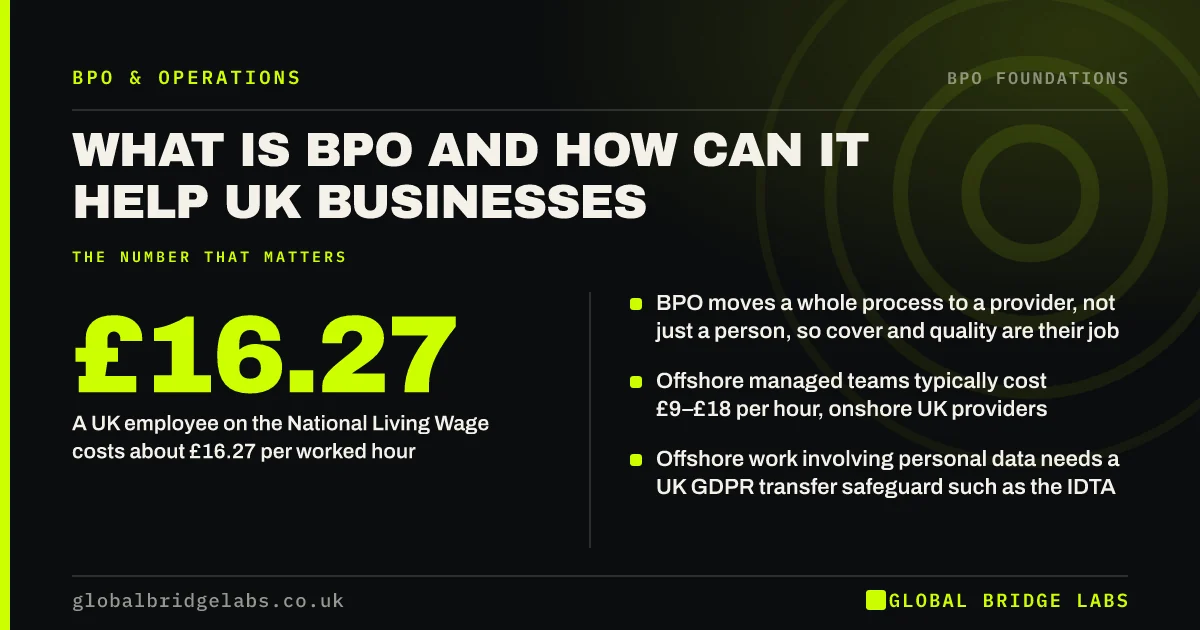
The true cost of an employee in the UK is the salary plus employer National Insurance, pension contributions, paid holiday and the overheads of recruiting, equipping and managing them. For 2026/27, a full-time employee on the National Living Wage costs about £28,309 a year in direct costs, or about £16.27 per worked hour.
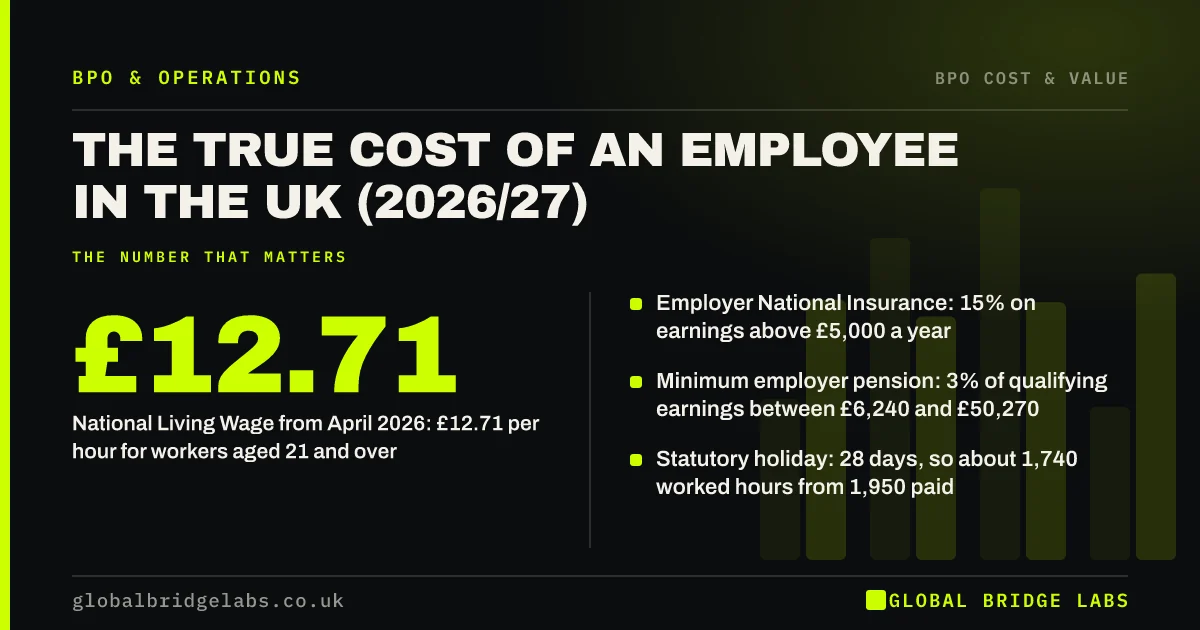
- National Living Wage from April 2026: £12.71 per hour for workers aged 21 and over.
- Employer National Insurance: 15% on earnings above £5,000 a year.
- Minimum employer pension: 3% of qualifying earnings between £6,240 and £50,270.
- Statutory holiday: 28 days, so about 1,740 worked hours from 1,950 paid.
- Overheads such as recruitment, equipment and management often add 15–30% more.
Want this worked out for a role you are about to hire? Message us on WhatsApp with the salary and hours.
Chat on WhatsApp →What does an employee really cost?
The true cost of an employee is the total annual cost to the business of employing them, divided by the hours they actually work. It includes statutory costs you must pay, such as employer National Insurance and pension contributions, and practical costs, such as recruitment, equipment and management time.
The per-hour figure matters because it is the fair comparison with any alternative, whether that is outsourcing, a contractor or automation. Comparing a salary with a provider's all-in rate understates the cost of hiring every time.
How do you calculate the statutory costs?
Start with gross salary, then add the costs set by law. These figures use HMRC and GOV.UK rates for the 2026/27 tax year.
- Salary: at the National Living Wage, £12.71 × 37.5 hours × 52 weeks = about £24,785.
- Employer National Insurance: 15% × (£24,785 − £5,000) = about £2,968.
- Employer pension: 3% × (£24,785 − £6,240) = about £556.
- Direct cost: about £28,309 a year.
How does holiday change the hourly cost?
Holiday changes the hourly cost because you pay for hours the employee does not work. Most full-time workers are entitled to 28 days of paid leave a year, which can include bank holidays. At 7.5 hours a day that is 210 hours, leaving about 1,740 worked hours from 1,950 paid.
Divide the direct cost by worked hours: £28,309 ÷ 1,740 = about £16.27 per worked hour at the minimum wage. At a £26,000 salary the direct cost is about £29,743, or £17.09 per worked hour. At £30,000 it is about £34,463, or £19.81. Sick days reduce worked hours further; Statutory Sick Pay for 2026/27 is £123.25 a week or 80% of average weekly earnings, whichever is lower.
What overheads should you add?
Overheads are the costs that do not appear on a payslip but come with every hire. They vary widely, so estimate your own rather than assuming a figure.
- Recruitment: agency fees or advertising, plus interview time.
- Equipment: laptop, phone, headset, furniture.
- Software: licences for email, CRM, helpdesk and phone systems.
- Space: desk, utilities and insurance if office-based.
- Training and onboarding time before they are fully productive.
- Management time: supervision, one-to-ones and reviews.
- Cover: overtime or temporary staff during holiday and sickness.
Can small employers reduce these costs?
Eligible employers can claim the Employment Allowance, which reduces their annual employer National Insurance bill by up to £10,500. For a small business with a few employees that can remove most or all of the employer National Insurance cost. Check eligibility on GOV.UK, as some employers, such as those whose only employee is a director, cannot claim.
Salary sacrifice schemes for pensions can also reduce National Insurance for both employer and employee. Take advice from your accountant before changing pay arrangements.
How does outsourcing compare?
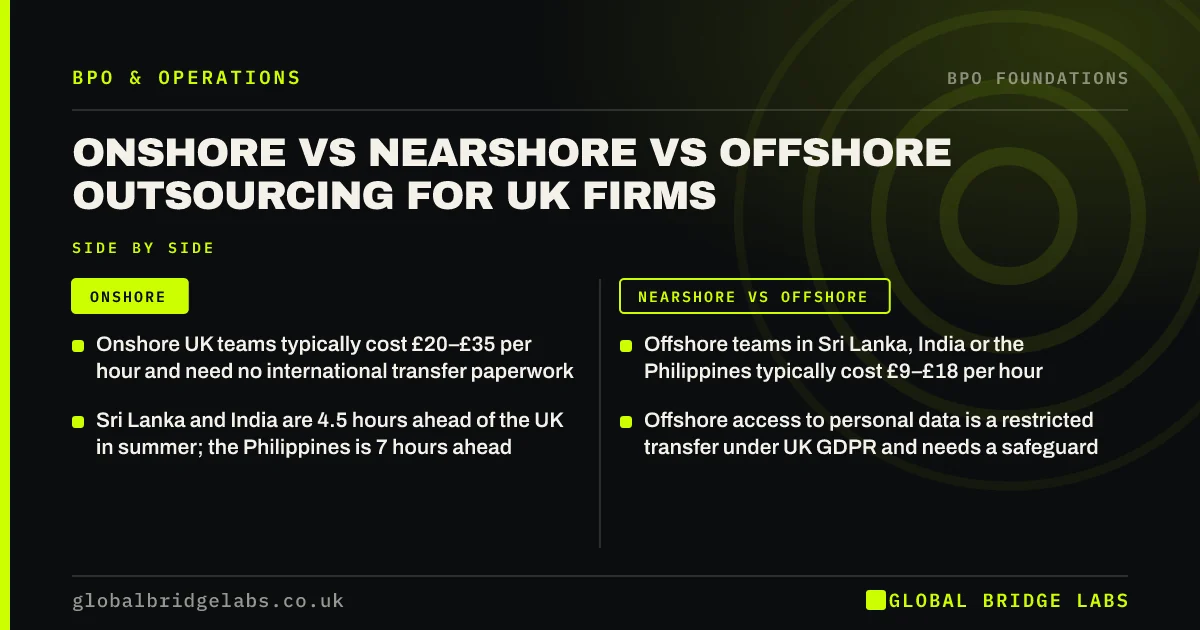
As indicative market ranges, managed offshore business process outsourcing costs around £9–£18 per hour and onshore UK providers around £20–£35, including recruitment, training, supervision and cover. Against a minimum-wage employee at about £16.27 per worked hour before overheads, offshore is usually cheaper and onshore usually more expensive per hour but flexible.
The decision is not only about cost. Some roles are better hired: those needing judgement, relationships or presence.
Want your in-house cost compared with a managed team for the same hours? Send us the role on WhatsApp and we will discuss your requirements.
Chat on WhatsApp →When is hiring still the right call?
Hiring is right when the role builds lasting capability, when it needs someone on site, or when every task needs judgement. A higher per-hour cost is worth paying for a salesperson, a manager or a specialist whose work defines your service. The true cost calculation helps you make that choice deliberately rather than by default.
What does this look like in practice?
A pattern we see when owners run these numbers for the first time: they budget £24,000 for an administrator, then find the real first-year cost is closer to £33,000 once National Insurance, pension, recruitment, a laptop, software and a month of training are added. That does not mean they should not hire. It means the comparison with alternatives is finally fair.
Checklist: cost a hire properly
Use these steps for any role.
- Start with the gross salary and contracted hours.
- Add employer National Insurance at 15% above £5,000.
- Add employer pension at 3% or more of qualifying earnings.
- Subtract 28 days' holiday and expected sick days from worked hours.
- Add recruitment, equipment, software and space.
- Estimate management and training time.
- Divide the total by worked hours for the true hourly cost.
Next step
Before you hire, send us the role and salary. We will work out the true hourly cost and compare it with a managed team for the same hours. 30 minutes, no pitch.
Message us on WhatsApp for a hire-versus-outsource comparison, or book a 30-minute consultation.
Chat on WhatsApp →Sources and further reading
- National Minimum Wage and National Living Wage rates · GOV.UK
- Rates and thresholds for employers 2026 to 2027 · HM Revenue & Customs
- Workplace pensions: what you, your employer and the government pay · GOV.UK
- Holiday entitlement · GOV.UK
- Employment Allowance · GOV.UK
Frequently asked questions
How much does it cost to employ someone in the UK?
Beyond salary, add employer National Insurance at 15% above £5,000 a year and at least 3% pension on qualifying earnings. For 2026/27, a full-time employee on the National Living Wage costs about £28,309 a year in direct costs, or about £16.27 per worked hour after holiday, before overheads.
What is employer National Insurance in 2026/27?
Employer Class 1 National Insurance is 15% on employee earnings above the secondary threshold of £5,000 a year. Eligible employers can reduce their bill by up to £10,500 through the Employment Allowance. Rates and thresholds are published by HMRC each tax year.
How many hours does a full-time employee actually work?
A 37.5-hour week over 52 weeks is 1,950 paid hours. After 28 days of statutory holiday, about 1,740 hours remain, before sickness, training and meetings. That is why the cost per worked hour is significantly higher than the hourly wage.
What percentage should I add to salary for employer costs?
Statutory costs alone typically add 12% to 16% to a modest salary, depending on the amount. Overheads such as recruitment, equipment, software and management often add another 15% to 30%. Work out your own figures, because overheads vary widely between businesses.
Written by

Global Bridge Labs (GBL) is a UK–Sri Lanka partner for social media, websites and BPO. Everything here comes from client delivery, not theory.