On this page
- 01Key takeaways
- 02What is a good customer service response time?
- 03What are sensible targets by channel?
- 04Why does first response time matter so much?
- 05How do you measure response times properly?
- 06How do you staff to hit the targets?
- 07What about out-of-hours contacts?
- 08When do faster response times not help?
- 09What does this look like in practice?
- 10Checklist: improve response times
- 11Next step
- 12Sources and further reading
- 13Frequently asked questions
Key takeaways
Customer service response time benchmarks differ by channel because customers expect different speeds. Sensible targets for a UK SME are calls answered within 20 seconds, chats within 60 seconds, WhatsApp within 15 minutes, email within 1 business hour and social messages within a few hours. Your own baseline matters more than any published average.
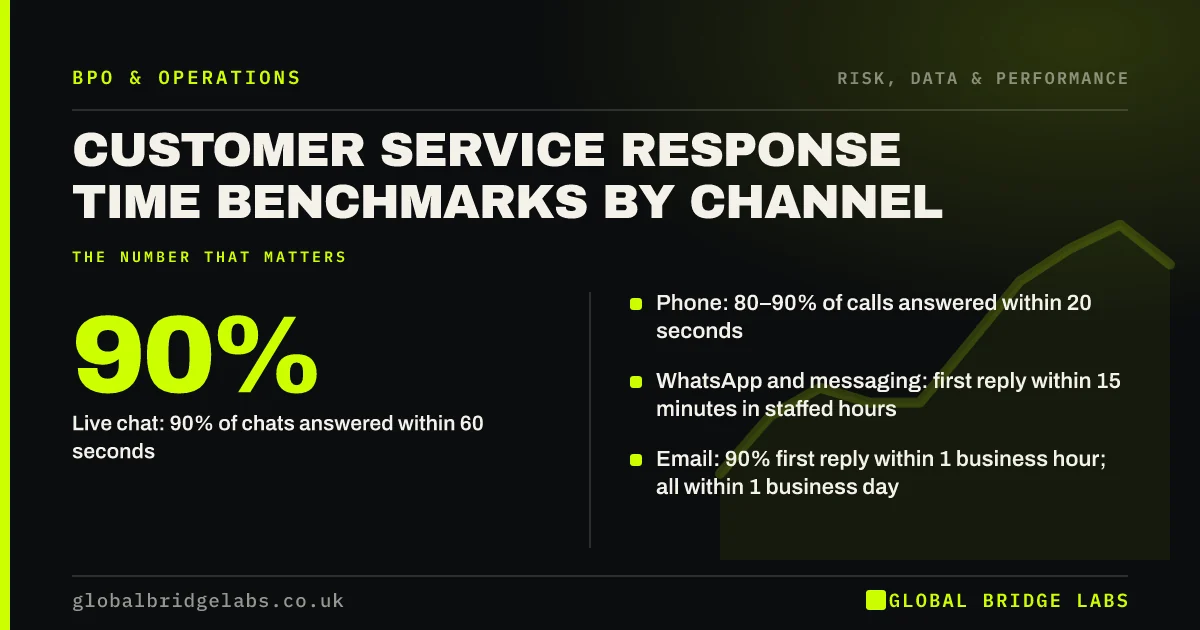
- Live chat: 90% of chats answered within 60 seconds.
- Phone: 80–90% of calls answered within 20 seconds.
- WhatsApp and messaging: first reply within 15 minutes in staffed hours.
- Email: 90% first reply within 1 business hour; all within 1 business day.
- Across our client work, response time to enquiries has fallen by 71%.
Want to know how your response times compare? Message us on WhatsApp with your current numbers by channel.
Chat on WhatsApp →What is a good customer service response time?
A good customer service response time is one that meets the expectation of the channel and resolves or clearly progresses the customer's issue. Real-time channels such as phone and chat need answers in seconds; messaging needs minutes; email needs hours at most during business days.
Speed matters because slow replies cost sales and trust. The Institute of Customer Service's UK Customer Satisfaction Index was 78.3 out of 100 in July 2026, and prompt, first-time resolution consistently distinguishes the organisations that score highest.
What are sensible targets by channel?
These targets are practical starting points for UK SMEs, not published industry averages. Adjust them to your customers, then tighten them as you consistently beat them.
- Phone: 80–90% answered within 20 seconds; abandonment under 5%.
- Live chat: 90% answered within 60 seconds.
- WhatsApp: first reply within 15 minutes; booking requests within 5.
- Email: 90% first reply within 1 business hour; 100% within 1 business day.
- Social media messages: within 1–4 hours in business hours.
- Public reviews: reply within 2 business days.
Why does first response time matter so much?
First response time matters most for enquiries, because a prospective customer contacting several businesses often goes with the first credible reply. For existing customers, a quick acknowledgement with a clear next step reduces follow-up contacts and complaints, even when full resolution takes longer.
But speed alone is not enough. A fast reply that does not help just generates another contact. Pair first response targets with resolution and quality measures.
How do you measure response times properly?
Measure in your helpdesk, phone system and chat platform, not by impression. Define business hours, measure the first human reply rather than an automated acknowledgement, and report the percentage within target as well as the average, because averages hide long waits.
- Use percentage within target, not only averages.
- Exclude automated replies from first response time.
- Measure within business hours and separately outside them.
- Review by hour of day to find gaps in cover.
How do you staff to hit the targets?
Staff to the busiest hours, not the average. Look at contact volumes by hour and day, then schedule enough people for the peaks, with cover for breaks. Tighter targets need more capacity, which costs more, so choose targets that match what customers value.
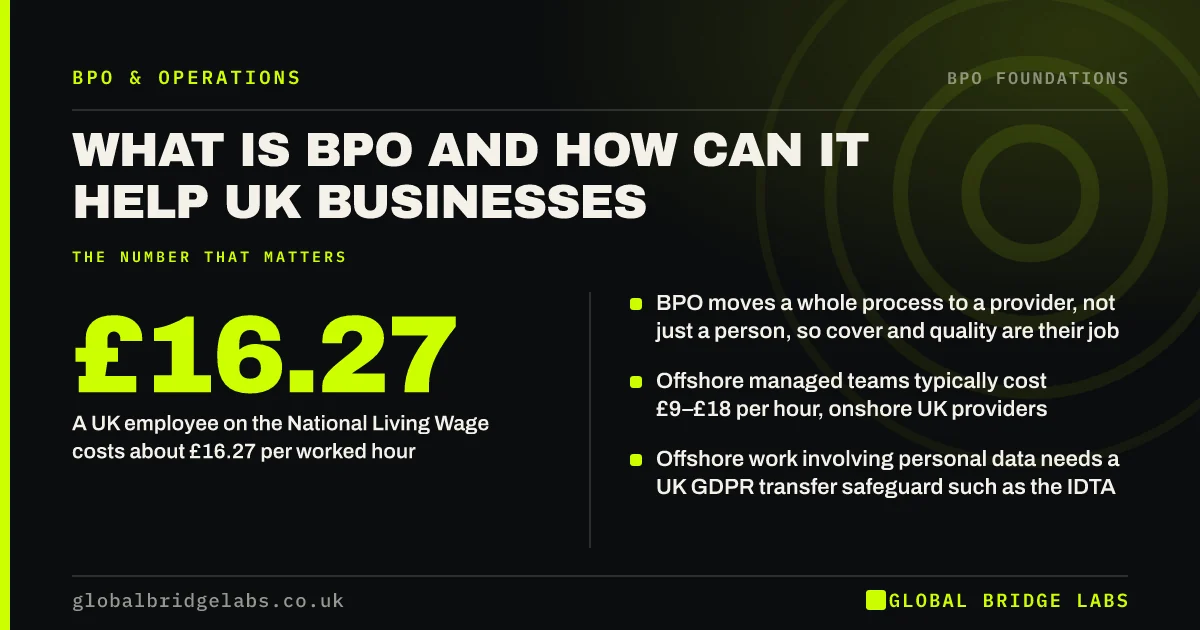
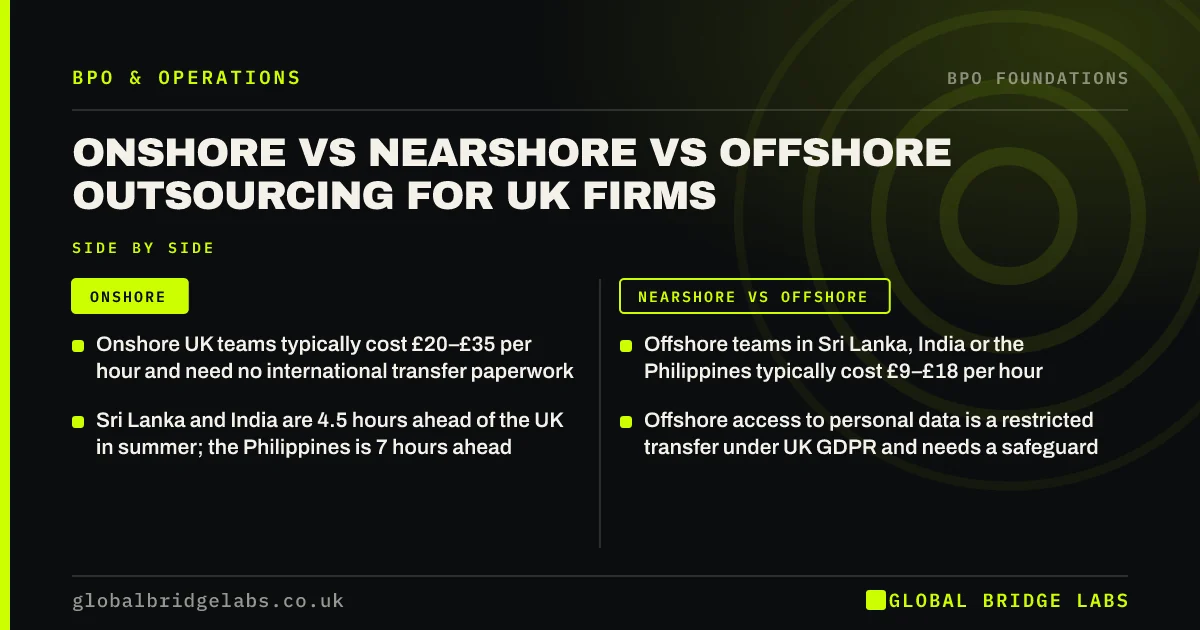
As indicative market ranges, managed offshore support costs around £9–£18 per hour and onshore UK around £20–£35. A UK employee on the April 2026 National Living Wage costs about £16.27 per worked hour after employer National Insurance, pension and holiday, and one person cannot cover a full trading day with breaks.
Want your volumes turned into a staffing plan and cost for your target response times? Send us your data on WhatsApp and we will discuss your requirements.
Chat on WhatsApp →What about out-of-hours contacts?
Set expectations clearly out of hours. An automatic reply that says when someone will respond, such as "by 9:30 tomorrow", is better than silence. Capture details so the first person in can reply quickly. Extend staffed hours only if the volume and value justify it.
When do faster response times not help?
Faster responses do not help if the team lacks authority to resolve issues, if the underlying problem is a product or delivery failure, or if speed targets push people to rush. Fix root causes of contacts, and give the team the information and permissions to solve common issues on the first reply.
What does this look like in practice?
Across our client work, response time to enquiries has fallen by 71% once a managed team covered the inbox, phones and messaging to written targets. The vehicle service centre on our projects page describes the effect: calls answered in the brand, shorter waits, and price checks turned into bookings.
Checklist: improve response times
Work through these steps.
- Measure current first response time by channel.
- Set targets as percentage within a time limit.
- Map volumes by hour and staff to the peaks.
- Add auto-replies with clear timings out of hours.
- Give the team authority to resolve common issues.
- Track resolution and quality alongside speed.
- Review weekly and adjust rotas.
Next step
Send us your current response times and volumes, and we will show you what it would take to hit your targets. 30 minutes, no pitch.
Message us on WhatsApp for a response-time plan, or book a 30-minute consultation.
Chat on WhatsApp →Sources and further reading
- UK Customer Satisfaction Index · Institute of Customer Service
- National Minimum Wage and National Living Wage rates · GOV.UK
- Rates and thresholds for employers 2026 to 2027 · HM Revenue & Customs
Frequently asked questions
What is a good email response time for a business?
For a UK SME, a first human reply within one business hour is a strong target, and within one business day is the minimum most customers accept. Enquiries from prospective customers deserve the fastest replies, because they are often contacting competitors at the same time.
How quickly should live chat be answered?
Aim to answer 90% of chats within 60 seconds. Chat is a real-time channel, and visitors who wait longer often leave. If you cannot staff chat to that standard during your open hours, switch it to message capture or offer WhatsApp instead.
What is first response time?
First response time is the time between a customer contacting you and the first human reply. It excludes automated acknowledgements. Measure it as the percentage of contacts answered within target, as well as the average, because averages hide the long waits customers remember.
How can a small business respond faster?
Route all channels into one queue, measure response times by hour, staff the peaks, use templates for common questions, give whoever answers the authority to resolve routine issues, and consider an outsourced team to cover hours your own staff cannot.
Written by

Global Bridge Labs (GBL) is a UK–Sri Lanka partner for social media, websites and BPO. Everything here comes from client delivery, not theory.