On this page
Key takeaways
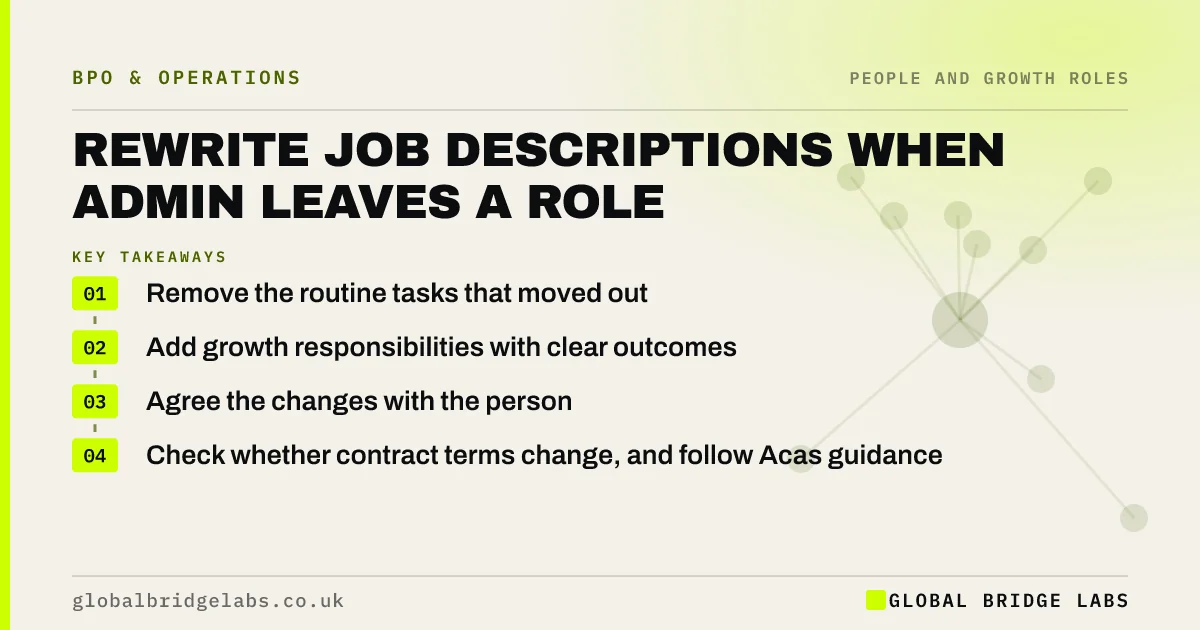
When routine work leaves a role, the job description should change to show the growth work replacing it. An updated description tells the person what is now expected, makes growth work part of the job rather than an extra, and supports fair reviews. Agree significant changes with the employee, because changing contractual terms needs agreement.
- Remove the routine tasks that moved out.
- Add growth responsibilities with clear outcomes.
- Agree the changes with the person.
- Check whether contract terms change, and follow Acas guidance.
Want help reshaping roles around growth? Message us on WhatsApp.
Chat on WhatsApp →Why rewrite job descriptions?
Because an old description quietly pulls people back to old work. If the job still lists invoice processing, people feel they should be doing it, and reviews judge them on it. A rewritten description makes growth work official, gives people permission to spend time on it and gives managers a fair basis for reviews.
What should the new description include?
- Purpose: one sentence on what the role now exists to achieve.
- Growth responsibilities: accounts, projects or goals owned.
- Remaining routine duties, if any.
- Oversight of outsourced work, if relevant.
- How success is measured.
What are the legal points?
A job description is often separate from the contract, but some duties may be contractual. Acas guidance explains that changing an employment contract normally needs the employee's agreement, and that consulting first is good practice. Take advice if the change is significant or involves pay, hours or location.
When should you wait?
Wait a few weeks after the handover until the new shape of the role is clear. Rewrite it with the person once growth goals are agreed, not before.
What does this look like in practice?
A pattern we see: an account executive's job description still lists order entry six months after it was outsourced, and she spends Fridays checking orders. A rewritten description with three named accounts to grow changes how she plans her week.
Job description checklist
- Remove tasks that moved out.
- Add growth responsibilities and measures.
- Discuss the draft with the person.
- Check contract implications.
- Use the new description in reviews.
Next step
Pick one role affected by outsourcing and draft its new purpose sentence. Then discuss it with the person.
Message us on WhatsApp for a growth role description template, or book a 30-minute consultation.
Chat on WhatsApp →Sources and further reading
Frequently asked questions
Do I need to update job descriptions after outsourcing?
It is strongly advisable. An outdated description pulls people back to work that has moved out and makes reviews unfair. Update it to show growth responsibilities and measures, and discuss the changes with each person. Check whether any contractual terms are affected.
Can an employer change an employee's job role?
Minor changes within the existing terms are often possible, but significant changes to contractual duties usually need the employee's agreement. Acas recommends consulting first and explaining the reasons. Take advice where pay, hours, location or status change. Revisit the answer each quarter, because team capacity and priorities change as the business grows.
What should a growth-focused job description include?
A one-sentence purpose, the growth responsibilities and outcomes owned, any remaining routine duties, oversight of outsourced work if relevant, and how success is measured. Keep it short and specific enough to guide a monthly review. Review it after six months, once the new shape of the role has settled.
Written by

Global Bridge Labs (GBL) is a UK–Sri Lanka partner for social media, websites and BPO. Everything here comes from client delivery, not theory.