On this page
Key takeaways
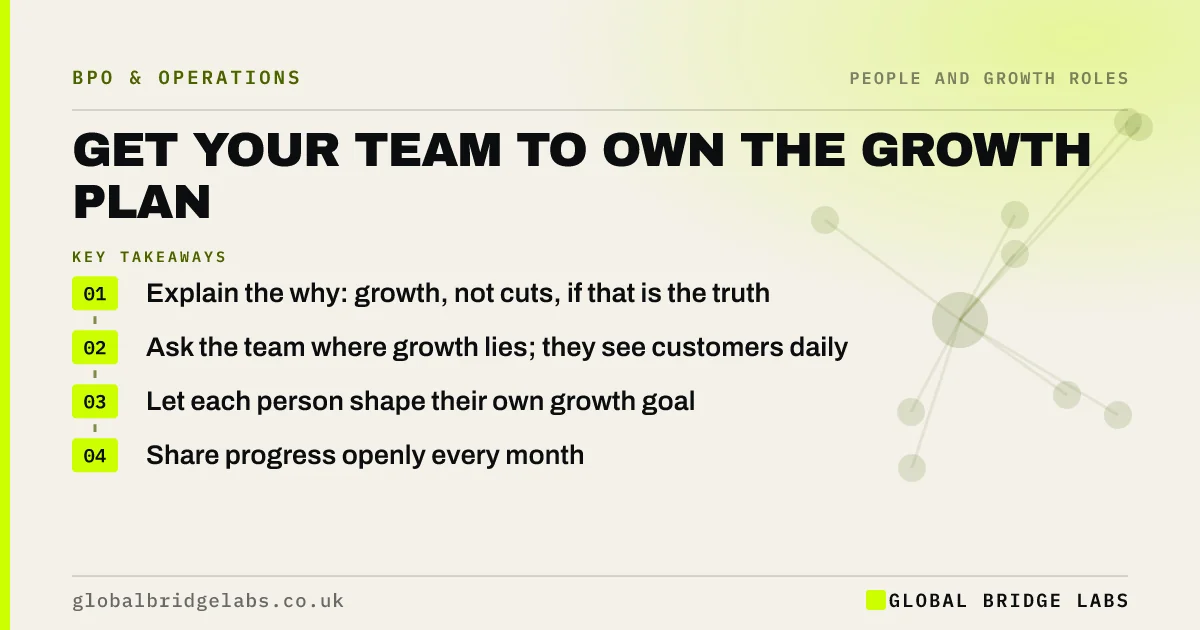
Your team will use freed hours well only if they believe in the growth plan. Involve them early: explain why routine work is moving out, ask where they see growth opportunities and let each person help choose their own growth goal. People commit to plans they helped shape, and resist plans handed down to them.
- Explain the why: growth, not cuts, if that is the truth.
- Ask the team where growth lies; they see customers daily.
- Let each person shape their own growth goal.
- Share progress openly every month.
Want help bringing your team into the growth plan? Message us on WhatsApp.
Chat on WhatsApp →Why does team buy-in matter?
Team buy-in matters because growth work depends on judgement and initiative, which cannot be forced. Someone who resents losing familiar tasks, or does not believe in their new goal, will drift back to routine work. Someone who chose their goal will protect the time for it. Acas advises consulting employees on changes that affect them for exactly this reason.
How do you build buy-in?
- Share the reason: what is moving out and what the business wants to grow.
- Be honest about roles: say clearly whether any are at risk.
- Run a short workshop asking where growth opportunities lie.
- Agree each person's growth goal with them, not for them.
- Report progress monthly to the whole team.
What worries do people usually have?
Common worries are job security, losing tasks they are good at, being judged on unfamiliar work and extra pressure. Address each directly. The Health and Safety Executive's Management Standards list change, role clarity and support among stress factors; clear communication reduces all three.
When will buy-in not come?
When people suspect the real aim is cost cutting and they are not being told. If roles are at risk, say so and follow proper consultation. Trying to present a cost project as a growth project damages trust for years.
What does this look like in practice?
A pattern we see: a firm announces outsourcing by email and staff assume redundancies. A follow-up workshop, where each person names one growth idea from their own customer contact, turns the mood around and produces most of the first quarter's growth goals.
Buy-in checklist
- Explain what is moving and why.
- Say clearly whether roles are at risk.
- Ask the team where growth lies.
- Agree goals with each person.
- Share progress monthly.
Next step
Before announcing any outsourcing, plan a one-hour team session to ask: where could we grow if we had more time?
Message us on WhatsApp for a team growth workshop outline, or book a 30-minute consultation.
Chat on WhatsApp →Sources and further reading
- Consulting employees and their representatives · Acas
- What are the Management Standards for work-related stress? · Health and Safety Executive
Frequently asked questions
How do you get employees to support a growth plan?
Explain the reason honestly, involve them in finding growth opportunities, let each person shape their own goal and share progress regularly. People support plans they helped create. Be clear about job security early, because unspoken worries undermine every other message.
Should staff choose their own growth goals?
They should have a strong say. The business sets the overall direction, but each person should help choose the goal their freed hours go to, based on their skills and customer knowledge. Goals people choose are more likely to be pursued when the week gets busy.
What if staff resist outsourcing?
Listen to the specific concerns, which are usually job security, loss of familiar work or fear of being judged on new tasks. Address each directly, provide training and support, and show early results. If resistance comes from a sense of being misled, rebuilding trust has to come first.
Written by

Global Bridge Labs (GBL) is a UK–Sri Lanka partner for social media, websites and BPO. Everything here comes from client delivery, not theory.