On this page
Key takeaways
An outsourced DPO, an external data protection officer under a service contract, is allowed under UK GDPR and can suit a small business. The DPO advises, monitors and acts as contact for the ICO. But the business, as controller, stays responsible for compliance and makes the decisions. Many SMEs do not legally need a DPO at all.
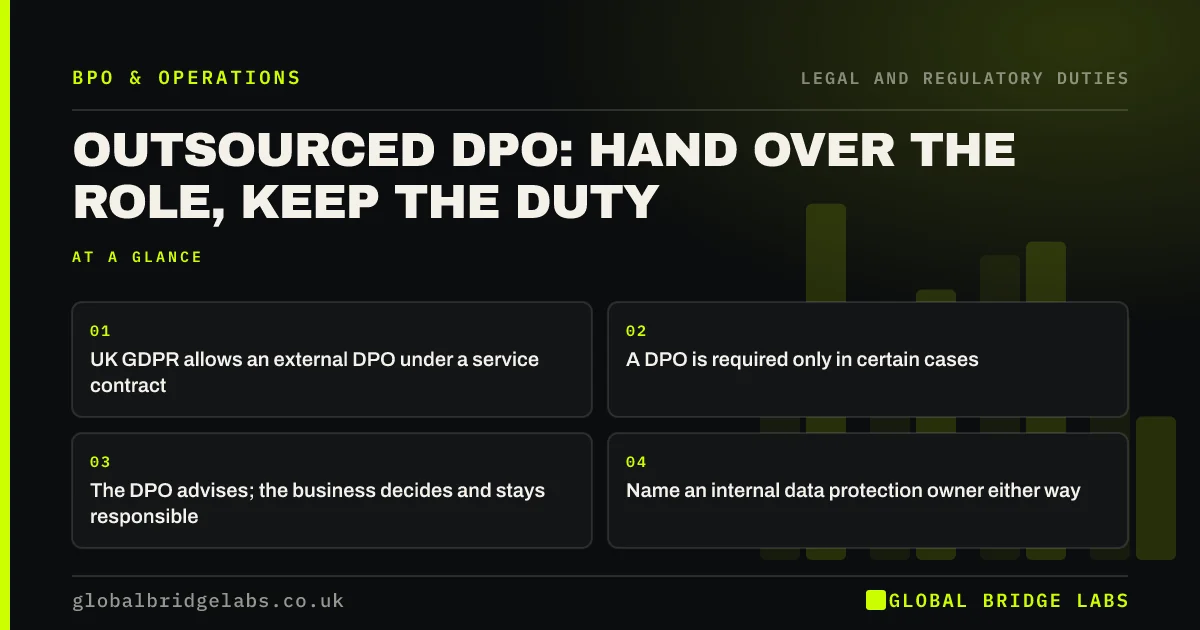
- UK GDPR allows an external DPO under a service contract.
- A DPO is required only in certain cases.
- The DPO advises; the business decides and stays responsible.
- Name an internal data protection owner either way.
Want to check whether you need a DPO? Message us on WhatsApp.
Chat on WhatsApp →When do you need a DPO?
You must appoint one if you are a public authority, or if your core activities involve large-scale regular and systematic monitoring of people, or large-scale processing of special category or criminal offence data. Most small businesses fall outside these, but may still choose to have one.
What does an outsourced DPO do?
Their tasks are set by law.
- Inform and advise on data protection duties.
- Monitor compliance, policies and training.
- Advise on data protection impact assessments.
- Act as contact point for the ICO and individuals.
What stays with the business?
Responsibility and decisions: what data to process, which risks to accept, whether to report a breach, how to answer complaints. The DPO must report to the highest level of management, be independent and not be told how to carry out their tasks, but the business decides what to do with their advice.
What if you do not need a DPO?
Name an internal data protection lead anyway, and if you buy outside advice, avoid calling the adviser a DPO unless they meet the legal requirements of the role. The ICO's guidance explains the difference.
What does this look like in practice?
A pattern we see: a business appoints an external DPO and assumes compliance is handled. Advice then sits unread. A named internal owner who meets the DPO quarterly and acts on findings makes the arrangement work.
DPO checklist
- Check whether a DPO is legally required.
- Name an internal data protection owner.
- If appointing, give the DPO access and independence.
- Publish the DPO's contact details if appointed.
- Act on the DPO's advice and record decisions.
Next step
Read the ICO's three tests for when a DPO is required and note your answer. Then name who owns data protection inside.
Message us on WhatsApp, or book a 30-minute consultation.
Chat on WhatsApp →Sources and further reading
- Data protection officers · Information Commissioner's Office
- Controllers and processors · Information Commissioner's Office
Frequently asked questions
Can a DPO be outsourced?
Yes. UK GDPR allows a data protection officer to be a member of staff or to fulfil the role under a service contract. The organisation remains responsible for compliance and must give the DPO the access, resources and independence they need.
Does a small business need a DPO?
Only if it is a public authority, or its core activities involve large-scale regular and systematic monitoring of individuals, or large-scale processing of special category or criminal offence data. Most small businesses are not required to appoint one.
Is the DPO responsible for GDPR compliance?
No. The DPO advises and monitors, but the controller or processor remains responsible for complying with data protection law. The business must consider the DPO's advice and make and own its decisions.
Written by

Global Bridge Labs (GBL) is a UK–Sri Lanka partner for social media, websites and BPO. Everything here comes from client delivery, not theory.