On this page
- 01Key takeaways
- 02How do you calculate social media ROI?
- 03Why is organic ROI harder to measure?
- 04Why does paid ROI look clearer?
- 05Which returns more over a year?
- 06How should ROI guide your split?
- 07What does this look like in practice?
- 08ROI checklist
- 09Next step
- 10Sources and further reading
- 11Frequently asked questions
Key takeaways
ROI from organic social builds slowly and keeps growing as content and audience accumulate; ROI from paid social is faster and easier to measure but stops when spend stops. Calculate both as profit from attributed customers minus full cost, divided by full cost. Over a year, organic often returns more per pound; paid returns faster.
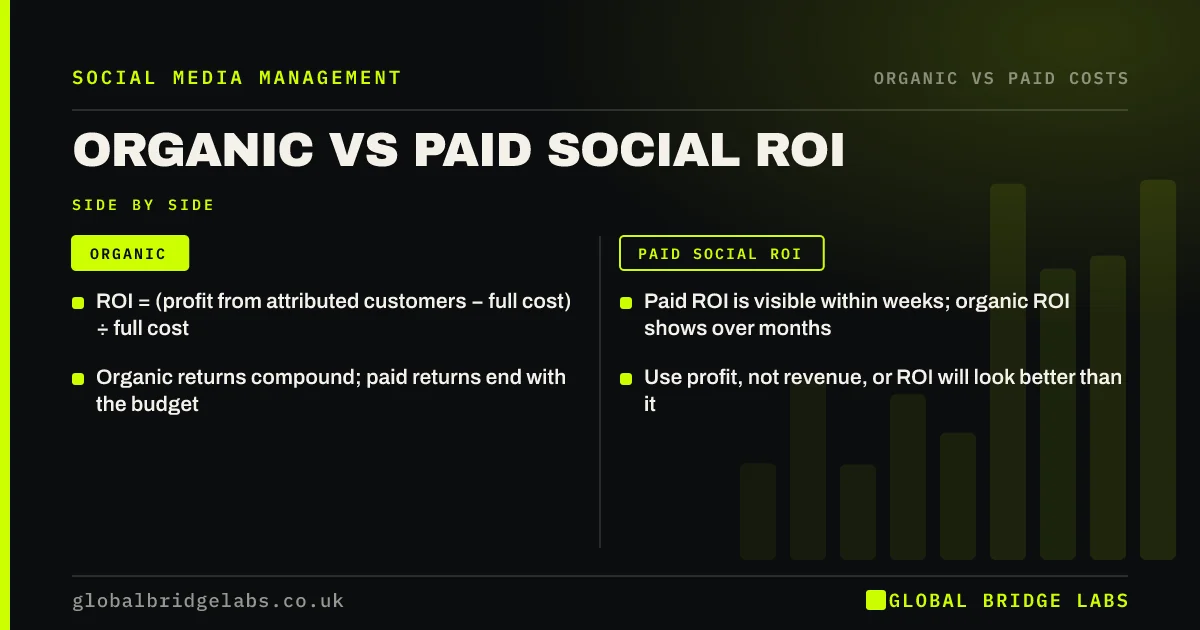
- ROI = (profit from attributed customers − full cost) ÷ full cost.
- Paid ROI is visible within weeks; organic ROI shows over months.
- Organic returns compound; paid returns end with the budget.
- Use profit, not revenue, or ROI will look better than it is.
Want your organic and paid ROI worked out? Message us on WhatsApp.
Chat on WhatsApp →How do you calculate social media ROI?
Social media ROI is profit from customers attributed to social, minus the full cost, divided by the full cost. Use gross profit, not revenue. Include time, fees, tools, content and ad spend. GA4's attribution reports show which channels contributed to website conversions.
Why is organic ROI harder to measure?
Organic ROI is harder to measure because many organic effects are indirect: someone sees posts for months, then searches your name or rings you. Those customers are often credited to search or direct traffic. Asking every customer how they found you closes part of the gap.
Why does paid ROI look clearer?
Paid ROI looks clearer because platforms track clicks and conversions automatically and report a return on ad spend. But platform figures include only ad spend as cost and may claim credit for people who would have bought anyway. Check against your own sales records.
Want a quarterly ROI review set up for both? Message us on WhatsApp and we will discuss your requirements.
Chat on WhatsApp →Which returns more over a year?
Over a year, organic often returns more per pound for businesses with good content and a loyal audience, because content keeps working. Paid returns more when speed and volume matter. The IPA's research shows brand building pays back over longer periods than short-term activation.
How should ROI guide your split?
Use ROI to shift effort at the margin, not to switch one off. If paid returns well, test a modest increase. If organic shows rising enquiries, protect its time. Review quarterly with the same method each time.
What does this look like in practice?
A pattern we see: an e-commerce gift shop judged paid on platform ROAS and organic not at all. Measuring gross profit from both over six months, and asking buyers at checkout how they found the shop, showed organic customers had a higher repeat rate, which changed how much the shop was willing to cut organic time.
ROI checklist
- Use gross profit, not revenue.
- Include full costs for both.
- Ask every customer how they found you.
- Check platform figures against your sales records.
- Measure organic over six months or more.
- Review the split quarterly.
Next step
Pick a six-month window and calculate ROI for organic and paid with the same method. Use the results to adjust next quarter's split by a small step, not a full switch.
Message us on WhatsApp for the social ROI calculator, or book a 30-minute consultation.
Chat on WhatsApp →Sources and further reading
- Get started with attribution · Google Analytics Help
- The Long and the Short of It: balancing short and long-term marketing strategies · IPA
- Meta Business Help Centre · Meta
Frequently asked questions
What is a good ROI for social media?
Any positive ROI means social media earns more profit than it costs. A good ROI depends on your margins and alternatives: if social returns more per pound than other marketing, it deserves more budget. Measure over months, because organic in particular takes time to show its full return.
Is ROAS the same as ROI?
No. ROAS, return on ad spend, is revenue divided by ad spend. ROI uses profit and includes all costs, such as management fees and content. A campaign can have a healthy-looking ROAS but negative ROI once margins and fees are included. Use ROI to make budget decisions.
How long before organic social shows ROI?
Most businesses need three to six months of consistent organic posting before ROI is clear, and returns often keep rising after that. Track enquiries and customer sources from the start so you have data when you review. Judging organic after one month usually underestimates it.
Written by

Global Bridge Labs (GBL) is a UK–Sri Lanka partner for social media, websites and BPO. Everything here comes from client delivery, not theory.