On this page
- 01Key takeaways
- 02How much time does organic social media take?
- 03Where does the time go?
- 04What is that time worth?
- 05How can you reduce the time?
- 06When should you pay instead of spending time?
- 07What does this look like in practice?
- 08Time checklist
- 09Next step
- 10Sources and further reading
- 11Frequently asked questions
Key takeaways
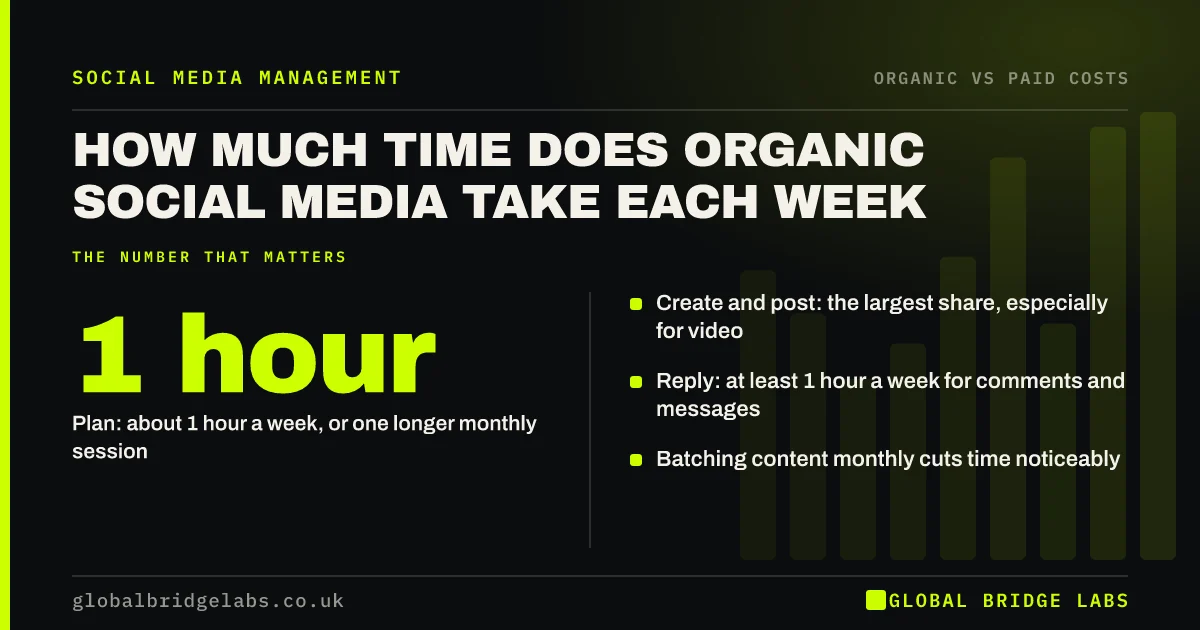
Organic social for a small business typically takes 4 to 6 hours a week for one main platform with three posts a week: about an hour planning, two to three hours creating and posting, and an hour or more replying. Adding a second platform or video raises that. The time is the real cost of organic.
- Plan: about 1 hour a week, or one longer monthly session.
- Create and post: the largest share, especially for video.
- Reply: at least 1 hour a week for comments and messages.
- Batching content monthly cuts time noticeably.
Want to know where your social media hours go? Message us on WhatsApp.
Chat on WhatsApp →How much time does organic social media take?
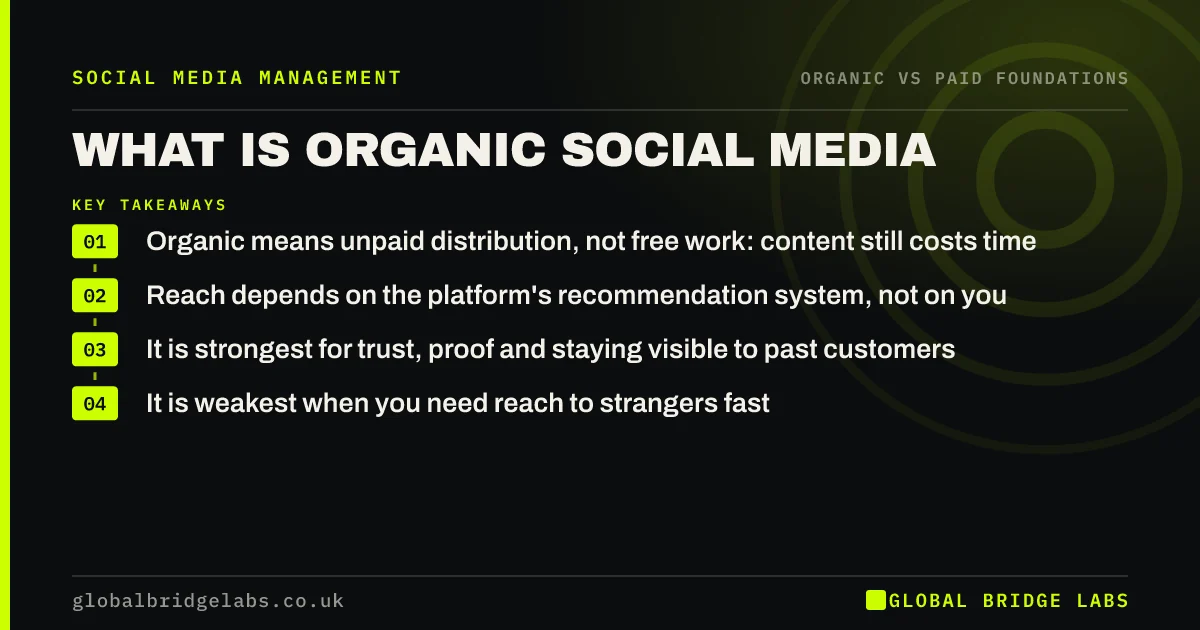
For one main platform and three posts a week, most small businesses spend around 4 to 6 hours a week once they have a routine. The first months take longer while you learn tools and formats. Video-heavy plans and extra platforms add hours quickly.
Where does the time go?
Time splits across four jobs, and replying is the one most often forgotten.
- Planning topics and a calendar.
- Creating images, video and captions.
- Scheduling and publishing.
- Replying to comments and messages, and engaging with others.
What is that time worth?
Value the time at the hourly cost of the person doing it. For an owner, that includes the work they are not doing instead. ONS earnings data (ASHE) gives typical UK hourly pay if you need a benchmark. Five hours a week of a manager's time is often more than a small agency retainer.
Want us to estimate the hours your plan needs? Send it to us on WhatsApp.
Chat on WhatsApp →How can you reduce the time?
Reduce time by planning monthly, batching filming and design in one session, reusing each piece across formats, using templates and scheduling tools, and setting fixed times for replies. These habits typically save a third or more of the weekly time.
When should you pay instead of spending time?
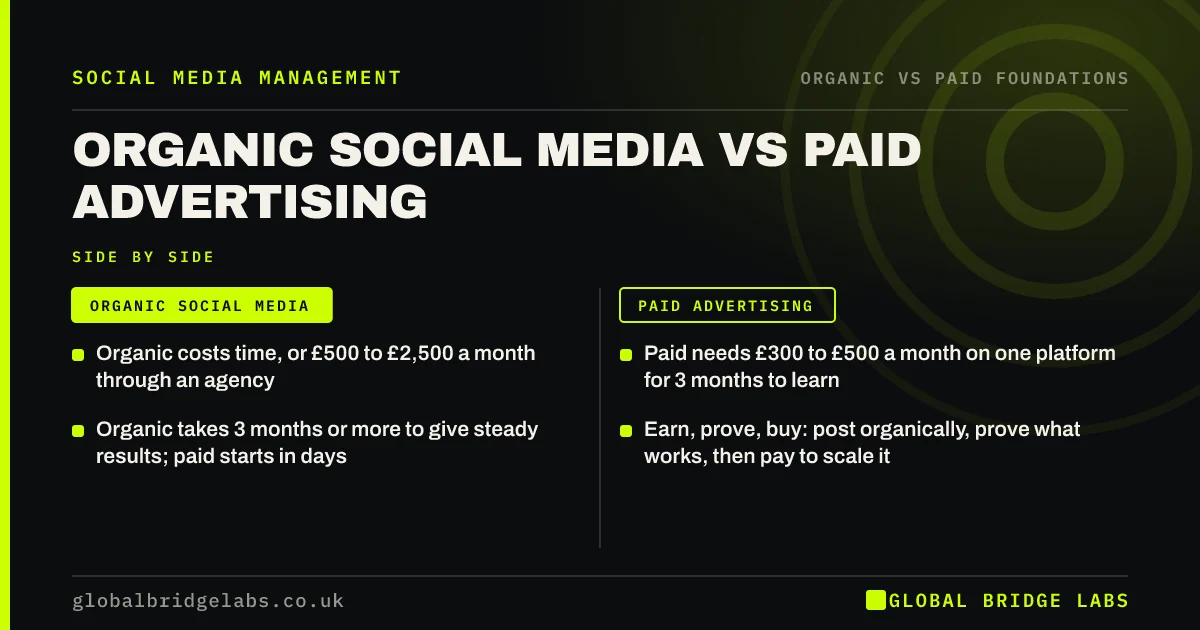
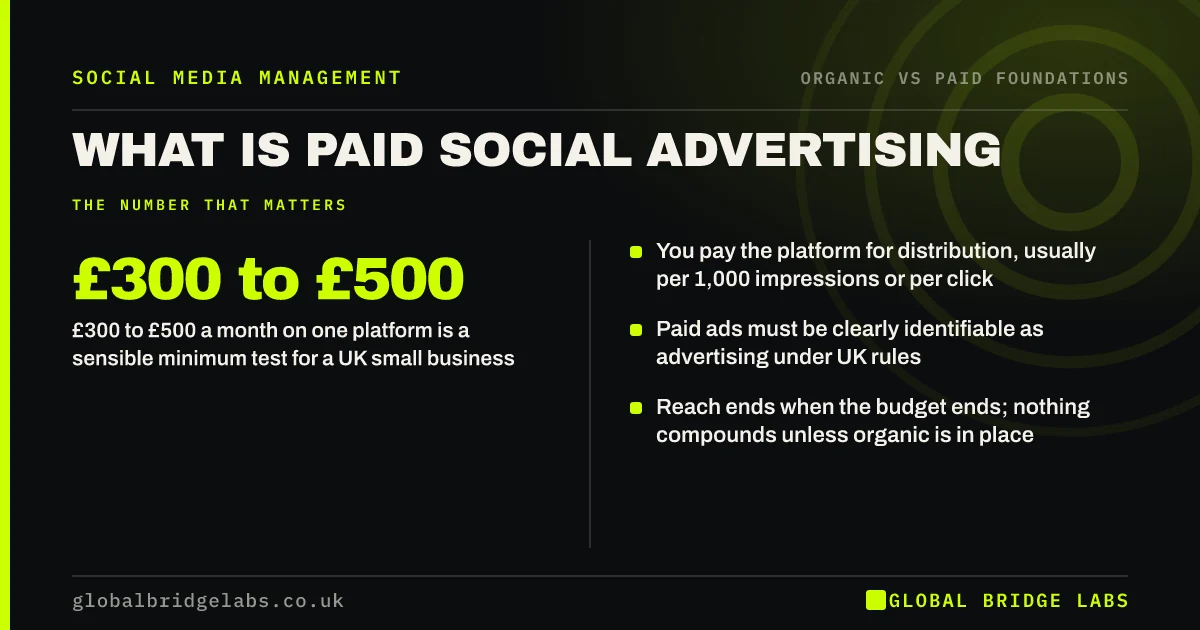
Pay someone when the hours are coming from higher-value work, when posting is inconsistent because nobody has time, or when skills such as video are missing. Paying for ads does not remove the time: ads still need content and replies.
What does this look like in practice?
A pattern we see: a florist owner spent most evenings on Instagram and assumed that was normal. Moving to one monthly planning session, a weekly two-hour filming slot and set reply times cut the weekly total by about a third, with no drop in orders from social.
Time checklist
- Track social media time for two weeks.
- Split it into plan, create, post and reply.
- Batch creation into one weekly session.
- Plan a month at a time.
- Set fixed reply windows each day.
- Decide what to hand over if time is too high.
Next step
Log every minute spent on social media for two weeks, split into the four jobs. Cut or hand over the biggest block that does not lead to enquiries.
Message us on WhatsApp for the social media time log, or book a 30-minute consultation.
Chat on WhatsApp →Sources and further reading
- Employee earnings in the UK (Annual Survey of Hours and Earnings) · Office for National Statistics
- Small Business Survey reports · Department for Business and Trade
- Meta Business Help Centre · Meta
Frequently asked questions
How many hours a week should a small business spend on social media?
For one main platform and about three posts a week, four to six hours is typical once a routine is in place. Less than that often leads to inconsistent posting. More may be justified for video-led plans or several platforms, if the extra time produces enquiries.
Does paid social take less time than organic?
Not usually. Paid still needs content, plus setting up campaigns, checking results weekly and replying to comments on ads. Paid replaces some of the effort of earning reach, but it adds campaign management. Most businesses running both spend more time, not less.
Is it worth outsourcing organic social media?
It is worth outsourcing when the hours come from higher-value work, when posting is inconsistent, or when you lack skills like video. Compare the real cost of your time with a retainer. Keep the parts only you can do, such as expert opinions and customer stories.
Written by

Global Bridge Labs (GBL) is a UK–Sri Lanka partner for social media, websites and BPO. Everything here comes from client delivery, not theory.