On this page
- 01Key takeaways
- 02What counts as organic social media?
- 03Who sees organic posts?
- 04What can organic social do for a business?
- 05What can organic social not do?
- 06When is organic social enough on its own?
- 07What does this look like in practice?
- 08Organic social checklist
- 09Next step
- 10Sources and further reading
- 11Frequently asked questions
Key takeaways
Organic social media is the unpaid content a business publishes on its own profiles: posts, videos, stories, replies and comments. It reaches followers and people the platform chooses to recommend it to, without paying for distribution. It builds trust, answers buyer questions and keeps you visible, but reach is not guaranteed.
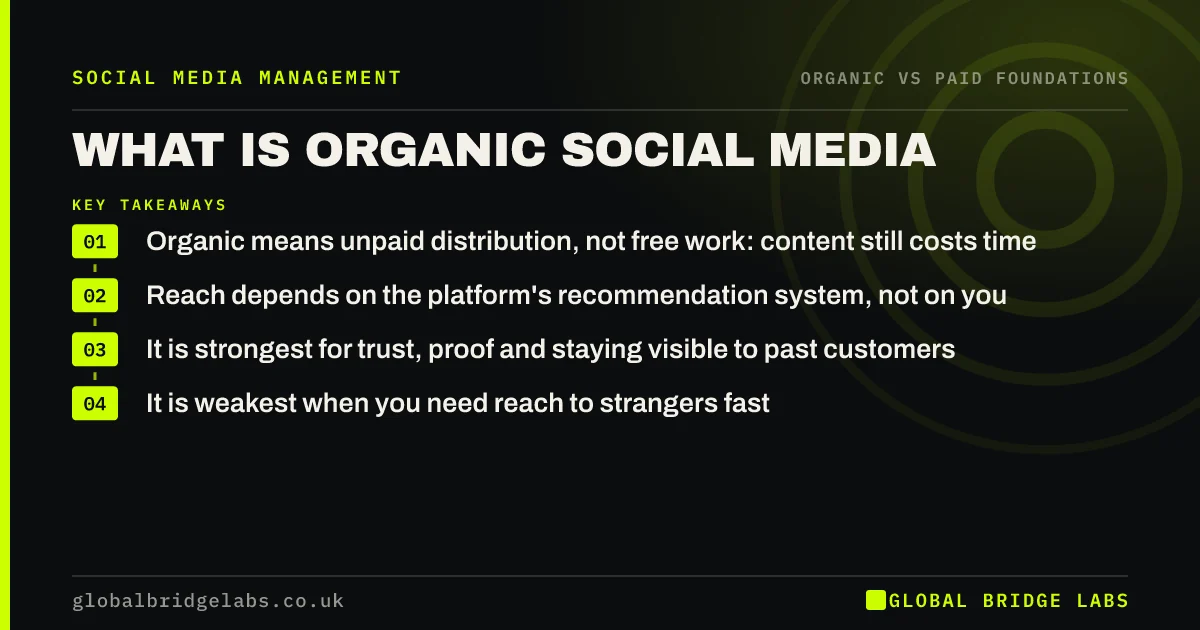
- Organic means unpaid distribution, not free work: content still costs time.
- Reach depends on the platform's recommendation system, not on you.
- It is strongest for trust, proof and staying visible to past customers.
- It is weakest when you need reach to strangers fast.
Want a plain view of what organic can do for your business? Message us on WhatsApp.
Chat on WhatsApp →What counts as organic social media?
Organic social media is any content you publish without paying the platform to show it: feed posts, short videos, stories, live streams, comments, replies to messages and posts in groups. If money changes hands to reach more people, such as boosting a post, that piece becomes paid. Everything else is organic, even if you paid someone to make it.
- Posts and videos on your business profile.
- Replies to comments and direct messages.
- Posts by staff or founders on their own profiles.
- Contributions to groups and community pages.
Who sees organic posts?
Organic posts are shown to some of your followers and, on recommendation-led feeds, to people who do not follow you yet. Each platform ranks content by predicted interest, so a post can reach a handful of people or many thousands. LinkedIn, for example, explains that its feed ranks posts by relevance to each member rather than by time.
What can organic social do for a business?
Organic social builds trust before a buyer gets in touch, gives proof through reviews and examples, answers questions, and keeps you in mind with past customers. Ofcom's media use research shows social media is part of most UK adults' daily routine, so an active profile is often checked before someone calls.
- Show real work, people and reviews.
- Answer the questions buyers ask before they call.
- Keep past customers aware of you for repeat work.
- Test which messages people respond to, for free.
What can organic social not do?
Organic social cannot guarantee reach, pick exactly who sees a post, or produce results on a deadline. If a launch, event or hiring drive needs a set number of people to see it by a set date, organic alone is a gamble. It also grows slowly: most small accounts need months of consistent posting before results are steady.
When is organic social enough on its own?
Organic is often enough for local businesses with a loyal customer base, firms that win most work by referral, and businesses with active community groups in their sector. In those cases paid ads add speed, not capability. Where buyers do not know you exist yet, organic usually needs paid support.
What does this look like in practice?
A pattern we see: a family-run electrician posted only when there was spare time and called social media pointless. Moving to two posts a week, each showing a finished job with a short note on the problem solved, turned the profile into something new customers checked before ringing. Enquiries mentioned the posts within three months, with no ad spend.
Organic social checklist
- Complete your profile: services, area, contact details and reviews.
- Pick one main platform where your buyers already spend time.
- Post on a rhythm you can keep, even if it is twice a week.
- Reply to every comment and message within one working day.
- Show real work and real people, not stock images.
- Track which posts lead to enquiries, not just likes.
Next step
Write down what you want organic social to do for you this quarter, such as trust, repeat business or enquiries, and plan one month of posts around that single job.
Message us on WhatsApp for a one-page organic social starter plan, or book a 30-minute consultation.
Chat on WhatsApp →Sources and further reading
- Adults' media use and attitudes · Ofcom
- Meta Business Help Centre · Meta
- LinkedIn relevance: optimising the member experience · LinkedIn Help
Frequently asked questions
Is organic social media free?
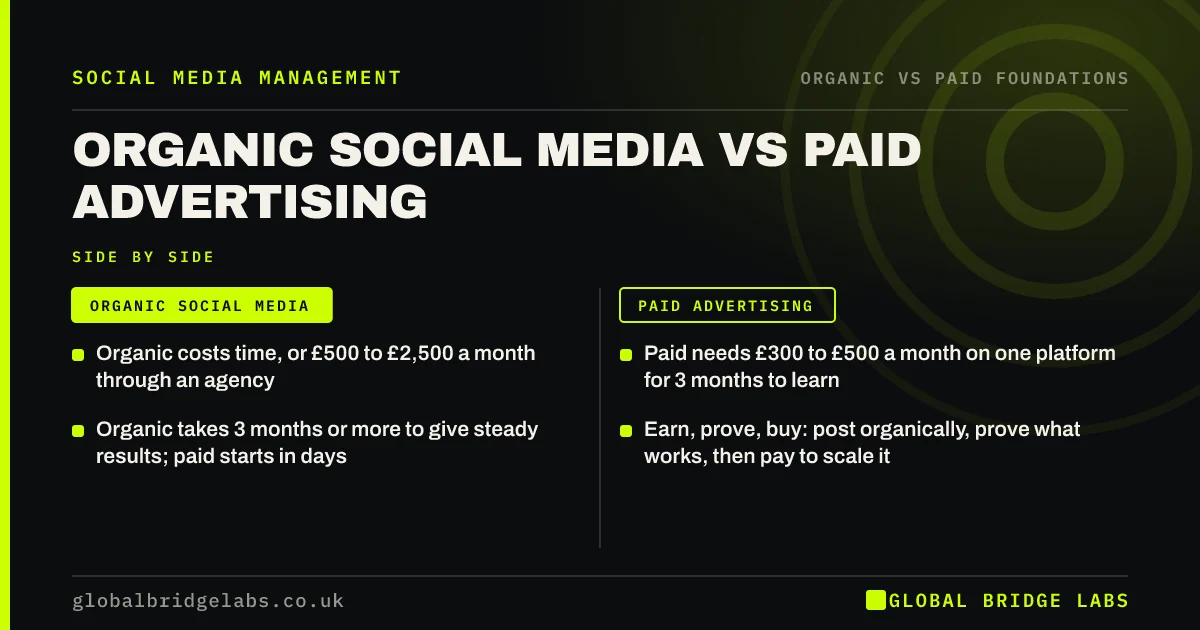
Organic social media is free to publish but not free to run. The platform does not charge for distribution, but someone has to plan, create, post and reply. For most small businesses that is several hours a week of staff or owner time, or an agency fee, so it should be budgeted like any other marketing activity.
What is an example of organic social media?
A plumber posting a short video of a boiler repair on their business page, a café sharing its weekly specials, or an accountant answering a tax question on LinkedIn are all organic social media. None of them paid the platform to show the post. If any of them boosted it, that post would become paid.
Is organic or paid social better for a small business?
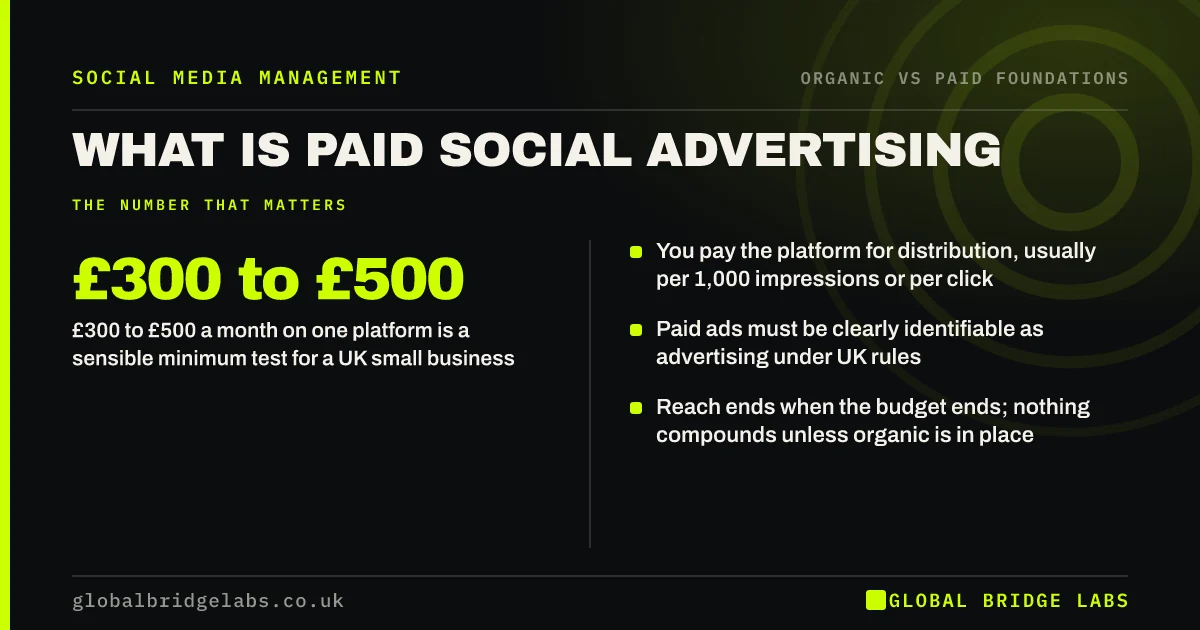
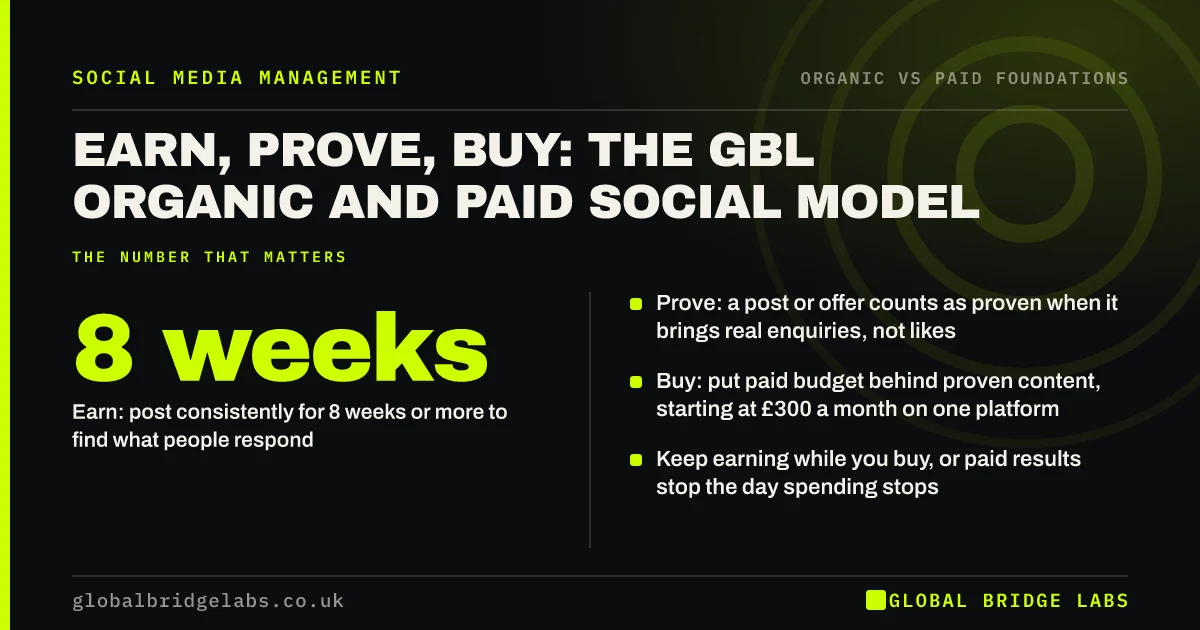
Neither is better in general. Organic builds trust and works over time; paid buys reach and speed. Most small businesses should start organic to learn what their buyers respond to, then add paid behind what already works. The right balance depends on your goal, budget and how quickly you need results.
Written by

Global Bridge Labs (GBL) is a UK–Sri Lanka partner for social media, websites and BPO. Everything here comes from client delivery, not theory.