On this page
- 01Key takeaways
- 02What goes in an annual organic and paid plan?
- 03How do you plan organic for the year?
- 04How do you time paid pushes?
- 05Which UK dates matter?
- 06How do you review the plan?
- 07What does this look like in practice?
- 08Annual plan checklist
- 09Next step
- 10Sources and further reading
- 11Frequently asked questions
Key takeaways
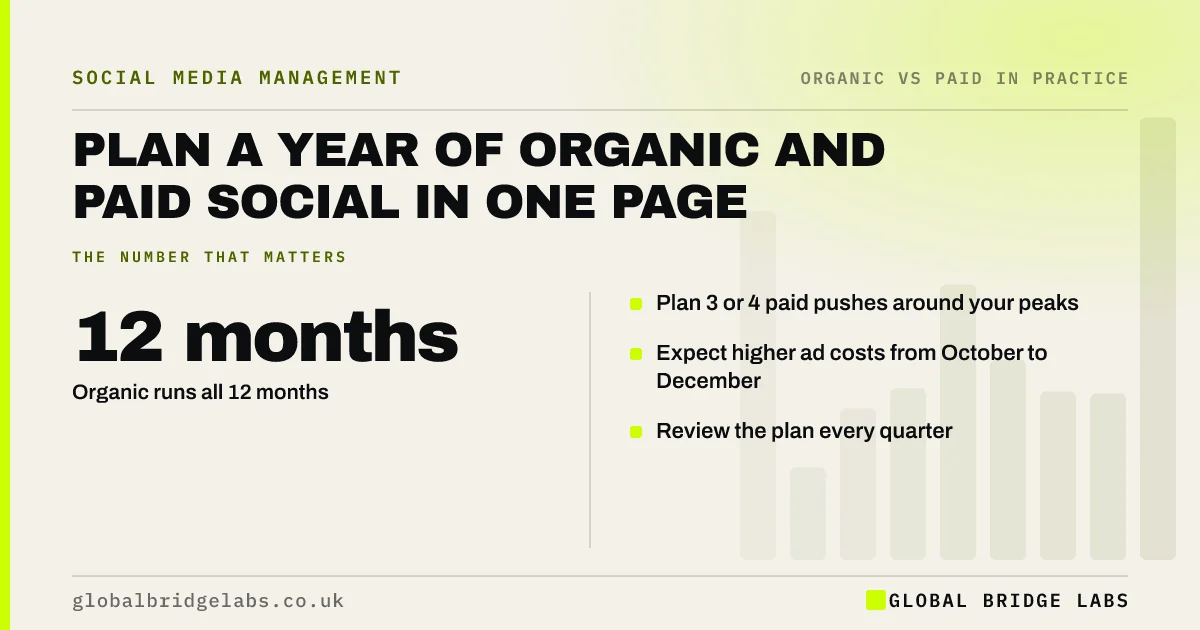
A one-page annual plan for organic and paid social shows always-on organic posting across all twelve months, three or four paid pushes timed to your peaks, and four quarterly reviews. Plan paid pushes around your own busy seasons and UK dates such as bank holidays, January and the run-up to Christmas, when ad costs rise.
- Organic runs all 12 months.
- Plan 3 or 4 paid pushes around your peaks.
- Expect higher ad costs from October to December.
- Review the plan every quarter.
Want your year mapped out? Message us on WhatsApp.
Chat on WhatsApp →What goes in an annual organic and paid plan?
An annual plan has three layers on one page.
- Organic: themes for each month, always on.
- Paid: three or four pushes with dates and budgets.
- Reviews: four quarterly checkpoints.
- Key dates: your peaks and UK holidays.
How do you plan organic for the year?
Plan organic as monthly themes linked to what customers need at that time of year, then fill each month in your monthly calendar. Keep it always on: the IPA's research shows brand building works over long periods, not bursts.
How do you time paid pushes?
Time paid pushes to your busiest buying periods, launches and events, and to quiet months you want to fill. Ad costs often rise from October to December as competition increases. Start organic build-up a few weeks before each push.
Want a costed annual plan? Message us on WhatsApp and we will discuss your requirements.
Chat on WhatsApp →Which UK dates matter?
Plan around bank holidays, which differ between England and Wales, Scotland and Northern Ireland according to GOV.UK, school holidays, January, Black Friday and Christmas. Add sector dates such as tax deadlines or wedding season.
How do you review the plan?
Each quarter, compare enquiries and costs by source, adjust the next quarter's paid pushes and move budget towards what worked. Meta's budget tools let you set lifetime budgets for each push in advance.
What does this look like in practice?
A pattern we see: a garden centre ran ads all year at the same level. Moving to always-on organic with three paid pushes, spring planting, summer furniture and Christmas, spent a similar total but brought more sales in each peak, because budget was concentrated when customers were buying.
Annual plan checklist
- Set 12 monthly organic themes.
- Mark your peak buying periods.
- Plan 3 or 4 paid pushes with budgets.
- Add UK holidays and sector dates.
- Start organic build-up before each push.
- Book four quarterly reviews.
Next step
On one page, write twelve monthly organic themes, mark your three busiest periods for paid pushes and put four review dates in the diary.
Message us on WhatsApp for the one-page annual plan template, or book a 30-minute consultation.
Chat on WhatsApp →Sources and further reading
Frequently asked questions
How do I plan social media for a whole year?
Set monthly organic themes linked to your customers' year, mark your peak periods and plan three or four paid pushes around them, with budgets. Add UK holidays and sector dates. Then fill each month in detail a few weeks ahead and review every quarter.
Should I advertise all year or in bursts?
Most small businesses do better with always-on organic and paid concentrated in bursts around peaks and launches. Some businesses with steady demand benefit from a small always-on paid campaign too. The key is not spreading a small budget thinly across every month.
When are social ads most expensive in the UK?
Ad costs usually rise from October to December, especially around Black Friday and Christmas, as more advertisers compete. January is often cheaper. Plan Christmas pushes early, build organic interest beforehand and consider whether quieter months offer better value for your business.
Written by

Global Bridge Labs (GBL) is a UK–Sri Lanka partner for social media, websites and BPO. Everything here comes from client delivery, not theory.