On this page
- 01Key takeaways
- 02Should you use organic or paid to promote an event?
- 03What should organic posts do?
- 04How should paid be used for events?
- 05How much should you spend?
- 06What rules apply to event offers?
- 07What does this look like in practice?
- 08Event promotion checklist
- 09Next step
- 10Sources and further reading
- 11Frequently asked questions
Key takeaways
To promote an event, use organic social to announce it, show what attendees get and build excitement, and paid social to make sure enough of the right local people see it before the date. Events have fixed deadlines, so relying on organic reach alone is risky. Concentrate paid spend in the final two weeks.
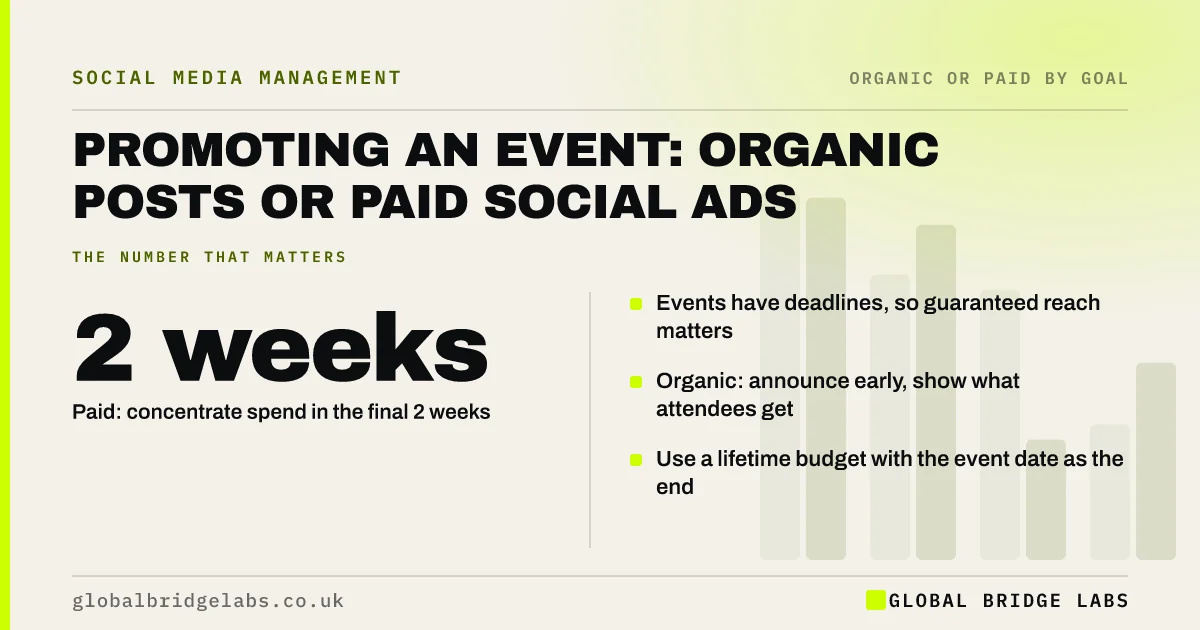
- Events have deadlines, so guaranteed reach matters.
- Organic: announce early, show what attendees get.
- Paid: concentrate spend in the final 2 weeks.
- Use a lifetime budget with the event date as the end.
Got an event to fill? Tell us the date on WhatsApp.
Chat on WhatsApp →Should you use organic or paid to promote an event?
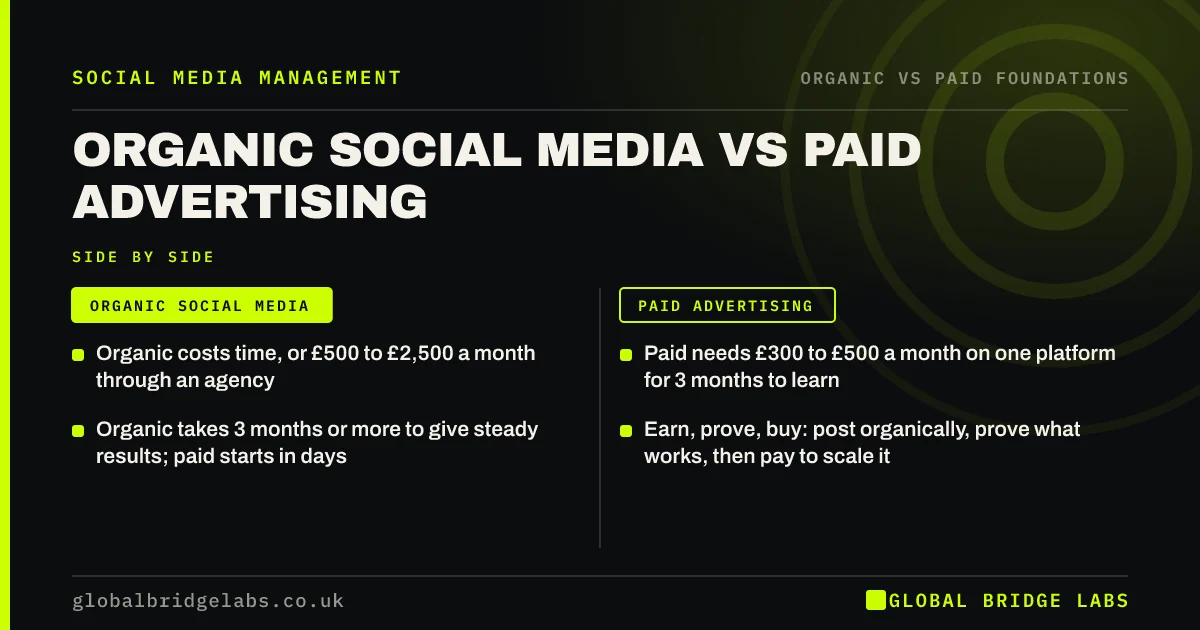
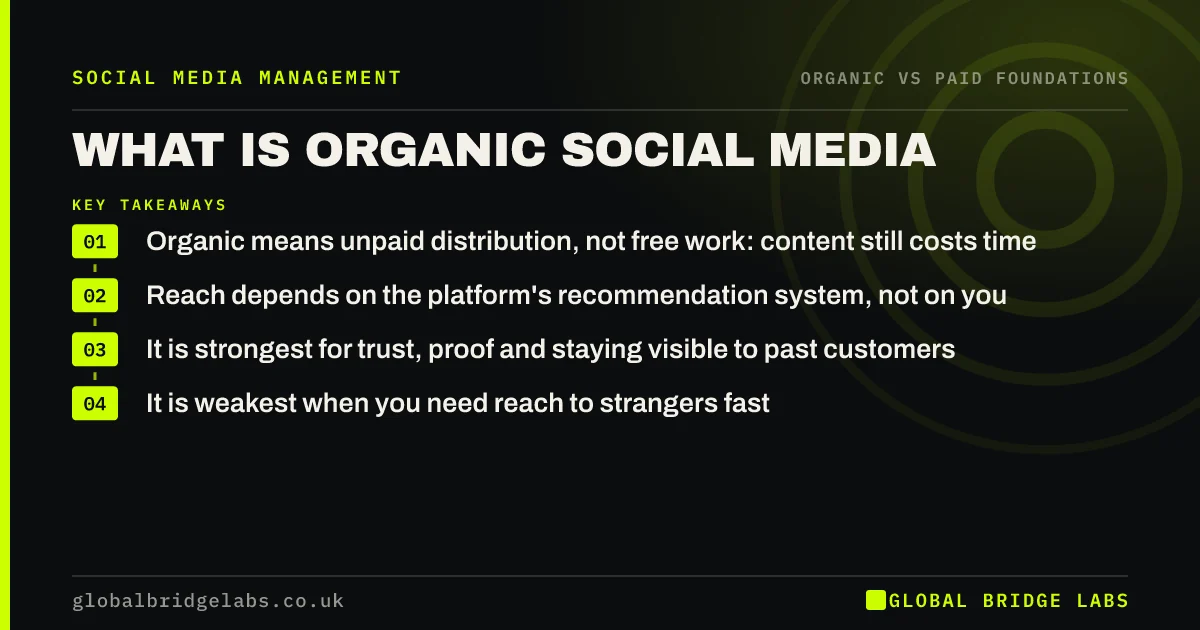
Use both, because events have a fixed date. Organic builds interest among people who already follow you and gives the event credibility. Paid ensures a defined local audience sees it in time to book. Without paid, you are hoping the algorithm shows your posts before the date.
What should organic posts do?
Organic posts should announce the event early, show what happened at past events, introduce speakers or performers, and answer practical questions. Create a platform event page so people can mark interest and get reminders.
- Announce six weeks or more ahead.
- Share photos or clips of past events.
- Introduce people involved.
- Answer timing, parking and price questions.
How should paid be used for events?
Paid should target the local area and relevant interests, retarget people who engaged with event posts, and push hardest in the final two weeks. Meta's lifetime budgets let you set an end date matching the event, so spending stops when the event happens.
How much should you spend?
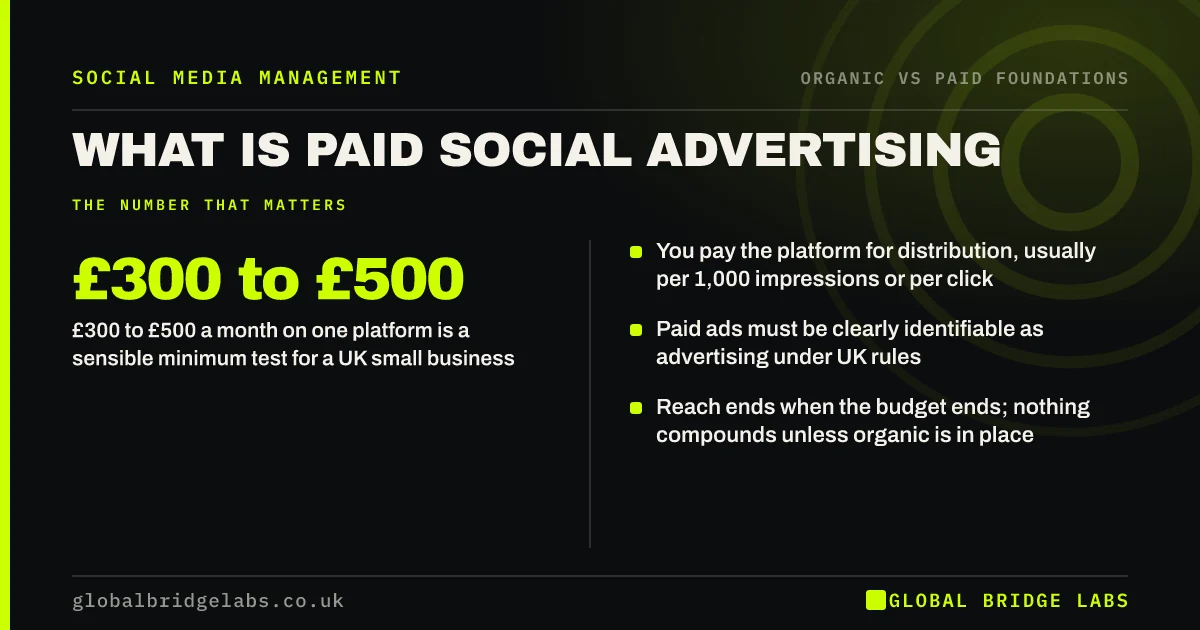
Work back from tickets needed and ticket value. If you need 50 more bookings at £20, a few hundred pounds of ads is proportionate. For free events, set a budget per expected attendee. Concentrate spend rather than running small ads for months.
What rules apply to event offers?
Early-bird prices, limited tickets and prize draws must follow the CAP Code's promotional marketing rules. Deadlines and availability must be genuine, and any prize draw needs clear terms.
What does this look like in practice?
A pattern we see: a business networking group relied on organic posts and half-filled its quarterly breakfast. For the next one, a two-week ad campaign to local business owners, using a short clip from the previous event, sold out the room. Organic posts kept running to give the ads a credible profile.
Event promotion checklist
- Create an event page on your main platform.
- Announce at least six weeks ahead organically.
- Share proof from past events.
- Set a lifetime ad budget ending on event day.
- Concentrate paid in the final two weeks.
- Retarget people who showed interest.
Next step
Work out how many bookings you need and what each is worth. Set a lifetime ad budget proportionate to that, ending on the event date, and plan weekly organic posts until then.
Message us on WhatsApp for an event promotion plan, or book a 30-minute consultation.
Chat on WhatsApp →Sources and further reading
- Meta Business Help Centre · Meta
- About budgets · Meta
- CAP Code section 8: Promotional marketing · Committee of Advertising Practice
Frequently asked questions
When should I start promoting an event on social media?
Start organic promotion about six weeks ahead for most local events, longer for large or ticketed ones. Begin paid ads two to three weeks before, concentrating spend in the final fortnight when people make decisions. Very late promotion leaves little time for people to plan.
Is it worth paying to promote a free event?
Often, yes, if attendance matters. Free events still compete for attention, and a small local ad budget makes sure the right people see it. Set a budget per expected attendee and target the area and interests that match your audience.
How do I get people to actually turn up?
Send reminders through the platform event page, email or WhatsApp, share practical details and a clear agenda, and post in the final days to build excitement. For free events, expect some no-shows and consider overbooking slightly. A booking step, even free, improves attendance.
Written by

Global Bridge Labs (GBL) is a UK–Sri Lanka partner for social media, websites and BPO. Everything here comes from client delivery, not theory.