On this page
- 01Key takeaways
- 02Why does timing matter so much?
- 03How do lead times differ by channel?
- 04How do you build a seasonal calendar?
- 05How do the channels divide the work?
- 06What happens to prices in peak periods?
- 07How should the budget follow the season?
- 08What should you do in the quiet season?
- 09What can go wrong?
- 10What does this look like in practice?
- 11Next step
- 12Sources and further reading
- 13Frequently asked questions
Key takeaways
Seasonal advertising for a small business is mostly about starting early enough. Buyers plan before the peak, and traditional media need booking weeks ahead. Social media can start late and adjust daily, which makes it the natural partner for any seasonal push.
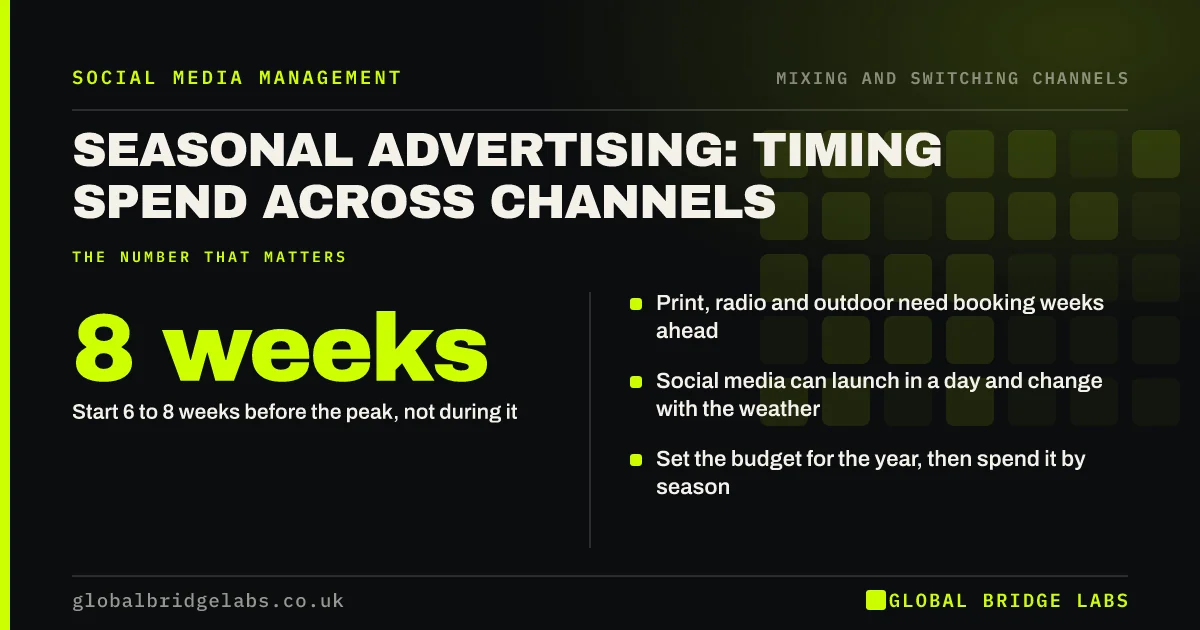
- Start 6 to 8 weeks before the peak, not during it.
- Print, radio and outdoor need booking weeks ahead.
- Social media can launch in a day and change with the weather.
- Set the budget for the year, then spend it by season.
Want a seasonal calendar for your trade? Message us on WhatsApp.
Chat on WhatsApp →Why does timing matter so much?
Timing matters because demand in many trades is uneven and buyers decide before they need the service. Boiler servicing is booked in early autumn, garden work in early spring and Christmas parties in September. An advert that appears at the peak reaches people who have already chosen.
How do lead times differ by channel?
Lead time is the gap between deciding to advertise and the advert appearing. It varies from hours to months.
- Social media posts and adverts: the same day.
- Leaflets: two to four weeks for print and delivery.
- Local print: one to four weeks before the issue.
- Radio: two to four weeks including production and clearance.
- Outdoor: four weeks or more for good sites.
- Trade shows: booked six to twelve months ahead.
How do you build a seasonal calendar?
Build it backwards from your busy periods.
- 1. Mark your peaks from the last two years' enquiries.
- 2. Mark when buyers start looking, usually weeks earlier.
- 3. Subtract each channel's lead time for booking dates.
- 4. Add quiet periods to fill.
- 5. Put the dates in a shared calendar.
How do the channels divide the work?
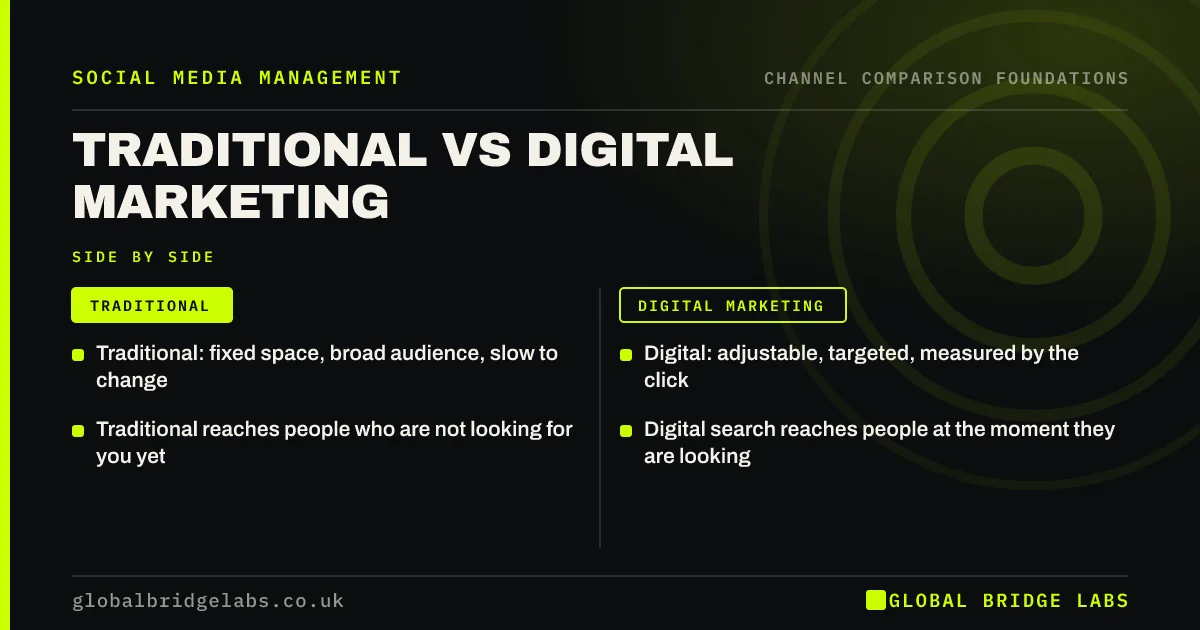
Use traditional media for the planned, fixed parts of a season and social media for the parts that move. A leaflet can announce the autumn service offer. Social media can respond to the first cold snap that week, with the same offer.
What happens to prices in peak periods?
Media prices rise when demand for space rises, most obviously before Christmas. Social advert costs also tend to climb in the same weeks, because more advertisers compete for the same audience. Booking early, or advertising just before the rush, usually costs less.
How should the budget follow the season?
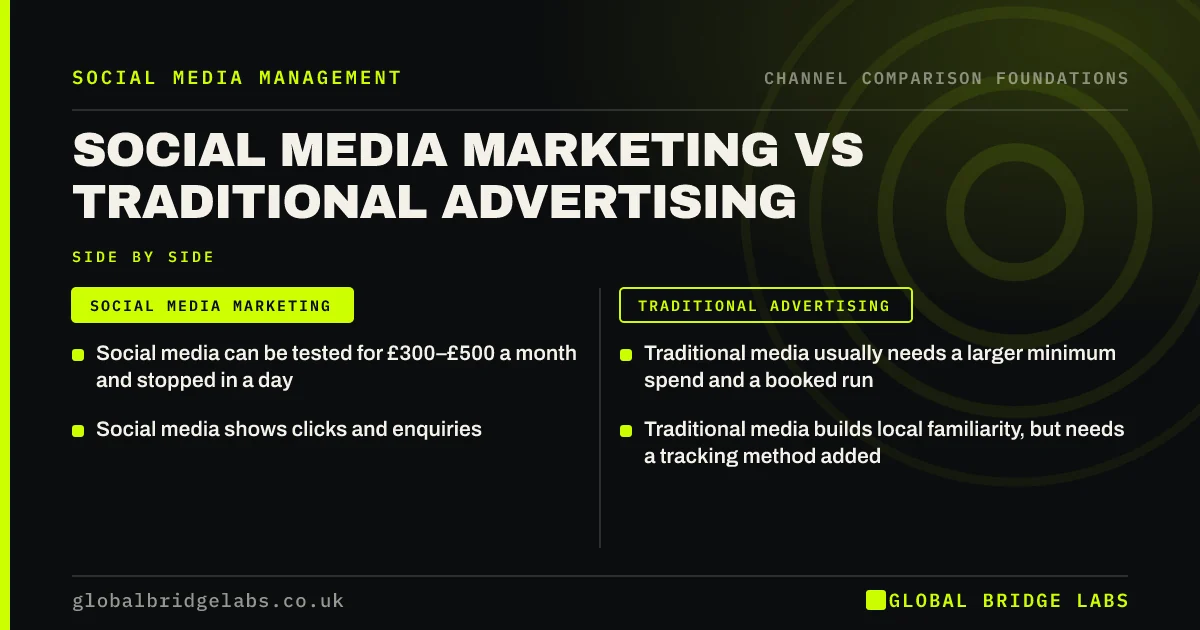
Set the budget for the year and release it unevenly. A firm with a strong autumn might spend 40% of its budget in August to October and keep a low level otherwise. Paid social, with a practical floor of £300–£500 a month, is easy to raise and lower in this way.
Want your yearly budget spread across your seasons? Message us on WhatsApp and we will discuss your requirements.
Chat on WhatsApp →What should you do in the quiet season?
Use the quiet season to prepare and to promote work that suits it. Collect reviews, take photographs, plan the calendar and advertise the services people buy off-peak. Late space is often discounted then, so a small test costs less.
What can go wrong?
Three things go wrong most often: starting too late, advertising more than you can deliver at peak, and running last season's creative after the moment has passed. Check capacity before promoting, and put an end date on every seasonal advert.
What does this look like in practice?
A pattern we see with seasonal trades: advertising is booked when the phone goes quiet, which is after the buying season has ended. Moving the same spend eight weeks earlier, with no other change, is frequently the largest single improvement.
Next step
Chart your enquiries by month for the last two years. Mark the two busiest months and count back eight weeks from each. Those are your start dates.
Message us on WhatsApp with your busiest months and we will draft the calendar, or book a 30-minute consultation.
Chat on WhatsApp →Sources and further reading
- Meta Business Help Centre · Meta
- Radio advertising clearance · Radiocentre
- Radio Joint Audience Research: UK radio listening figures · RAJAR
Frequently asked questions
When should I start seasonal advertising?
Start six to eight weeks before the period when customers buy, because most people research and book ahead. Count back further for channels with long lead times such as print, radio and outdoor. Use social media to fill the gap if you have left it late, because it can start the same day.
How far in advance do I need to book advertising?
Social media can start the same day. Leaflets and local print typically need two to four weeks, radio two to four weeks including production, outdoor four weeks or more and trade show stands six to twelve months.
Is advertising more expensive at Christmas?
Generally, yes. Demand for space and airtime rises before Christmas, and social media advert costs tend to rise too as more advertisers compete. Booking early or running just before the peak usually reduces the cost.
Should I advertise in my quiet season?
Yes, at a lower level. Promote the services people buy off-peak, keep your profile active and use cheaper late space for tests. Staying visible in quiet months means buyers remember you when the season returns.
Written by

Global Bridge Labs (GBL) is a UK–Sri Lanka partner for social media, websites and BPO. Everything here comes from client delivery, not theory.