On this page
- 01Key takeaways
- 02When should you judge paid social results?
- 03When should you judge organic social results?
- 04What early signals should you watch?
- 05Why do small samples mislead?
- 06How do you avoid stopping too early?
- 07What does this look like in practice?
- 08Review timing checklist
- 09Next step
- 10Sources and further reading
- 11Frequently asked questions
Key takeaways
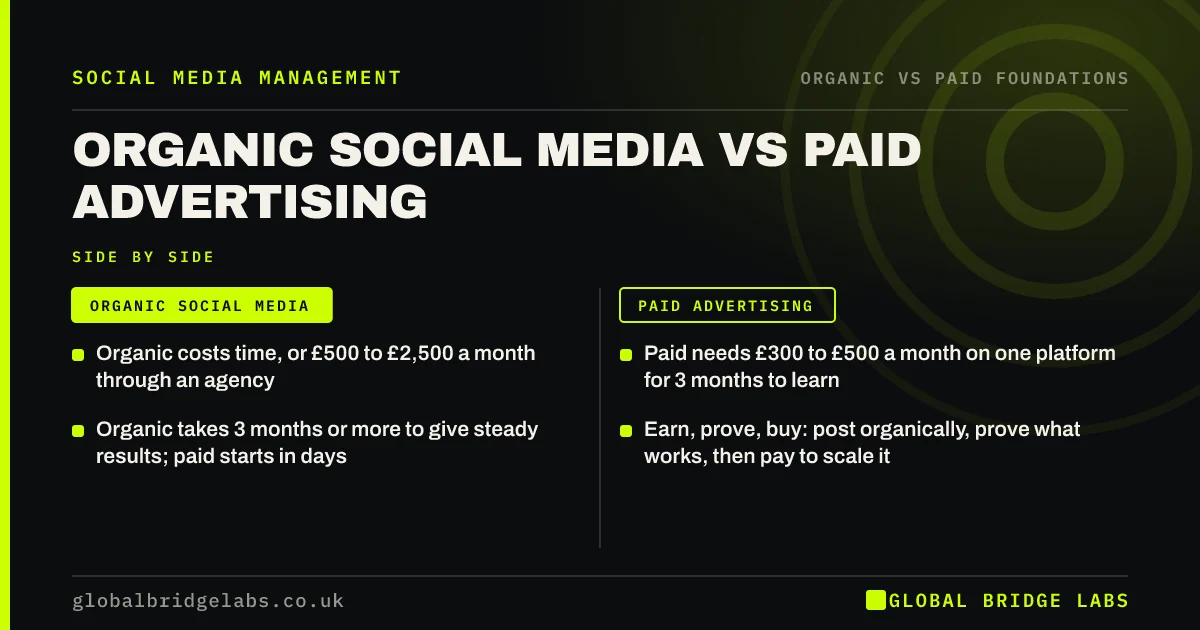
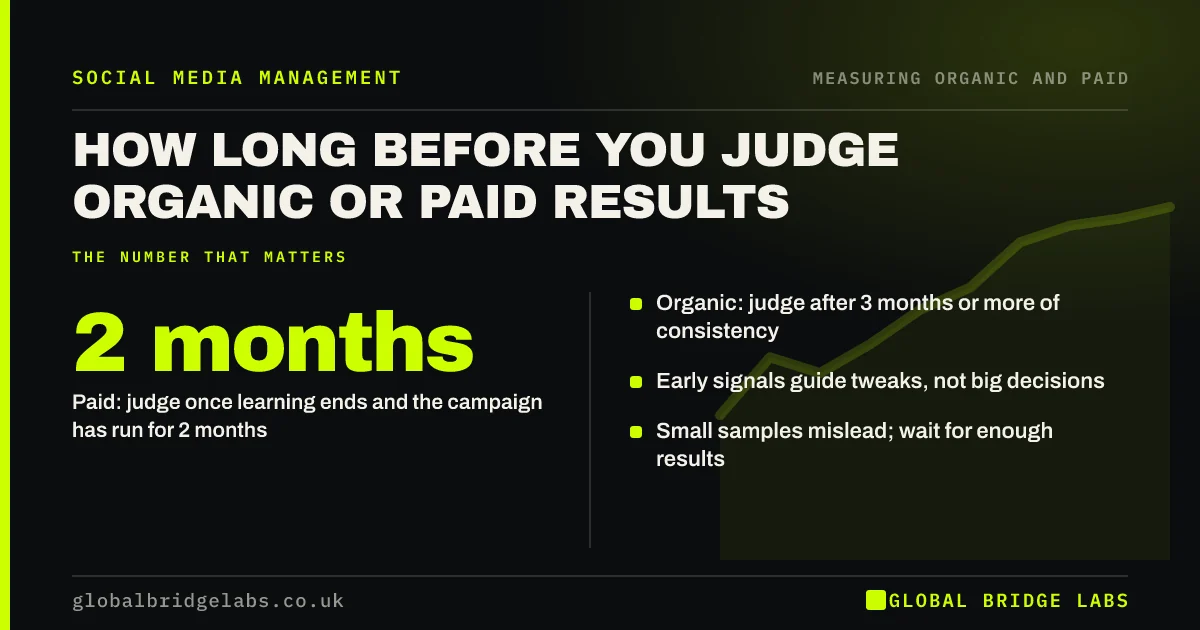
Judge paid social after it has left the learning phase and run for two to three months, and organic social after three to six months of consistent posting. Earlier than that, results are mostly noise. Watch early signals in the meantime, such as cost per click and engagement for paid, saves and messages for organic, but do not make big decisions on them.
- Paid: judge once learning ends and the campaign has run for 2 months.
- Organic: judge after 3 months or more of consistency.
- Early signals guide tweaks, not big decisions.
- Small samples mislead; wait for enough results.
Wondering whether it is too soon to judge? Ask us on WhatsApp.
Chat on WhatsApp →When should you judge paid social results?
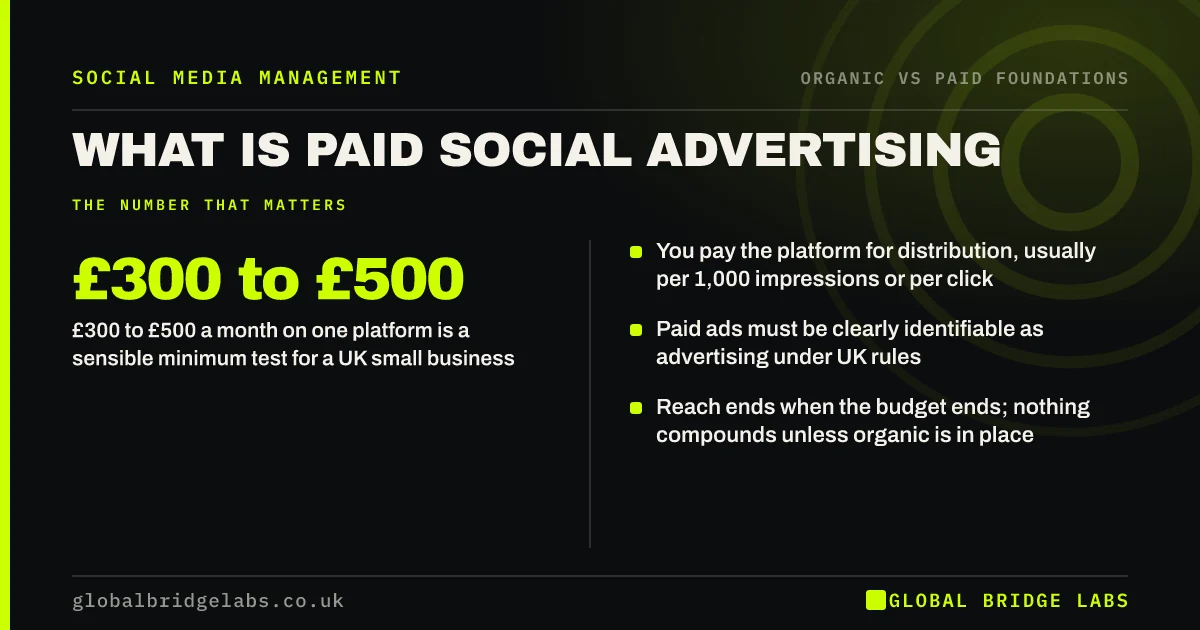
Judge paid results once campaigns have left the learning phase and gathered enough results to be meaningful, usually two to three months for a small business. Meta explains that delivery is unstable during learning, so early cost per result is not representative.
When should you judge organic social results?
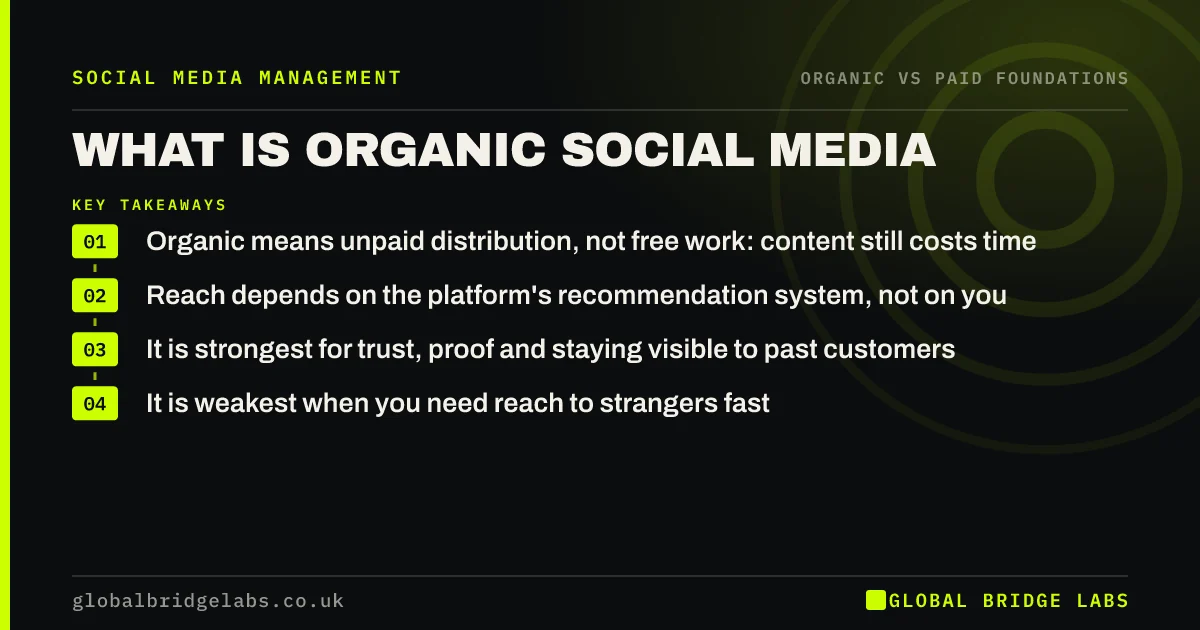
Judge organic after three to six months of consistent posting. Audiences and trust build slowly, and enquiries often lag behind engagement. Judging after one month nearly always underestimates organic.
What early signals should you watch?
Watch signals that tell you whether you are on track.
- Paid: click-through rate and cost per click.
- Paid: landing page conversion rate.
- Organic: saves, shares and comments.
- Organic: direct messages and profile visits.
Why do small samples mislead?
With only a few results, chance dominates. Two enquiries one week and none the next tells you almost nothing. Wait until you have enough results, often dozens of clicks and several enquiries, before comparing versions or channels. GA4 key events help collect them consistently.
How do you avoid stopping too early?
Agree review dates before you start and stick to them. The IPA's research shows brand effects build over longer periods, so cutting organic early loses its biggest benefit. Make small tweaks on early signals; make big decisions at review dates.
What does this look like in practice?
A pattern we see: a tutoring business stopped organic posting after six weeks because it had brought only two enquiries. Restarting with a fixed six-month review date showed enquiries rising steadily from month three. By month six, organic was bringing more enquiries than its ads.
Review timing checklist
- Set review dates before you start.
- Paid: review after learning and two months or more.
- Organic: review after three months or more.
- Watch early signals weekly.
- Make small tweaks, not big decisions, early on.
- Wait for enough results before comparing.
Next step
Put a paid review date and an organic review date in your diary now, based on these timelines, and agree the result that would mean continue, change or stop.
Message us on WhatsApp for a review timeline plan, or book a 30-minute consultation.
Chat on WhatsApp →Sources and further reading
- About the learning phase · Meta
- The Long and the Short of It: balancing short and long-term marketing strategies · IPA
- About key events · Google Analytics Help
Frequently asked questions
How long should I give social media marketing to work?
Give paid campaigns two to three months, after the learning phase, and organic three to six months of consistent posting. Watch early signals in the meantime, but make big decisions at planned review dates. Stopping earlier usually means stopping before results arrive.
What if my ads are expensive in the first week?
That is common. Campaigns in the learning phase often cost more per result until the platform finds the right people. Avoid big changes in the first weeks, since edits can restart learning. Review once the campaign has gathered enough results.
How do I know if organic social is on track?
Look for rising saves, shares, messages and profile visits over the first two to three months, and for enquiries that mention your posts. If none of these move after three months of consistent posting, review your platform, content and message.
Written by

Global Bridge Labs (GBL) is a UK–Sri Lanka partner for social media, websites and BPO. Everything here comes from client delivery, not theory.