On this page
Key takeaways
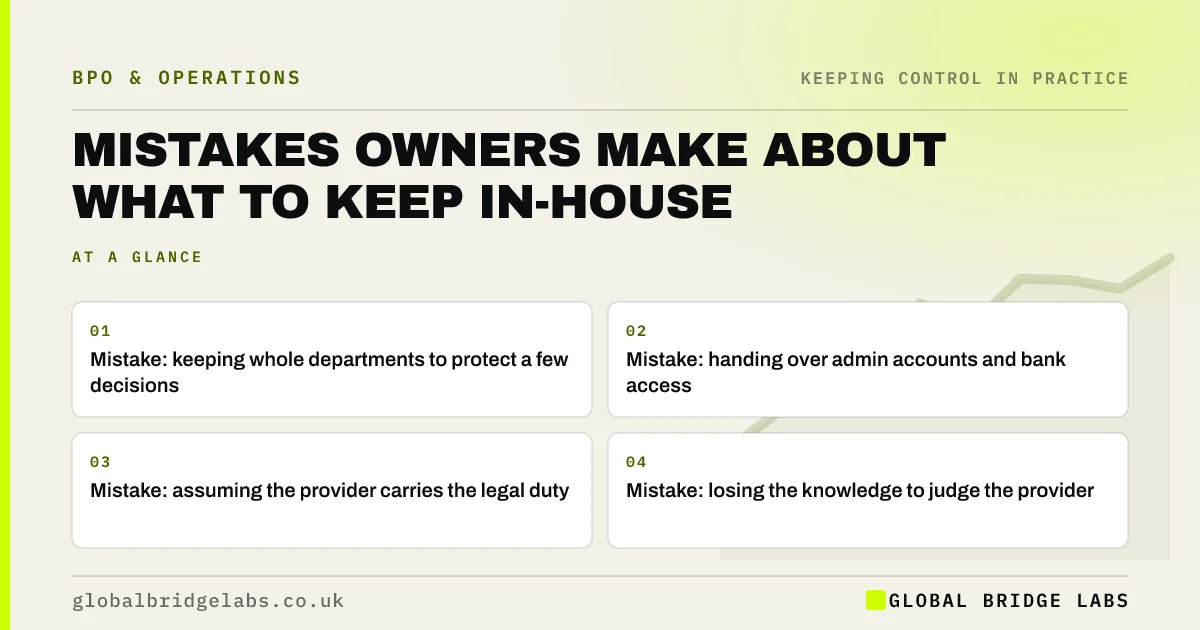
Never-outsource mistakes fall into two groups. Owners keep too much, locking whole departments in-house to protect a few decisions. Or they give away too much, handing over admin accounts, decisions or know-how without noticing. The fix for both is the same: name the specific decisions, duties and keys that stay, and move the rest deliberately.
- Mistake: keeping whole departments to protect a few decisions.
- Mistake: handing over admin accounts and bank access.
- Mistake: assuming the provider carries the legal duty.
- Mistake: losing the knowledge to judge the provider.
Want a second view on where your boundary sits? Message us on WhatsApp.
Chat on WhatsApp →What are the 'keeping too much' mistakes?
These cost time and growth.
- Listing departments instead of decisions.
- Generalising from one bad experience.
- Keeping admin because 'nobody else knows how'.
- Owners approving everything personally.
What are the 'giving away too much' mistakes?
These cost control and can be expensive to reverse.
- Letting providers hold master accounts.
- Giving payment release rights.
- No written limits on discounts or refunds.
- Customer data only in the provider's systems.
- No exit clause.
What are the accountability mistakes?
Assuming the provider 'handles compliance', not checking filings or payroll before they go, and not knowing who would answer a regulator. The duty stays with you, so oversight must too.
How do you avoid them?
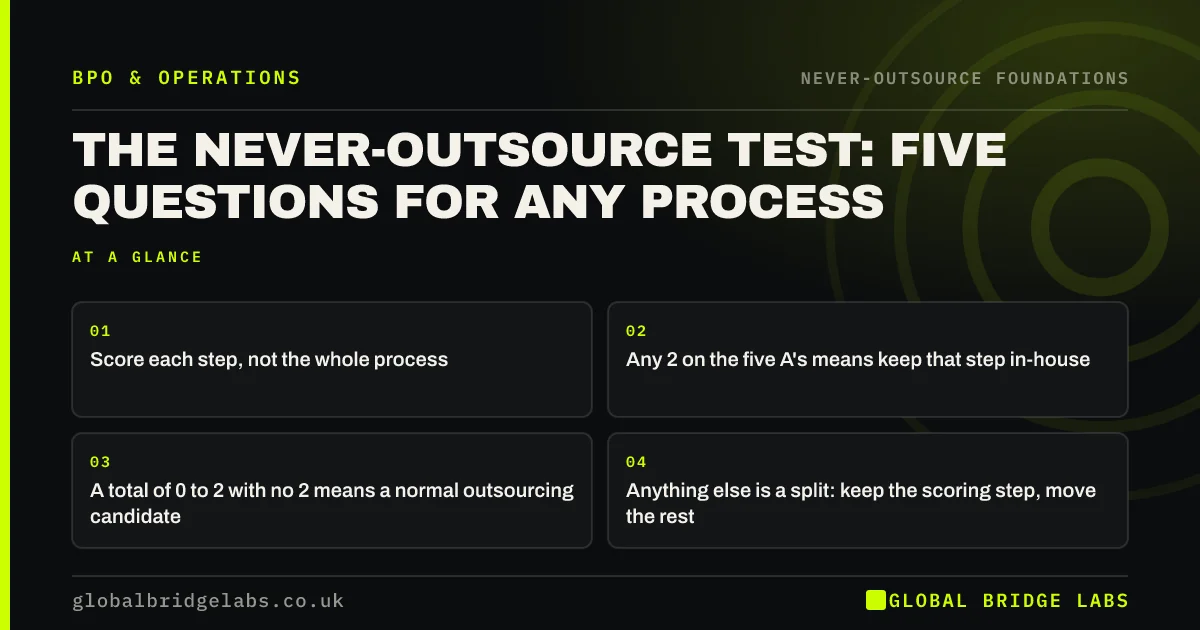
Run the never-outsource test on each step, write a keep list, put red lines in the contract, keep accounts in your name, name an intelligent client for each process and review the list yearly.
What does this look like in practice?
A pattern we see: the same business both keeps too much admin and has given away its admin accounts. Fixing both at once, with a keep list and an account audit, usually takes a few weeks.
Mistakes checklist
- Replace departments with decisions on your list.
- Audit who holds admin accounts.
- Write discount, refund and payment limits.
- Name an owner for every legal duty.
- Keep someone able to judge each provider.
Next step
Pick the mistake from this list that feels most familiar and fix it this month.
Message us on WhatsApp, or book a 30-minute consultation.
Chat on WhatsApp →Sources and further reading
- Password administration for system owners · National Cyber Security Centre
- Controllers and processors · Information Commissioner's Office
Frequently asked questions
What are the most common mistakes when deciding what to keep in-house?
Keeping whole departments to protect a few decisions, handing providers admin accounts or payment rights, assuming the provider carries legal duties, having no written limits, keeping customer data only in a provider's system and losing the knowledge to judge the provider.
Can you keep too much in-house?
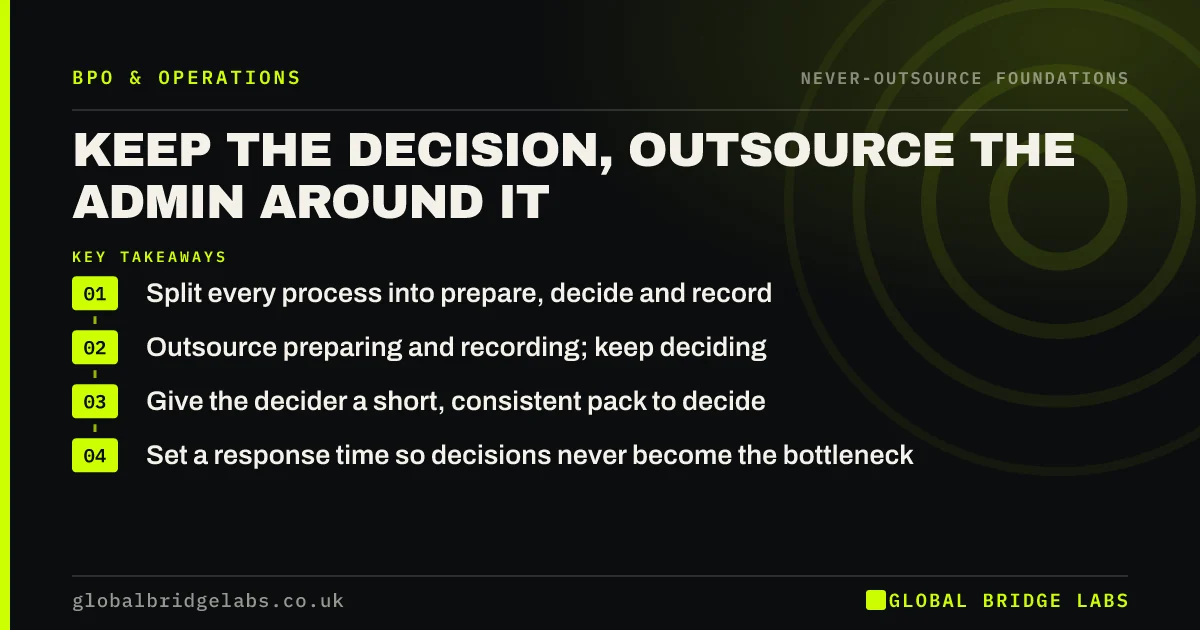
Yes. Owners often keep whole functions to protect a handful of decisions, which ties up their time in admin. Keeping only the decisions, duties and keys, and outsourcing the work around them, usually gives better control with less owner time.
How do I know if I have given a provider too much control?
Check whether the provider holds master admin accounts, can release payments, makes decisions you learn about afterwards, or is the only one who knows how a process works. Any of these suggests the boundary needs resetting.
Written by

Global Bridge Labs (GBL) is a UK–Sri Lanka partner for social media, websites and BPO. Everything here comes from client delivery, not theory.