On this page
Key takeaways
Influencer marketing vs paid ads is a choice between borrowed trust and controlled reach. £1,000 with a creator buys content and an introduction to their audience, usually as a one-off. £1,000 in ads buys repeatable, measurable reach you can adjust daily. Often the best use combines both: pay for creator content, then run it as ads.
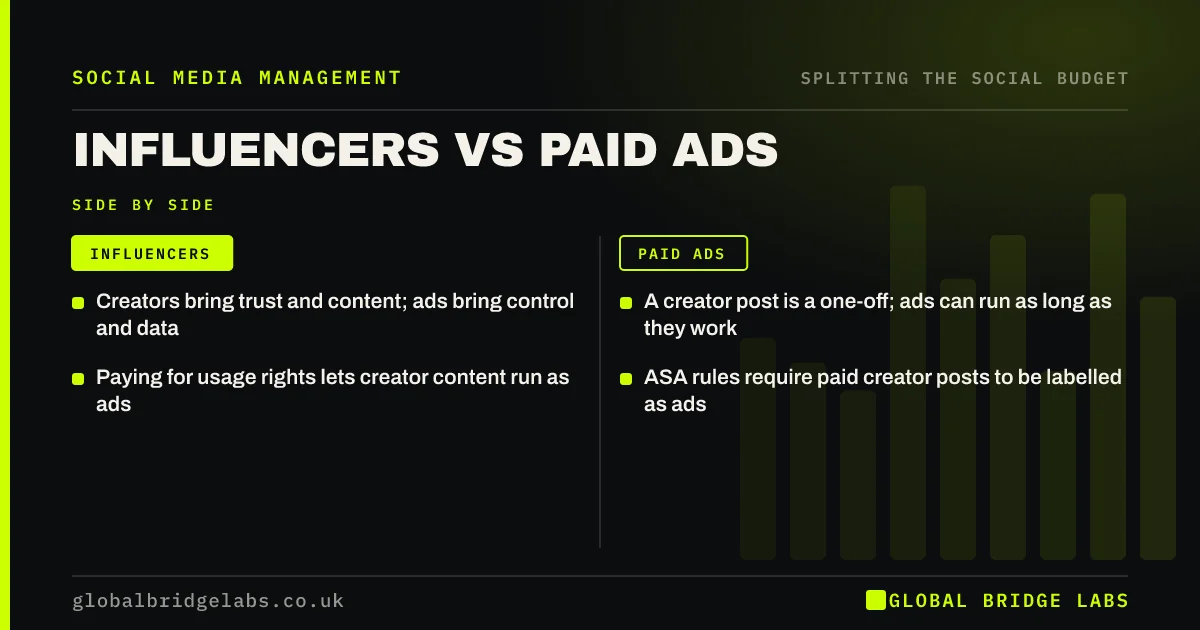
- Creators bring trust and content; ads bring control and data.
- A creator post is a one-off; ads can run as long as they work.
- Paying for usage rights lets creator content run as ads.
- ASA rules require paid creator posts to be labelled as ads.
Want a plan for £1,000? Message us on WhatsApp.
Chat on WhatsApp →What does £1,000 buy with each?
With creators, £1,000 might buy one post from a mid-sized local creator or several from smaller ones, depending on their rates. With ads, £1,000 buys around a month of steady reach for a local business, with results visible daily. Creator fees vary widely, so ask for audience data before paying.
When does a creator beat an ad?
When the product needs a trusted voice: beauty, food, fitness, family products and local venues. A creator showing the product in use can persuade where an ad would be scrolled past. Creators also produce content you could not easily make yourself, which has value beyond the post.
How can you combine them?
Pay a creator for content and the right to use it in your ads for a set period. Run the best piece as an ad from your account or theirs, and measure it like any other ad. Illustrative split: £400 for content and usage rights, £600 to run the winning piece as ads.
Send us your product on WhatsApp and we will discuss your requirements.
Chat on WhatsApp →What are the risks with creators?
Audiences that do not match yours, inflated follower numbers, and posts that are not clearly labelled. The ASA expects paid or gifted posts to be obviously identifiable as ads, and both brand and creator can be held responsible. Agree labelling, timing and usage in writing before paying.
What does this look like in practice?
A pattern we see: a business pays a creator for one post, gets a burst of attention, and has nothing to show a month later. Agreeing usage rights at the same time and running the post as an ad usually turns that one-off into weeks of measurable results.
Influencer and ads checklist
- Decide whether you need trust or reach most.
- Ask creators for audience location and age data.
- Agree usage rights for ads before paying.
- Label every paid or gifted post as an ad.
- Measure creator content run as ads like any other ad.
Next step
Shortlist three creators whose followers match your buyers. Ask each for audience data and a quote that includes usage rights for ads.
Message us on WhatsApp with your shortlist, or book a 30-minute consultation.
Chat on WhatsApp →Sources and further reading
Frequently asked questions
Are influencers better than Facebook ads?
They do different jobs. Influencers lend trust and create content, which suits products that need a personal recommendation. Facebook ads give controllable, measurable reach you can adjust daily. Many small businesses get the best result by paying for creator content and running it as ads.
Do I have to label influencer posts as ads?
Yes, if the creator is paid or given something and you have control over the content. The ASA and CMA expect such posts to be clearly labelled as advertising, typically with 'ad' at the start. Brands as well as creators can face action for unlabelled posts.
What are usage rights?
Usage rights are your permission to reuse a creator's content, for example in your own ads or on your website, for an agreed period. They usually cost extra on top of the post fee. Agree them in writing before the content is made.
Written by

Global Bridge Labs (GBL) is a UK–Sri Lanka partner for social media, websites and BPO. Everything here comes from client delivery, not theory.