On this page
- 01Key takeaways
- 02What does a growing backlog tell you?
- 03How do you measure whether a backlog is growing?
- 04How do you clear a backlog without burning out the team?
- 05When does a backlog mean you should outsource?
- 06What does a backlog cost?
- 07When is a backlog not a capacity problem?
- 08How do you stop the backlog coming back?
- 09What does this look like in practice?
- 10Backlog checklist
- 11Next step
- 12Sources and further reading
- 13Frequently asked questions
Key takeaways
A growing backlog of work means more arrives each week than the team can finish. If it has grown for four or more weeks in a row, it will not clear on its own. Route new work to extra capacity first so the backlog stops growing, then clear old items in batches. Outsourcing fits when the backlog is repeatable work.
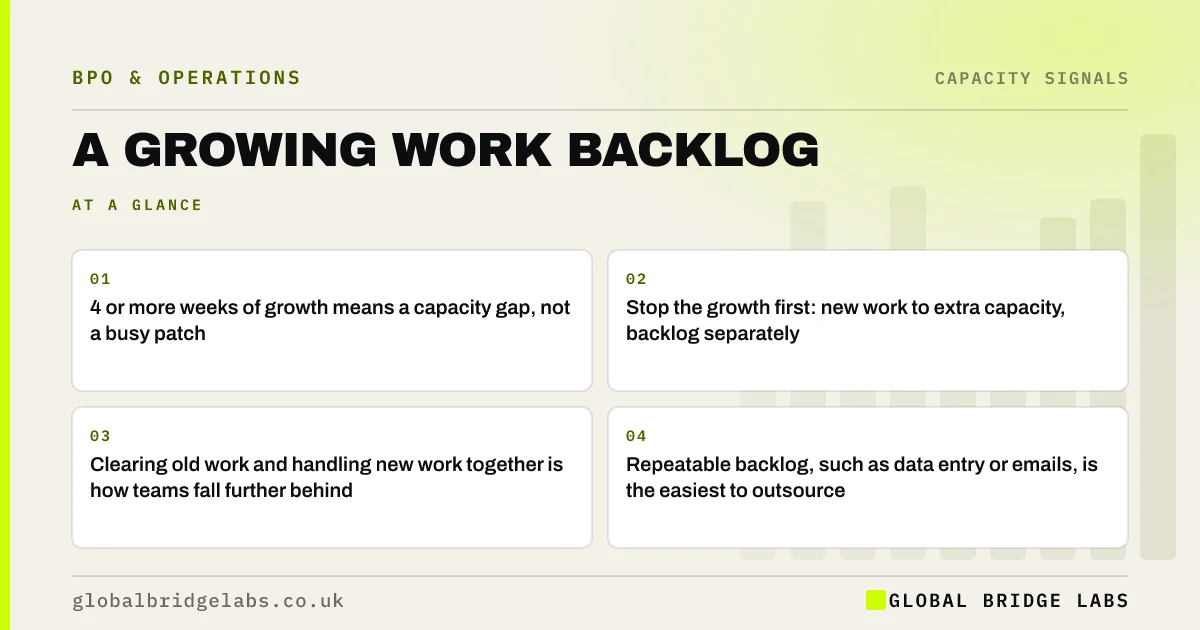
- 4 or more weeks of growth means a capacity gap, not a busy patch.
- Stop the growth first: new work to extra capacity, backlog separately.
- Clearing old work and handling new work together is how teams fall further behind.
- Repeatable backlog, such as data entry or emails, is the easiest to outsource.
Backlog getting away from you? Message us on WhatsApp with its size and type.
Chat on WhatsApp →What does a growing backlog tell you?
A growing backlog tells you that demand is higher than capacity, week after week. A stable backlog is normal; one that grows steadily means the team is losing ground. The gap is usually small, a few hours a week, but it compounds, and each week adds older, more awkward items to the pile.
How do you measure whether a backlog is growing?
Count items waiting at the same time each week, and the age of the oldest item. Track both for at least four weeks. If the count rises and the oldest item gets older, the backlog is growing. Count by type too: emails, orders, invoices, data entry and callbacks behave differently.
- Items waiting at 9am every Monday, by type.
- Age of the oldest item in each type.
- Items arriving and items finished each week.
- Hours spent on backlog work each week.
How do you clear a backlog without burning out the team?
Separate the flow from the backlog. First, make sure new work is handled on time, using extra capacity if needed, so the pile stops growing. Then clear old items in planned batches: close what is no longer relevant, batch similar items, and handle the rest by age. Weekend marathons clear a backlog once and exhaust the people who have to prevent the next one.
Want a plan to clear your backlog in 30 days? Send us the numbers on WhatsApp.
Chat on WhatsApp →When does a backlog mean you should outsource?
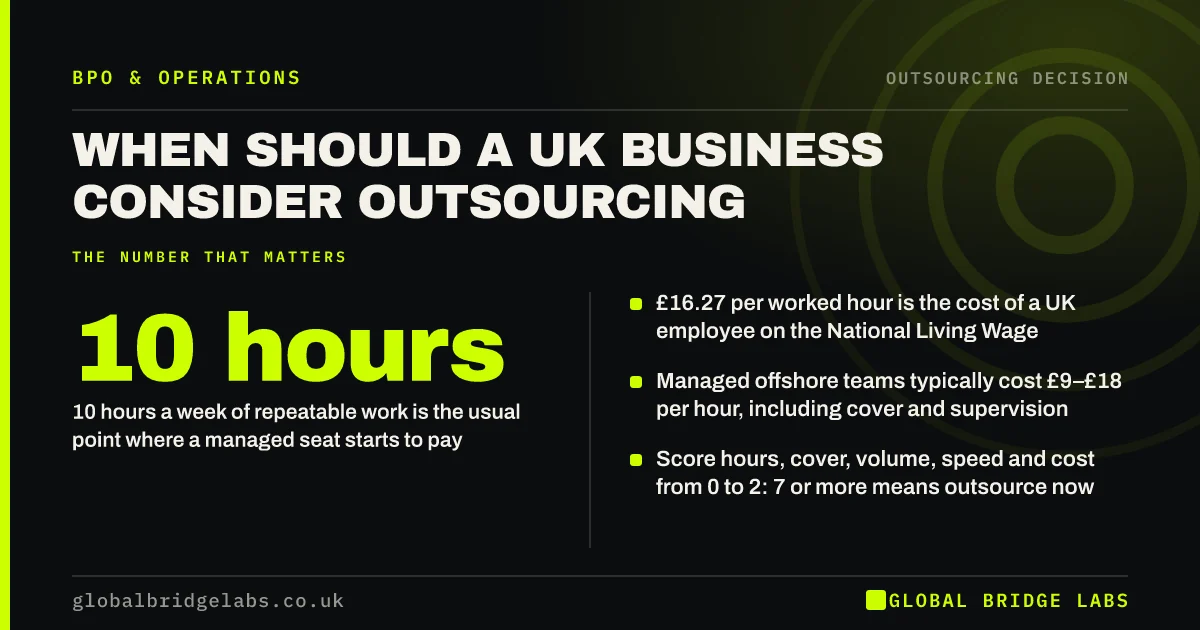
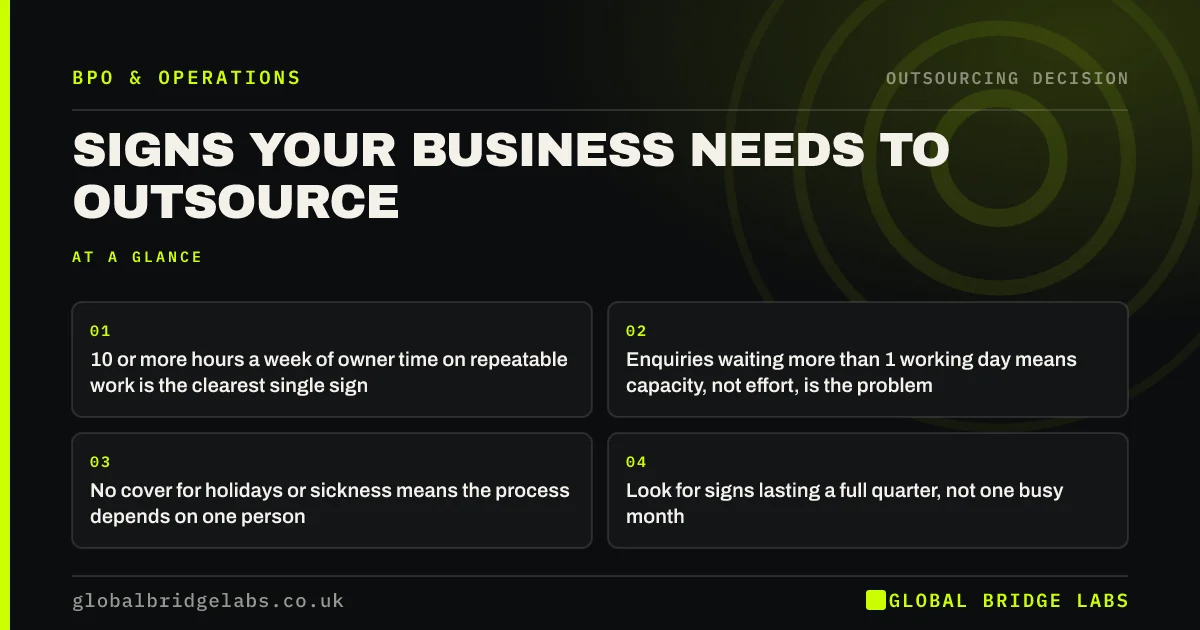
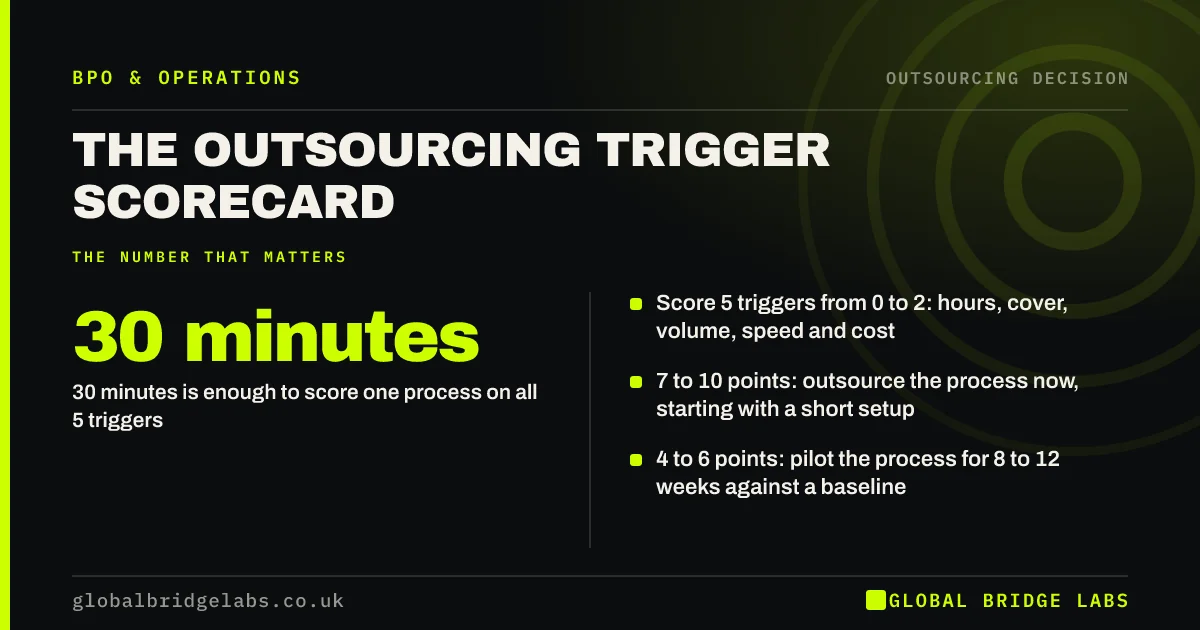
Outsource when the backlog is repeatable work, has grown for more than a month, and the gap is at least 10 hours a week. Data entry, order processing, email and invoicing backlogs are good candidates because they follow rules and are easy to check. A judgement-heavy backlog, such as complex complaints, points to a hire or a process fix instead.
What does a backlog cost?
A backlog costs money in three ways: delayed cash when invoices wait, lost sales when enquiries wait, and staff time spent handling chasers about the backlog itself. Customers who chase a late reply often contact you two or three times, so a backlog creates its own extra work.
UK businesses can charge statutory interest of 8% above the Bank of England base rate on late commercial payments, but only once they have invoiced. An invoicing backlog delays that clock too.
When is a backlog not a capacity problem?
When work waits for a decision rather than for effort. If items sit because they need the owner's approval, missing information from customers, or a broken system, adding people will not help. Fix the bottleneck first: delegate approvals, improve intake forms, or repair the tool.
How do you stop the backlog coming back?
Fix the gap that created it. A backlog returns whenever work arriving exceeds capacity again, so keep counting weekly volume after the clear-down and act when the trend turns. Set a simple rule, such as no item older than two working days, and treat any breach as a signal rather than a one-off.
Reduce the work arriving too. Better intake forms, clear customer instructions and automated updates cut the chasers and incomplete requests that inflate most backlogs.
- Keep counting waiting items every Monday.
- Set a maximum age for any item, such as two working days.
- Improve intake forms so work arrives complete.
- Send automatic status updates to cut chasers.
What does this look like in practice?
A pattern we see in UK manufacturers and wholesale brands: sales orders arriving by email and PDF wait two or three days to be keyed in, and the backlog grows every month end. Outsourcing order entry with a same-day target stops the growth, and the in-house team clears the old orders in two weeks.
Backlog checklist
Use this to decide what to do about a backlog.
- Count waiting items weekly by type for four weeks.
- Record the age of the oldest item.
- Check whether items wait for effort or for decisions.
- Route new work to extra capacity so the pile stops growing.
- Clear old items in planned batches.
- Outsource repeatable backlog types with a gap of 10 or more hours a week.
Next step
Send us what your backlog is made of and how fast it is growing. We will tell you whether outsourcing is the right fix and what a 30-day clear-down looks like.
Message us on WhatsApp with your backlog numbers, or book a 30-minute consultation.
Chat on WhatsApp →Sources and further reading
- Late commercial payments: charging interest and debt recovery · GOV.UK
- Work-related stress and how to manage it · Health and Safety Executive
- UK Customer Satisfaction Index · Institute of Customer Service
Frequently asked questions
How do I clear a work backlog quickly?
Stop it growing first by handling new work on time, using extra capacity if needed. Then clear old items in batches: close stale items, group similar ones and work through the rest by age. Clearing old and new work together usually leaves the team further behind.
Is a backlog a sign I need more staff?
A backlog that grows for four or more weeks is a sign capacity is below demand. Whether you need staff, an outsourced team or a process fix depends on the work. Repeatable backlogs suit outsourcing; judgement-heavy ones suit a hire.
Can I outsource just the backlog?
Yes, for repeatable work such as data entry or order processing, a short project to clear the backlog is common. It works best when the process is written down, and many businesses keep the team on afterwards to stop the backlog returning.
Written by

Global Bridge Labs (GBL) is a UK–Sri Lanka partner for social media, websites and BPO. Everything here comes from client delivery, not theory.