
On this page
- 01Key takeaways
- 02What is an extended development team?
- 03How is it different from hiring an agency?
- 04When does extending the team make sense?
- 05What does an extended team cost?
- 06How do you keep quality and ownership?
- 07When should you hire developers instead?
- 08What does this look like in practice?
- 09Extended team checklist
- 10Next step
- 11Sources and further reading
- 12Frequently asked questions
Key takeaways
An extended development team adds engineers from a partner to your own product team, working to your roadmap and standards, without permanent hires. It suits firms with an in-house technical lead and more work than their developers can deliver. Indicative market rates for offshore developers are £20–£40 per hour.
- Partner engineers work inside your team, to your roadmap.
- You need an in-house technical lead or product owner.
- £20–£40 per hour: indicative market range for offshore developers.
- Own the code, the repositories and the documentation from day one.
Roadmap longer than your team can deliver? Message us on WhatsApp with the backlog.
Chat on WhatsApp →What is an extended development team?
An extended development team is a group of software engineers supplied by an external partner who join a client's existing team for an ongoing period. They attend the same stand-ups, use the same tools and follow the same coding standards. The client directs the work. The partner employs and supports the people.
How is it different from hiring an agency?
A project agency takes a brief and delivers a result. An extended team supplies capacity that you direct. With an agency you buy an outcome and less day-to-day control. With an extension you keep control of priorities and architecture, and you need someone in-house able to lead engineers.
When does extending the team make sense?
Extending the team makes sense when you have a working product, a technical lead and a backlog that keeps growing. It also suits short-term needs for a skill you lack, such as mobile development or test automation. It works poorly when nobody inside can set technical direction or review code.
- A backlog larger than current capacity.
- A specific skill gap for six months or more.
- A deadline that hiring cannot meet.
- A wish to test demand before permanent hires.
What does an extended team cost?
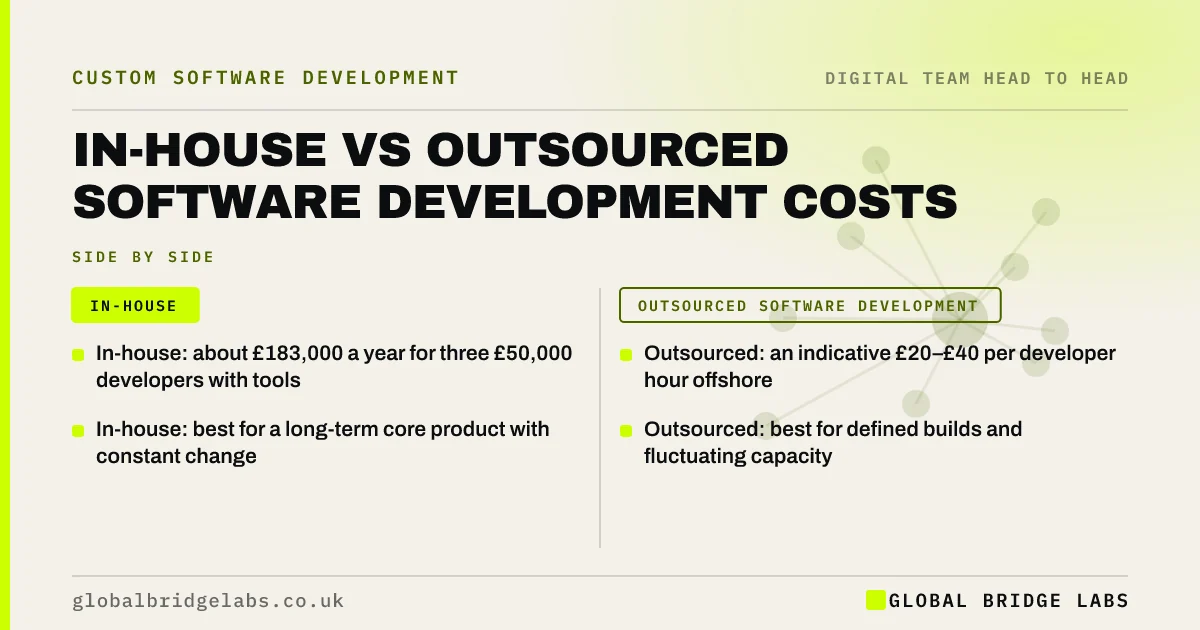
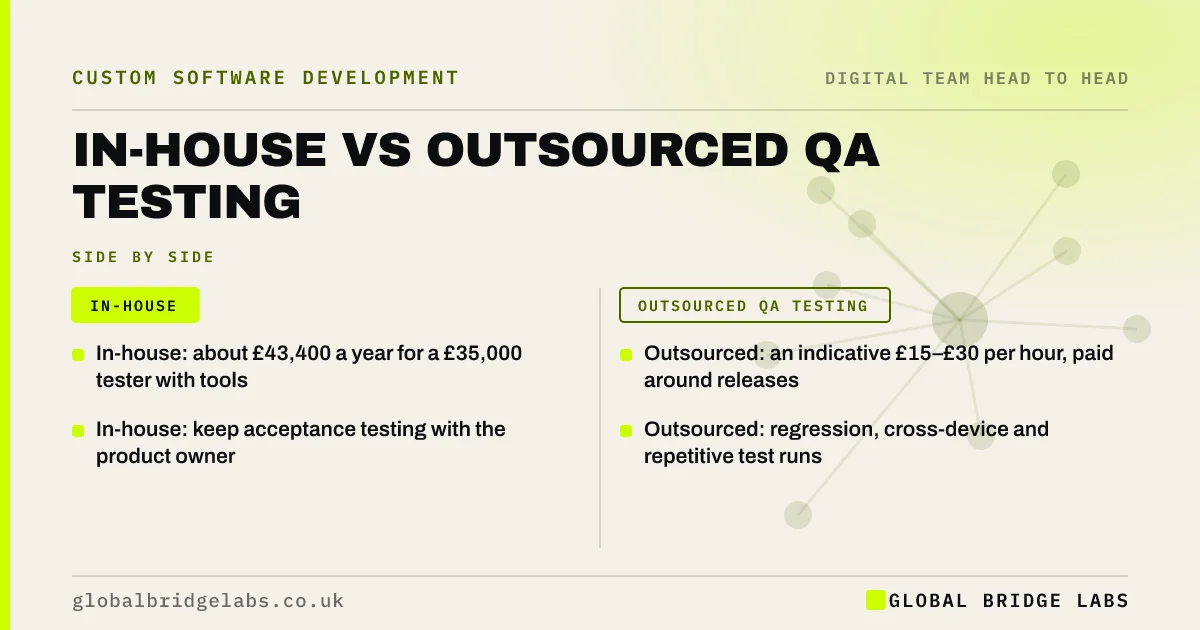
As indicative market ranges, offshore developers cost £20–£40 per hour and quality assurance engineers £15–£30 per hour through a managed partner. A UK developer's salary plus employer National Insurance, pension, recruitment fees and equipment is considerably higher per productive hour. Use the Office for National Statistics earnings tables to check local salary levels.
Want to discuss your requirements for extra engineering capacity? Send us your stack on WhatsApp.
Chat on WhatsApp →How do you keep quality and ownership?
Keep quality with code review, automated tests and a shared definition of done. Keep ownership by holding the repositories, cloud accounts and documentation in your own name, with intellectual property assigned to you in the contract. New engineers should be able to start from your documentation, not from someone's memory.
When should you hire developers instead?
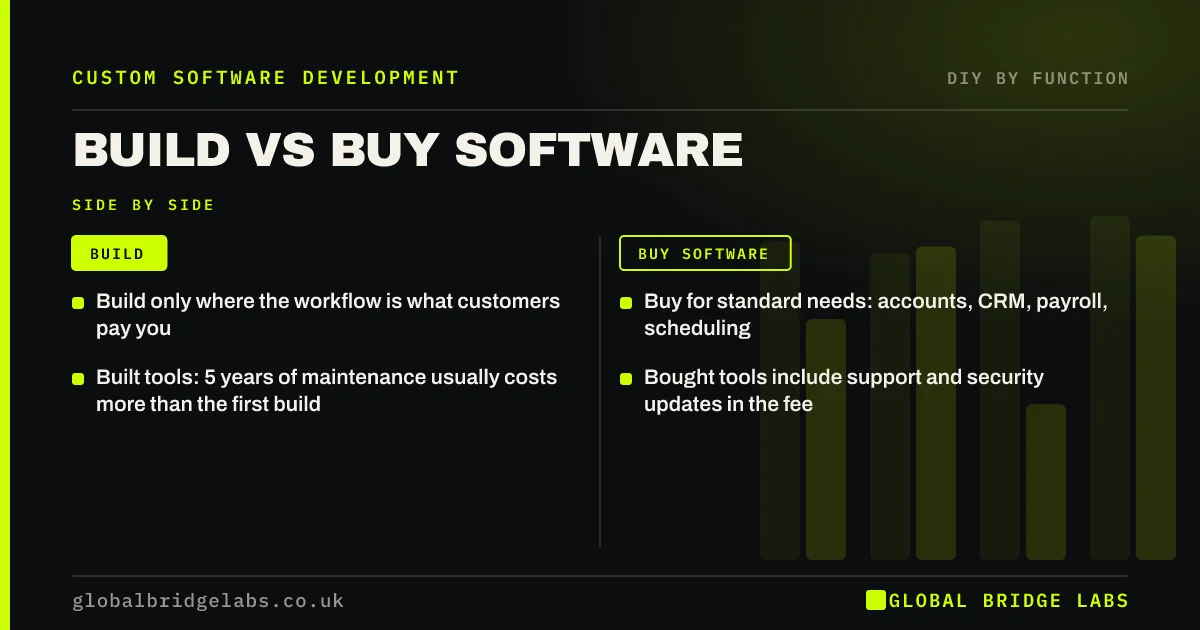
Hire when the role is central to your product for years, such as a lead engineer or architect, and when you want deep domain knowledge to stay in the business. A common shape is a small permanent core that owns architecture, with an extended team scaling up and down around the roadmap.
What does this look like in practice?
A pattern we see in UK firms with a small product team: two developers spend most of their time on support and fixes, and the roadmap has not moved in six months. Adding two partner engineers to take over maintenance, under the existing lead, frees the in-house pair for new features without opening a recruitment round.
Software development is a secondary service for Global Bridge Labs (GBL), delivered alongside our web and operations work.
Extended team checklist
Have these ready before engineers join.
- A named technical lead or product owner.
- A prioritised backlog for the next quarter.
- Repositories and cloud accounts in your name.
- Coding standards and a review process.
- A setup guide a new engineer can follow.
- Intellectual property and confidentiality terms.
- Overlapping working hours agreed.
Next step
Tell us about your product, your current team and the backlog. We will say whether an extended team fits and what you would need in place first.
Message us on WhatsApp to talk through team extension, or book a 30-minute consultation.
Chat on WhatsApp →Sources and further reading
- Earnings and hours worked, occupation by four-digit SOC: ASHE Table 14 · Office for National Statistics
- Rates and thresholds for employers 2026 to 2027 · HM Revenue & Customs
- How copyright protects your work · GOV.UK
Frequently asked questions
What is team extension in software development?
Team extension is adding engineers from an external partner to your own development team for an ongoing period. They work to your priorities, processes and standards alongside your staff. The partner handles their employment, equipment and replacement, while you direct the day-to-day work.
Is an extended team cheaper than hiring developers?
Often, particularly with offshore partners, where indicative rates are £20–£40 per hour. There are no recruitment fees, employer National Insurance or redundancy costs, and capacity can be reduced with notice. You still need to budget for in-house technical leadership and review time.
Who owns the code written by an extended team?
You should, and the contract must say so. Make sure intellectual property in all work is assigned to your company, that code lives in repositories you control, and that documentation is kept current. Do not rely on a verbal understanding about ownership.
How quickly can an extended team start?
With a clear backlog and a setup guide, engineers with the right skills can often join within two to four weeks. Productivity builds over the first month as they learn the codebase. Without documentation or a technical lead to onboard them, it takes considerably longer.
Written by

Global Bridge Labs (GBL) is a UK–Sri Lanka partner for social media, websites and BPO. Everything here comes from client delivery, not theory.