On this page
Key takeaways
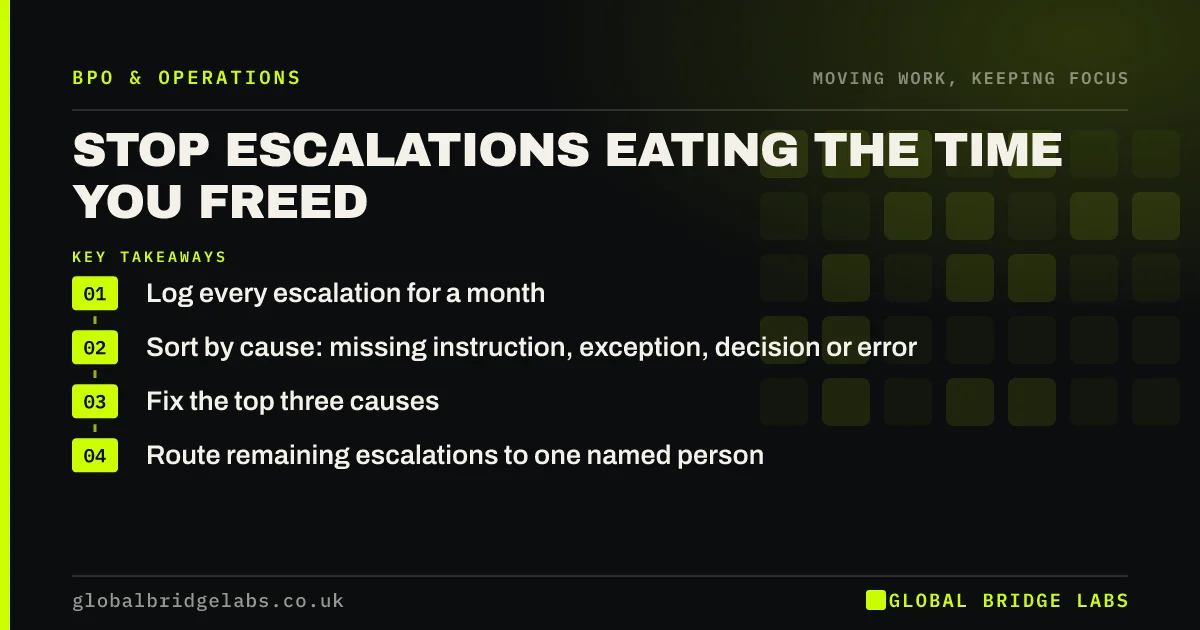
Escalations, issues the provider sends back to your team, can quietly eat the time outsourcing freed. A few are healthy; dozens a week mean instructions are incomplete or the scope is wrong. Log every escalation, sort them by cause, fix the instructions behind the most common causes and route the rest to one named person rather than whoever is free.
- Log every escalation for a month.
- Sort by cause: missing instruction, exception, decision or error.
- Fix the top three causes.
- Route remaining escalations to one named person.
Want help reducing provider escalations? Message us on WhatsApp.
Chat on WhatsApp →Why do escalations eat freed time?
Because each escalation interrupts someone, often a person whose time was freed for growth work. Ten escalations a day of five minutes each sounds small, but the interruptions break concentration and the total quickly reaches hours a week.
What causes too many escalations?
The Health and Safety Executive's guidance on human failure is useful for separating genuine errors from gaps in instructions.
- Missing instructions for common cases.
- Exceptions nobody documented.
- Decisions the provider is not authorised to make.
- Errors that need correcting.
- Unclear routing, so everything comes back to the same person.
How do you reduce them?
Log escalations for a month, sort by cause, fix the instructions behind the top causes and give the provider authority for routine decisions within agreed limits. Route the remainder to one named person. Data protection incidents are different: the provider must report them immediately, and serious breaches may need reporting to the ICO.
When are escalations a good sign?
When they catch genuine risks or exceptions early. Zero escalations can mean the provider is guessing. The aim is fewer routine escalations, not none.
What does this look like in practice?
A pattern we see: an account manager receives most of the provider's escalations because she wrote the original instructions. A month's log shows most are about two missing rules. Fixing those and routing the rest to the office manager restores her growth time.
Escalation checklist
- Log escalations for a month.
- Sort by cause.
- Fix the top three causes.
- Delegate routine decisions within limits.
- Route the rest to one named person.
Next step
Start an escalation log this week with three columns: date, cause and who handled it.
Message us on WhatsApp for an escalation log template, or book a 30-minute consultation.
Chat on WhatsApp →Sources and further reading
- Human factors: managing human failures · Health and Safety Executive
- Report a breach · Information Commissioner's Office
Frequently asked questions
Why does my outsourcing provider escalate so much?
Usually because instructions are missing for common cases, exceptions were never documented or the provider lacks authority for routine decisions. Logging escalations by cause for a month shows which instructions to fix. Escalations should fall steadily after the first few weeks.
How many escalations are normal?
It depends on the work, but escalations should fall month on month during the first quarter as instructions improve. A steady or rising volume after two months suggests gaps in instructions, scope or provider fit that need reviewing. Track the count monthly and discuss the top causes with the provider.
Who should handle escalations from an outsourcing provider?
One named person for routine matters, ideally not someone whose time was freed for growth work. Specialist issues go to the relevant expert. Data protection and compliance issues should go straight to whoever is responsible for them in your business.
Written by

Global Bridge Labs (GBL) is a UK–Sri Lanka partner for social media, websites and BPO. Everything here comes from client delivery, not theory.