On this page
Key takeaways
Patients choosing a private clinic want proof of safety and expertise. CQC-registered providers in England must display their latest CQC rating on their website. Beyond that, name your clinicians with their professional registrations, explain treatments and fees clearly, avoid exaggerated health claims and show genuine patient feedback.
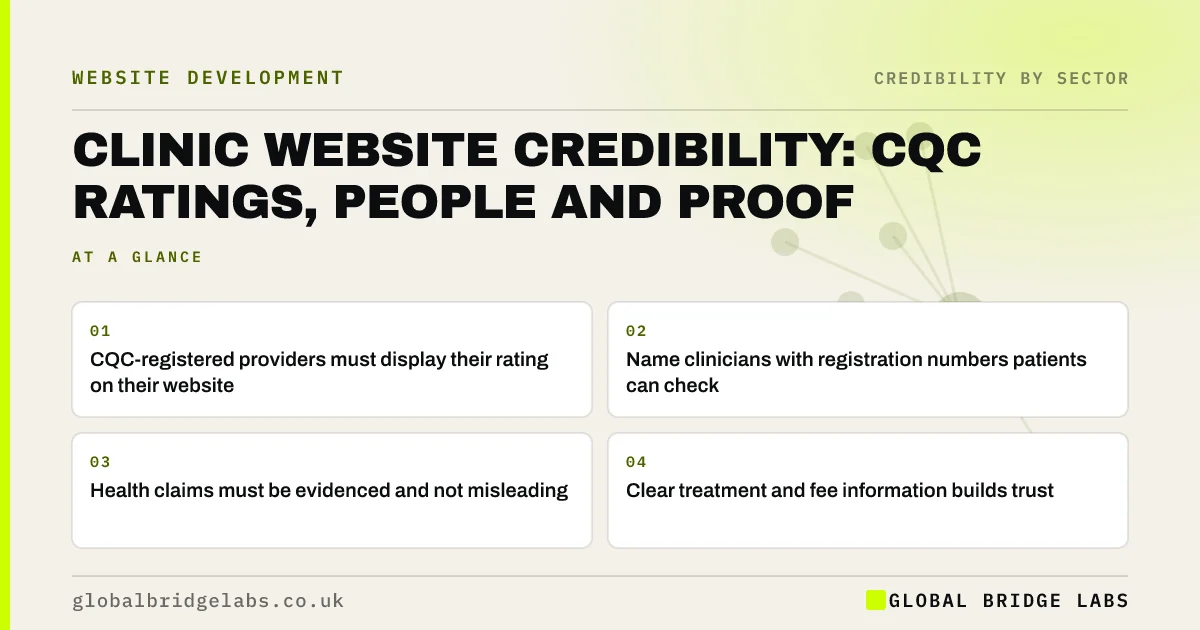
- CQC-registered providers must display their rating on their website.
- Name clinicians with registration numbers patients can check.
- Health claims must be evidenced and not misleading.
- Clear treatment and fee information builds trust.
Want your clinic website reviewed for credibility? Message us on WhatsApp.
Chat on WhatsApp →Must clinics display their CQC rating?
Yes, in England. Providers registered with the Care Quality Commission (CQC) must display their most recent rating on their website and at their premises, under the regulation on displaying performance assessments. The CQC provides a widget for this. A visible, current rating is both compliance and a strong credibility signal.
What else do patients check?
Patients look for evidence of who will treat them and how.
- Named clinicians with GMC, GDC, NMC or HCPC registration.
- Qualifications and experience in the treatment offered.
- Clear treatment information, risks and aftercare.
- Fees, consultation costs and what is included.
- Genuine reviews and how to make a complaint.
What are the rules on health claims?
Health and treatment claims on your website are covered by the CAP Code, which requires robust evidence for efficacy claims. Prescription-only medicines cannot be advertised to the public. Before-and-after images must not mislead. Careful, evidenced wording is safer and more credible than promises.
- Website claims and the CAP Code: what UK firms can say
- Cite your sources: back up the numbers on your website
Want your treatment pages checked for claims and clarity? Message us on WhatsApp and we will discuss your requirements.
Chat on WhatsApp →What costs a clinic's site credibility?
Stock photos of models instead of real clinicians and rooms, missing or outdated CQC ratings, unexplained prices, exaggerated results and slow replies to booking enquiries. Patients are anxious; anything that looks careless suggests the care may be too.
What does this look like in practice?
A pattern we see: a clinic's site shows practitioners by first name only, with stock imagery, and the CQC rating on a single 'About' page. Adding full names, registration numbers, real clinic photos and the CQC widget on the homepage and treatment pages gives patients the reassurance they look for.
Clinic website checklist
- Display the current CQC rating, ideally via the widget.
- Name clinicians with registration numbers.
- Use real photos of staff and rooms.
- Explain treatments, risks and fees clearly.
- Check health claims against the CAP Code.
- Answer booking enquiries promptly.
Next step
Check your CQC rating appears on your homepage and is the latest one. Then add registration numbers for each clinician.
Message us on WhatsApp for a clinic website review, or book a 30-minute consultation.
Chat on WhatsApp →Sources and further reading
- Display your CQC ratings · Care Quality Commission
- The fundamental standards of care · Care Quality Commission
- UK Code of Non-broadcast Advertising and Direct & Promotional Marketing (CAP Code) · ASA / CAP
Frequently asked questions
Do I have to show my CQC rating on my website?
Yes, if you are a CQC-registered provider in England with a rating. You must display your most recent rating on your website and at your premises. The CQC offers a widget that keeps the displayed rating up to date.
What should a private clinic website include?
Your CQC rating, named clinicians with professional registrations, clear treatment information including risks, fees, how to book, real photos, genuine reviews and a complaints process. Keep claims evidenced and avoid exaggeration.
Can clinics show before-and-after photos?
They can, if images are genuine, unaltered and representative, and if they do not mislead about typical results. Get patient consent and follow CAP Code rules for health and cosmetic claims.
Written by

Global Bridge Labs (GBL) is a UK–Sri Lanka partner for social media, websites and BPO. Everything here comes from client delivery, not theory.