Short, practical writing on visibility, conversion and capacity, from the team doing the work for 120+ UK startups, SMEs and enterprises.
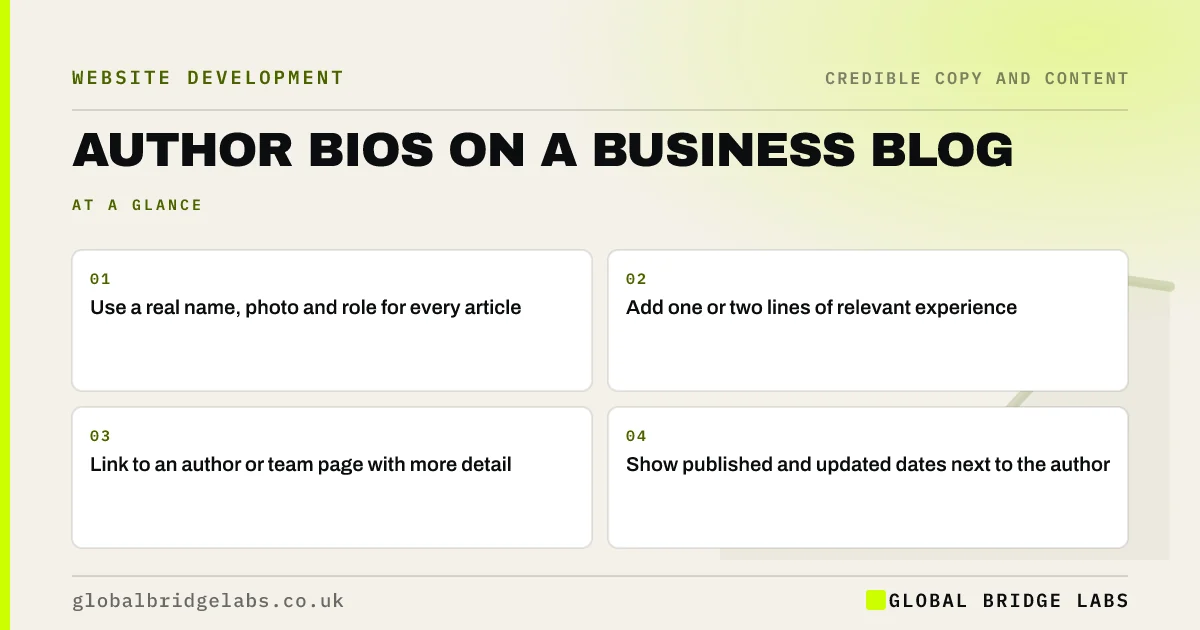
Author bios on a business blog show readers and search engines who wrote the advice and why to trust it. What to include and how to keep them credible.
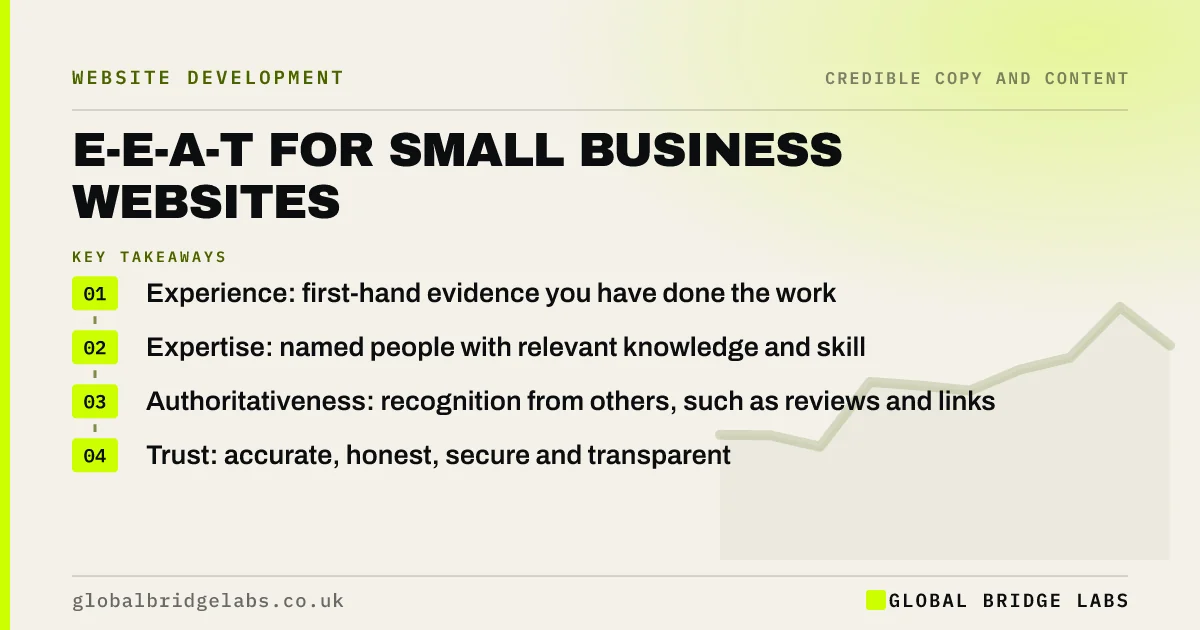
E-E-A-T for small business websites explained: experience, expertise, authoritativeness and trust, what Google means by each and what to show on your site.
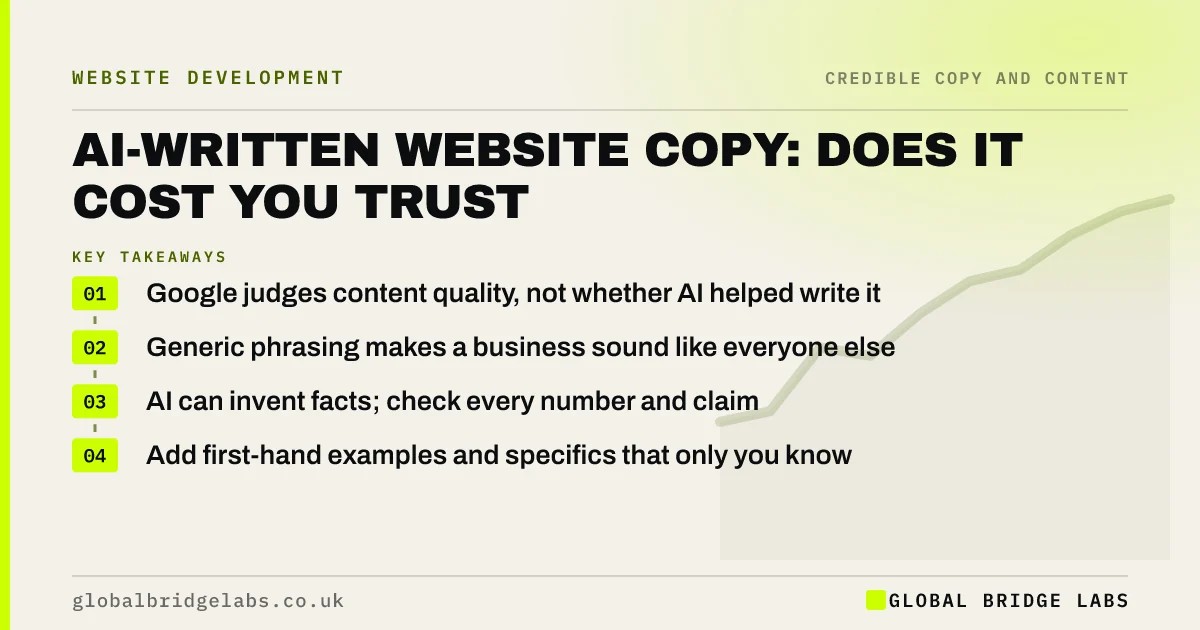
Does AI-generated website content cost trust? What Google says, why generic copy hurts credibility and how to use AI without sounding like it.
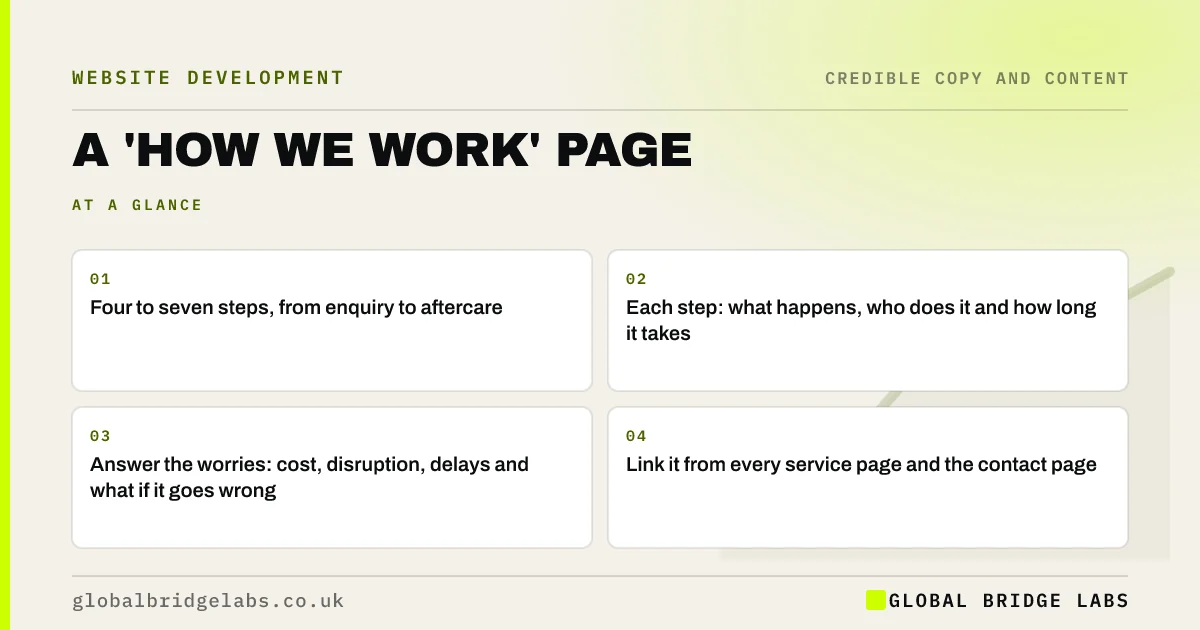
A 'How we work' page shows your process step by step, making a service easier to believe and safer to buy. What to include and where to link it.
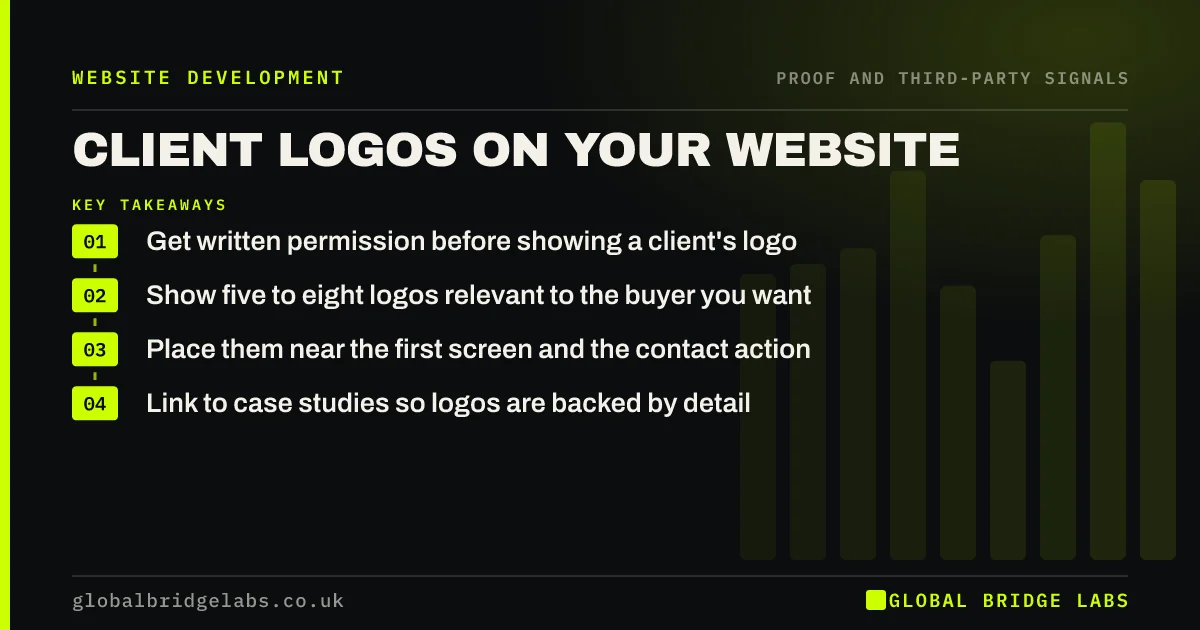
Client logos build credibility fast, if you have permission and they are real. Where to place them, how many to show and what to pair them with.
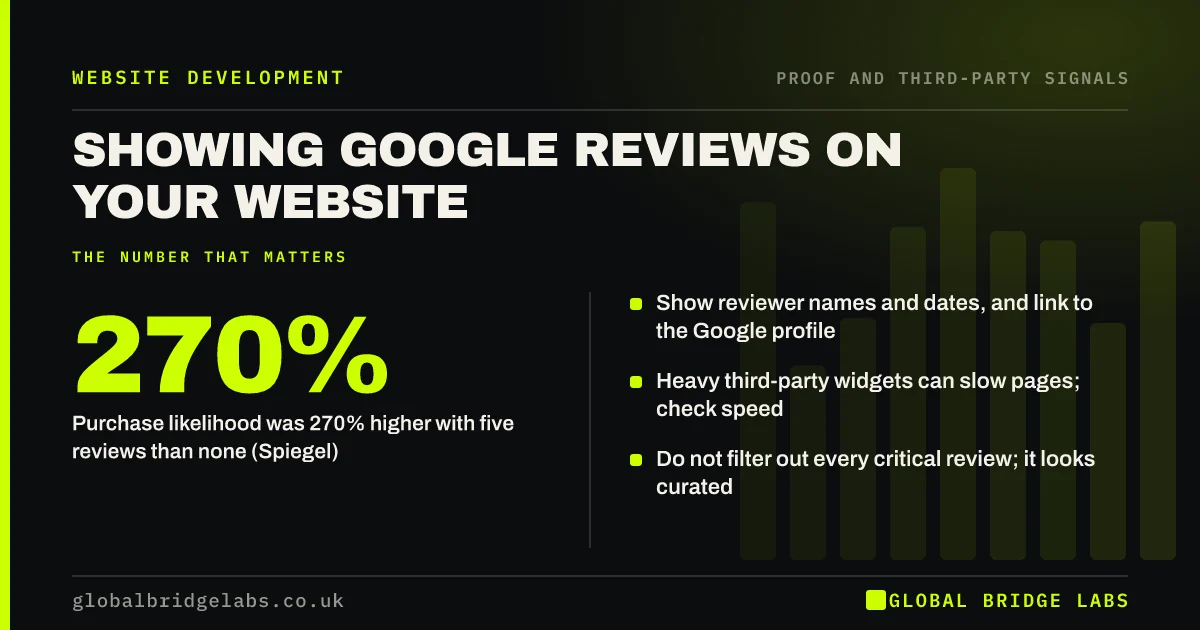
How to show Google reviews on your website: widgets, quotes and links, what Google's policies allow, the speed trade-off and how to keep reviews credible.
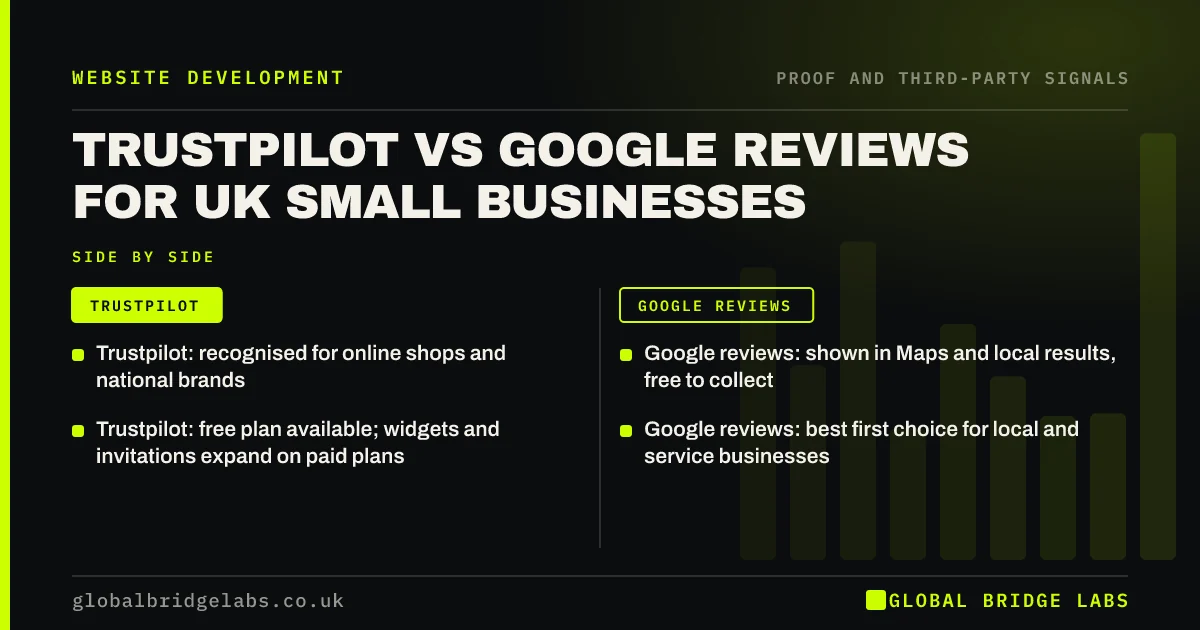
Trustpilot vs Google reviews for UK small businesses: where buyers look, what each costs, how each shows on your website and which to prioritise first.
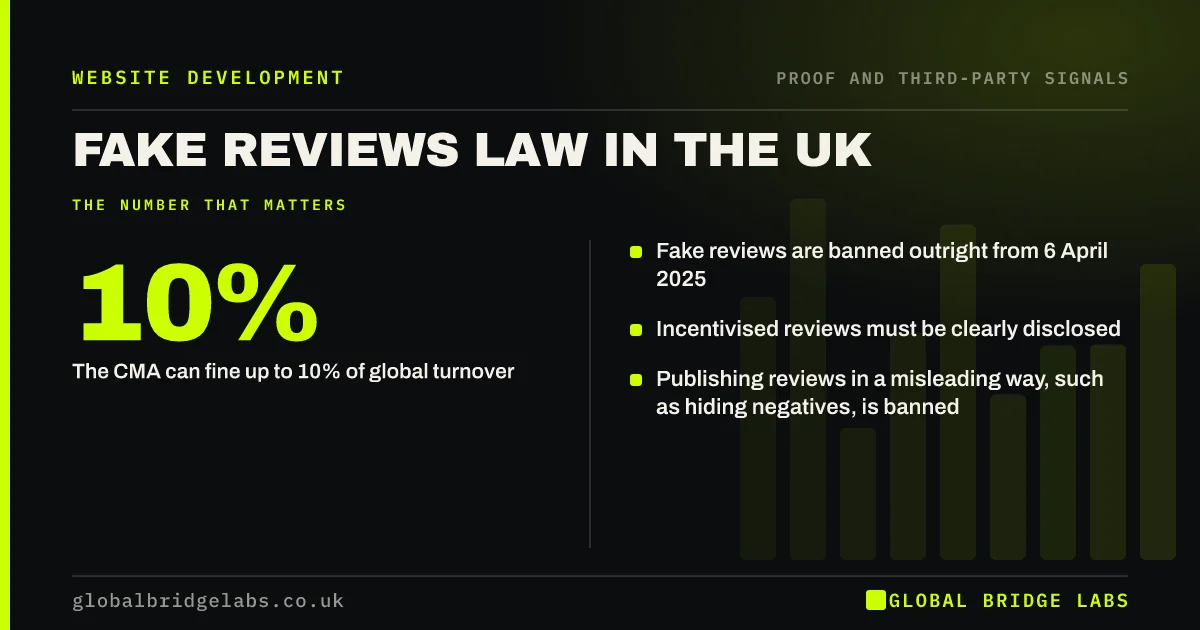
Fake reviews law in the UK: what the DMCC Act 2024 bans from April 2025, what counts as a fake or hidden incentivised review and what businesses must do.
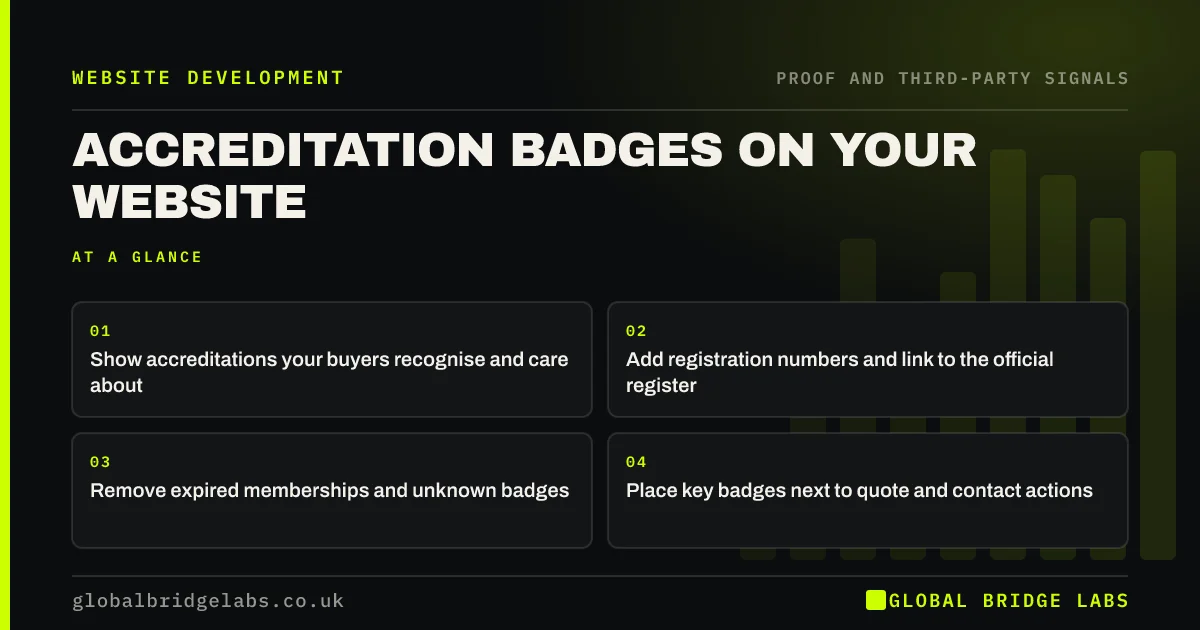
Accreditation badges on your website: which logos build credibility, how to make them verifiable, where to place them and which badges to leave off.
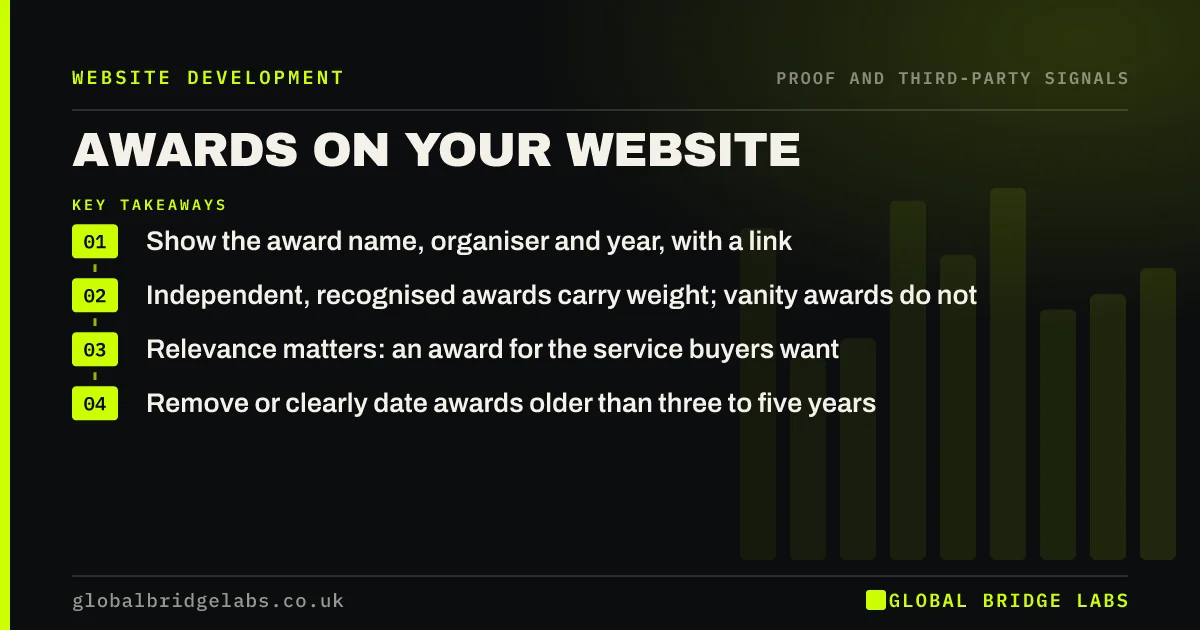
Displaying awards on your website: which awards build credibility, how to present them honestly and why pay-to-win awards can backfire with buyers.
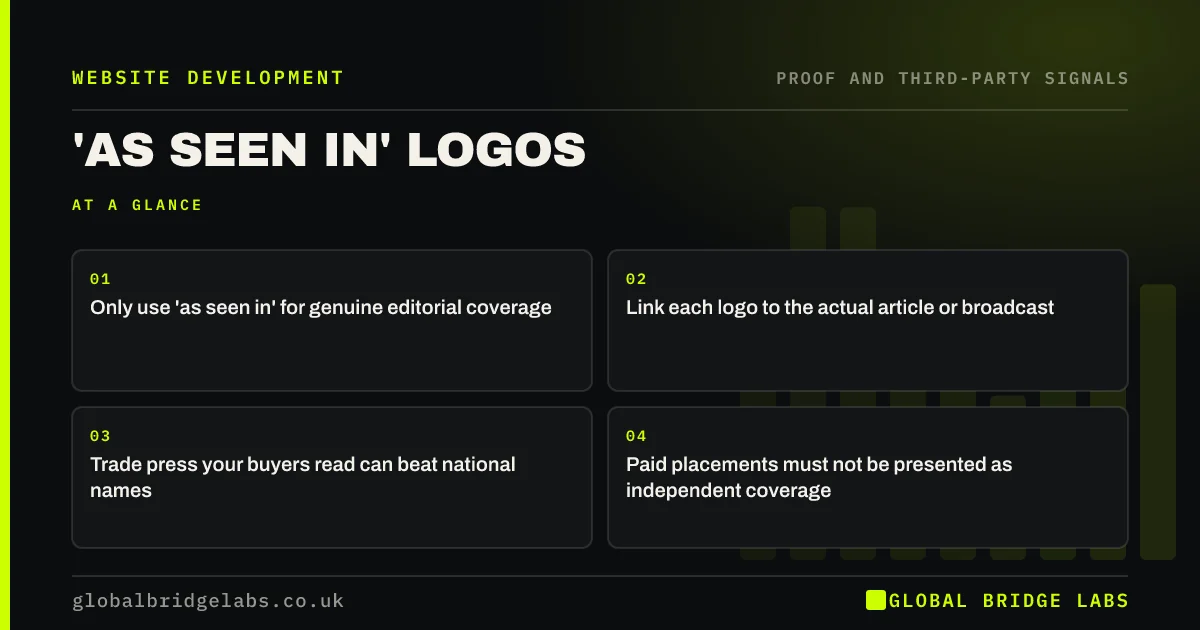
'As seen in' press logos on your website: when they build trust, the honesty rules that apply and how to link coverage so buyers can check it.
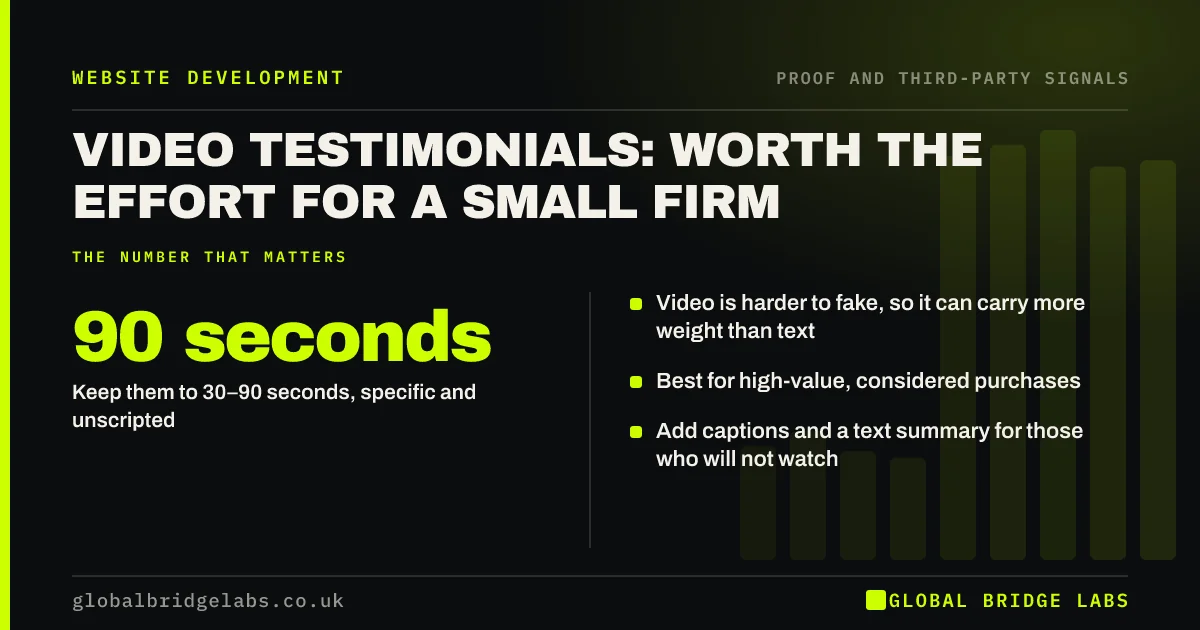
Are video testimonials worth it for a small business website? When video adds credibility over text reviews, how to film them simply and what to avoid.
30 minutes with our team and you'll know exactly which of the three problems to fix first.
