On this page
- 01Key takeaways
- 02Does website cost go up per page?
- 03What does an extra page cost?
- 04Why do layouts matter more than pages?
- 05When are more pages worth paying for?
- 06When should you avoid adding pages?
- 07What does this look like in practice?
- 08Page cost checklist
- 09Next step
- 10Sources and further reading
- 11Frequently asked questions
Key takeaways
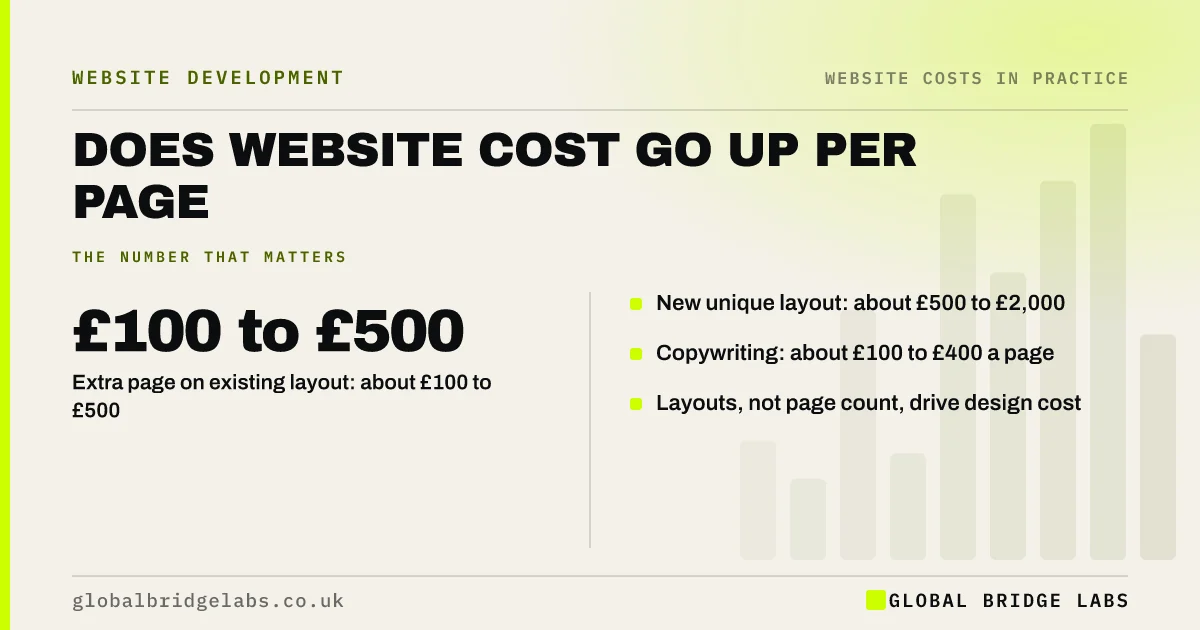
Website cost does rise with pages, but less than people expect. Extra pages built from an existing layout typically cost £100 to £500 each, mainly for content and checking, while each new unique layout can cost £500 to £2,000 to design and build. Count unique layouts and copy, not just pages, when estimating cost.
- Extra page on existing layout: about £100 to £500.
- New unique layout: about £500 to £2,000.
- Copywriting: about £100 to £400 a page.
- Layouts, not page count, drive design cost.
Want your page plan costed? Message us on WhatsApp.
Chat on WhatsApp →Does website cost go up per page?
Website cost goes up with pages mainly through content and checking, not design. Once a layout exists, adding a page that uses it costs relatively little. New unique layouts cost much more. That is why a 20-page site built from three layouts can cost less than eight pages each designed differently.
What does an extra page cost?
An extra page built from an existing layout typically costs about £100 to £500, covering setup, content loading and checks. If the supplier writes the copy, add about £100 to £400. A page needing a new layout costs about £500 to £2,000 to design and build.
- Existing layout: about £100 to £500.
- Plus copy if written for you: about £100 to £400.
- New layout: about £500 to £2,000.
Want extra pages priced for your site? Message us on WhatsApp and we will discuss your requirements.
Chat on WhatsApp →Why do layouts matter more than pages?
Layouts matter more because design, development and testing happen once per layout. Each layout must be tested on phones and for accessibility to WCAG 2.2 AA. Reusing layouts across pages spreads that cost.
When are more pages worth paying for?
More pages are worth paying for when each targets a distinct service, location or buyer question, because focused pages can rank and convert better than one long page. Pages that repeat each other add cost without value.
When should you avoid adding pages?
Avoid adding pages for minor services, thin location variants or content nobody will maintain. They add cost, care time and clutter. A few strong pages beat many weak ones.
What does this look like in practice?
At Global Bridge Labs (GBL), a UK roofing firm thought 15 pages would cost three times as much as five. With one service page layout reused for ten services, the extra ten pages added about £2,500, mostly copy, rather than tripling the build price.
Page cost checklist
- List pages and group them by layout.
- Count unique layouts.
- Price copy per page.
- Add pages only for distinct needs.
- Ask the cost of a page added later.
- Avoid thin or repeated pages.
Next step
Group your planned pages by layout. The number of groups is a better guide to design cost than the number of pages.
Message us on WhatsApp for a page plan template, or book a 30-minute consultation.
Chat on WhatsApp →Sources and further reading
- SEO Starter Guide · Google Search Central
- Web Content Accessibility Guidelines (WCAG) 2.2 · W3C
- How copyright protects your work · GOV.UK
Frequently asked questions
How much does it cost to add a page to a website?
Adding a page that uses an existing layout typically costs about £100 to £500, plus about £100 to £400 if the supplier writes the copy. A page needing a new layout costs more, about £500 to £2,000, because it must be designed, built and tested.
Do web designers charge per page?
Some do for simple sites, but most price by scope: unique layouts, features, content and testing. Per-page pricing can mislead because pages using the same layout cost far less than unique ones. Ask how many layouts a quote includes and what extra pages cost.
Is a website with more pages better for SEO?
Only if each page answers a distinct search need, such as a separate service or location. Focused pages can rank better than one long page. Thin, repeated pages add cost without helping search and can weaken the site overall.
Written by

Global Bridge Labs (GBL) is a UK–Sri Lanka partner for social media, websites and BPO. Everything here comes from client delivery, not theory.