On this page
- 01Key takeaways
- 02What is an annual website budget?
- 03What goes in the annual budget?
- 04What does a worked example look like?
- 05How should you plan by quarter?
- 06When is a simple annual figure enough?
- 07What does this look like in practice?
- 08Annual budget checklist
- 09Next step
- 10Sources and further reading
- 11Frequently asked questions
Key takeaways
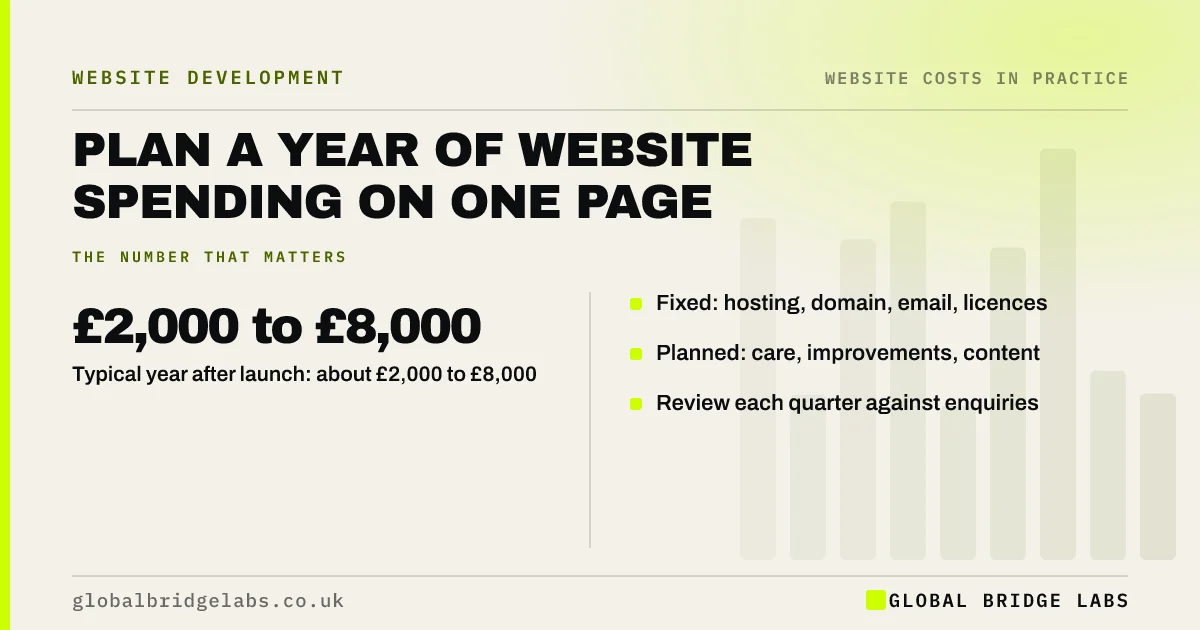
An annual website budget plans a year of spending on one page: fixed running costs, care, planned improvements, content and a small contingency. For a typical UK small business site, that is often £2,000 to £8,000 a year after launch. Planning by quarter ties spending to goals and stops the site being forgotten until it breaks.
- Typical year after launch: about £2,000 to £8,000.
- Fixed: hosting, domain, email, licences.
- Planned: care, improvements, content.
- Review each quarter against enquiries.
Want an annual website plan? Message us on WhatsApp.
Chat on WhatsApp →What is an annual website budget?
An annual website budget is a one-page plan of what you will spend on the website over the next twelve months, split into fixed running costs, care, planned improvements, content and contingency. It treats the site as an ongoing asset, not a one-off purchase.
What goes in the annual budget?
The annual budget includes fixed renewals, a care plan and a schedule of improvements tied to goals. Each line has a cost and a month.
- Fixed renewals: hosting, domain, email, licences.
- Care: updates, backups, security.
- Improvements: new pages, tests, speed work.
- Content: case studies, updates, photos.
- Contingency: about 10%.
Want your annual plan built around your goals? Message us on WhatsApp and we will discuss your requirements.
Chat on WhatsApp →What does a worked example look like?
A worked example for a ten-page service site: renewals £600, care at £100 a month, £1,200; two new service pages in quarter one, £800; a case study each quarter, £1,200; speed and conversion work in quarter three, £1,000; contingency £500. Total about £5,300.
How should you plan by quarter?
Plan by quarter so each block of spending has a goal, such as more enquiries for one service. Review enquiries tracked as key events at the end of each quarter, and move budget towards what worked.
When is a simple annual figure enough?
A simple annual figure is enough for very small sites with only renewals and occasional edits. Once the site is expected to bring regular enquiries, quarterly planning pays off.
What does this look like in practice?
At Global Bridge Labs (GBL), a UK property management firm moved from ad hoc website spending to a one-page annual plan of about £4,800. Quarterly reviews showed new landlord guides brought most enquiries, so quarter four's budget moved from design tweaks to two more guides.
Annual budget checklist
- List fixed renewals with dates.
- Price care for the year.
- Schedule improvements by quarter.
- Plan content for each quarter.
- Add a 10% contingency.
- Review against enquiries each quarter.
Next step
Draw four boxes for the four quarters and put one website goal and cost in each. That is your annual plan.
Message us on WhatsApp for an annual website budget template, or book a 30-minute consultation.
Chat on WhatsApp →Sources and further reading
- About key events · Google Analytics Help
- VAT rates · GOV.UK
- SEO Starter Guide · Google Search Central
Frequently asked questions
How much should a small business spend on its website each year?
After launch, many UK small businesses spend about £2,000 to £8,000 a year on their website, covering renewals, care, improvements and content. Simpler sites spend less; sites central to winning work often spend more. Base it on goals and review against enquiries each quarter.
What ongoing website costs should I plan for?
Plan for hosting, domain, business email, plugin or app licences, care for updates and security, planned improvements such as new pages, content such as case studies, and a contingency. Add VAT if you cannot reclaim it. Review the list each year.
Should website spending be planned monthly or yearly?
Plan yearly with quarterly reviews. A yearly view captures renewals and larger improvements, while quarterly reviews let you move budget towards what brings enquiries. Monthly tracking of actual costs still helps cash flow, especially for subscriptions that are billed monthly.
Written by

Global Bridge Labs (GBL) is a UK–Sri Lanka partner for social media, websites and BPO. Everything here comes from client delivery, not theory.