On this page
- 01Key takeaways
- 02Is website cost really based on the number of pages?
- 03Is a website a one-off cost?
- 04Are website builders free?
- 05Does a more expensive website always perform better?
- 06Other myths worth dropping
- 07When are the myths partly true?
- 08What does this look like in practice?
- 09Myth-busting checklist
- 10Next step
- 11Sources and further reading
- 12Frequently asked questions
Key takeaways
The most damaging website cost myths are that price depends on page count, that a website is a one-off cost, that builders are free and that a dearer site always performs better. In reality, cost is driven by scope, content and integrations, and running costs often equal the build within three years. Budget for the job the site must do.
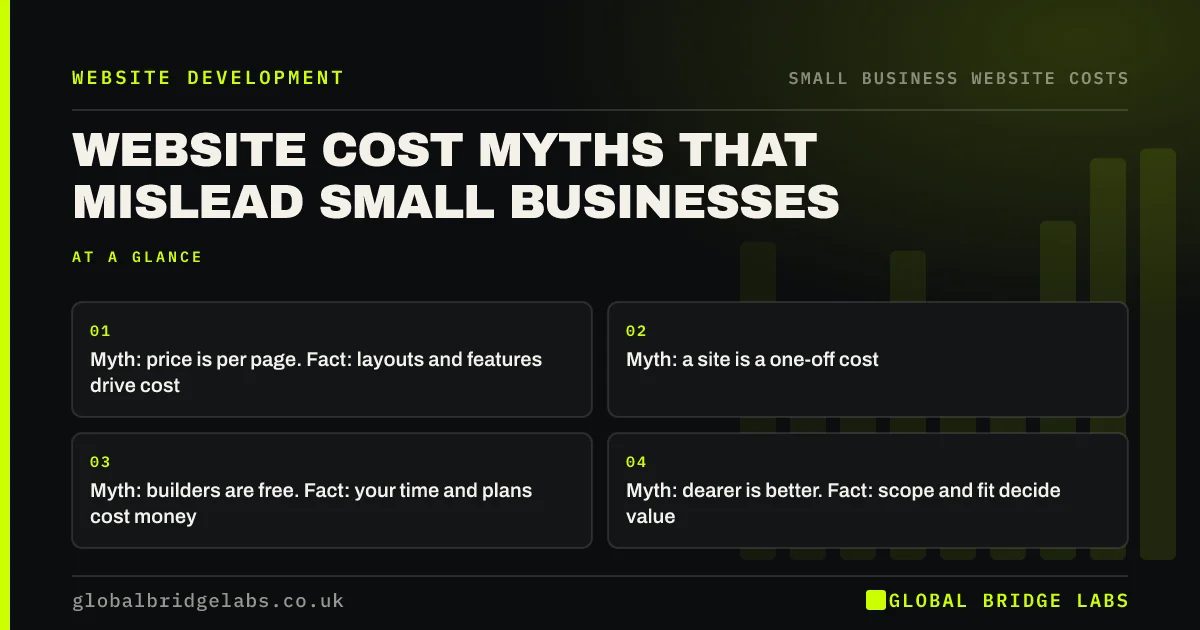
- Myth: price is per page. Fact: layouts and features drive cost.
- Myth: a site is a one-off cost. Fact: running costs recur.
- Myth: builders are free. Fact: your time and plans cost money.
- Myth: dearer is better. Fact: scope and fit decide value.
Want your website budget sanity-checked? Message us on WhatsApp.
Chat on WhatsApp →Is website cost really based on the number of pages?
No. Website cost is based mainly on unique layouts, content and features, not page count. Twenty service pages built from one template can cost less than five pages each designed from scratch. Pages still matter for copy and loading time, but integrations and design work drive most of the price.
Is a website a one-off cost?
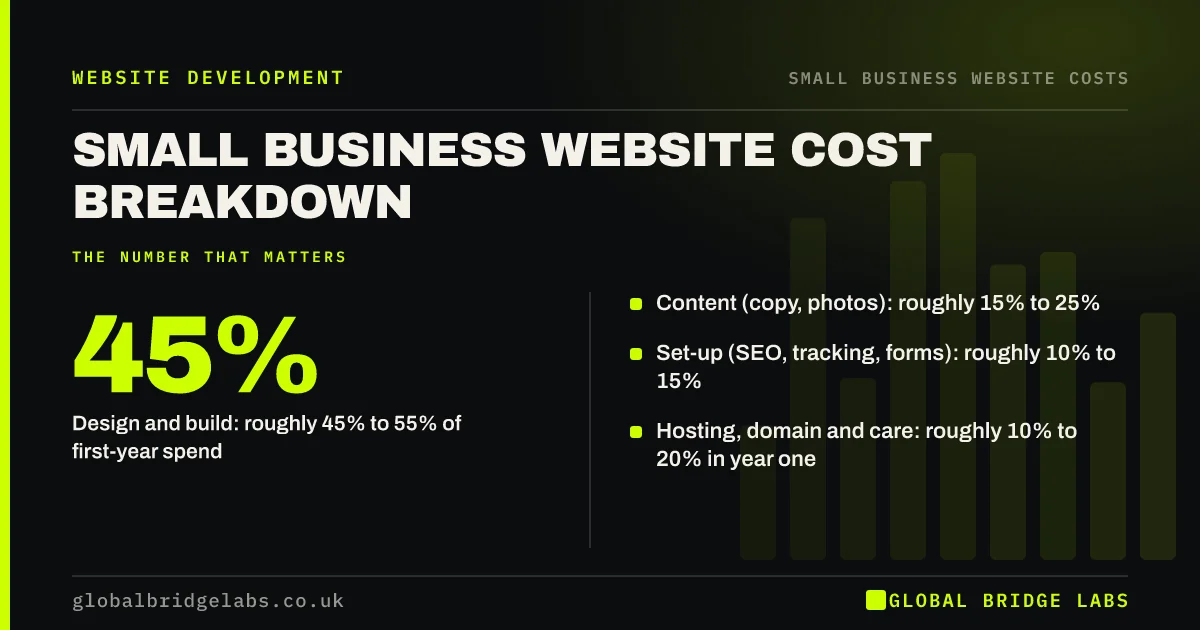
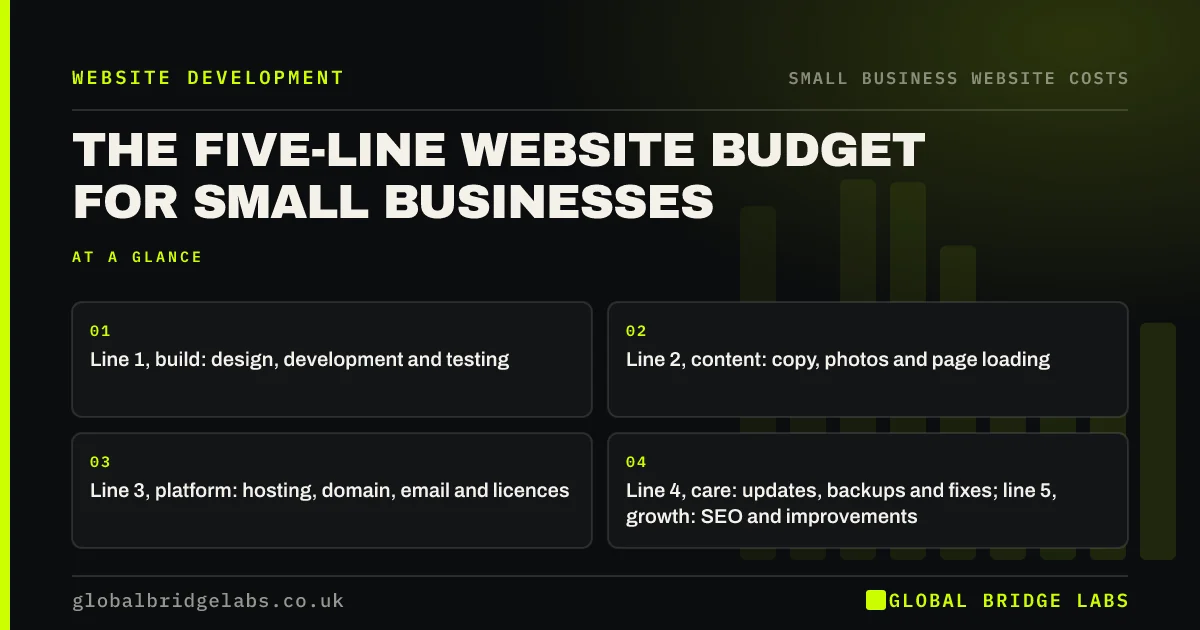
No. A website has a one-off build cost and recurring costs for hosting, domain, email, licences and care. For a typical small business site these run about £50 to £500 a month. Over three years, running costs can match or exceed the build price, so they belong in the budget from the start.
Are website builders free?
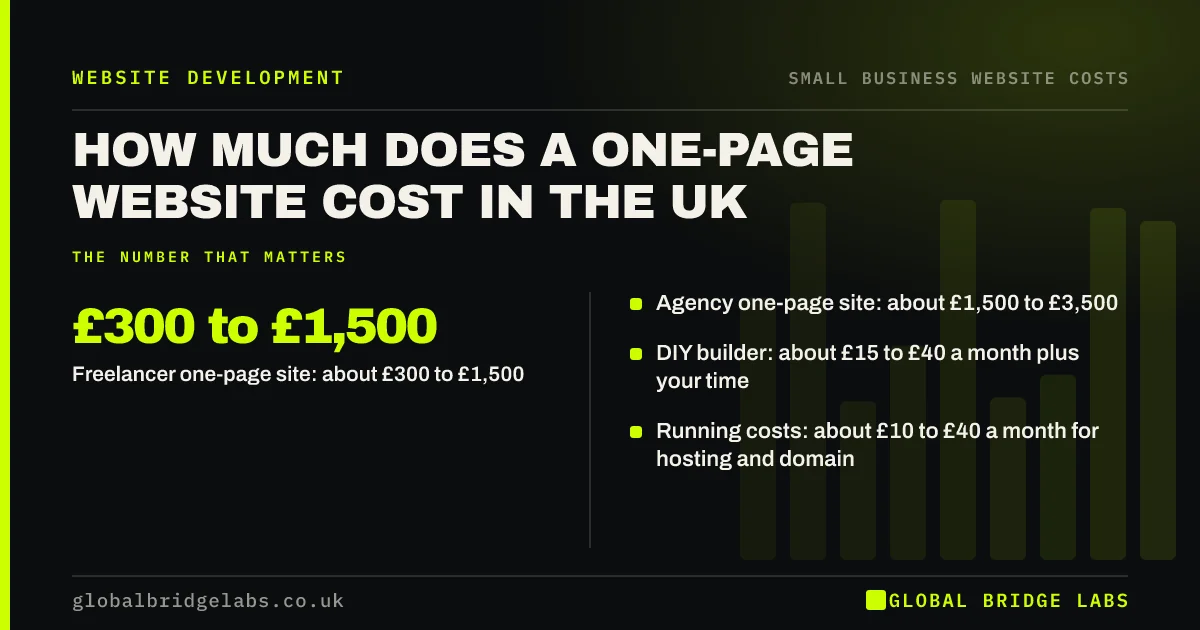
No. Website builders have free plans, but business features such as your own domain, no adverts and online booking need paid plans, typically £15 to £40 a month. The larger cost is your time: writing, designing, testing and updating the site yourself.
Does a more expensive website always perform better?
No. A more expensive website only performs better if the extra money goes on things that affect results: clear copy, proof, speed, accessibility to WCAG 2.2 AA and tracking. Money spent on animation or bespoke design for its own sake can make a site slower and no more effective.
Want to see where your budget would make the most difference? Message us on WhatsApp and we will discuss your requirements.
Chat on WhatsApp →Other myths worth dropping
Several smaller myths also distort budgets. Each leads owners to underpay for the parts that matter or overpay for parts that do not.
- SEO is a one-time set-up: it needs steady work.
- Security is the host's job: updates are usually yours.
- Copy can be added later: it shapes the whole design.
- Offshore always means low quality: management decides quality.
When are the myths partly true?
Some myths are partly true. Page count does affect copywriting and loading time. A simple hosted builder site can have very low running costs. And for tiny sites, a fixed-price package may be the simplest option. The myth is treating any one of these as the whole picture.
What does this look like in practice?
At Global Bridge Labs (GBL), we often see owners ask for fewer pages to save money. A UK logistics firm cut its plan from twelve pages to six, but kept a custom quote calculator. The saving was about £600; the calculator cost £3,000. Removing the calculator would have saved more and lost little.
Myth-busting checklist
- Ask what drives cost in each quote.
- Budget for running costs.
- Value your own time on DIY sites.
- Spend on copy, proof, speed and tracking first.
- Price features one by one.
- Keep care in place after launch.
Next step
Take your current budget and mark which lines are based on one of these myths. Rework those lines before asking for quotes.
Message us on WhatsApp for a website budget review, or book a 30-minute consultation.
Chat on WhatsApp →Sources and further reading
- SEO Starter Guide · Google Search Central
- Small Business Guide: cyber security · National Cyber Security Centre
- Web Content Accessibility Guidelines (WCAG) 2.2 · W3C
Frequently asked questions
What is the biggest misconception about website cost?
The biggest misconception is that a website is a one-off cost. Every site has recurring costs for hosting, domain, licences and care, typically £50 to £500 a month for a small business. Over three years these can match the build price. Budgeting for the build alone leaves the site underfunded.
Do more pages make a website more expensive?
More pages add copywriting and loading time, but they matter less than unique layouts, custom design and features such as booking, payments or integrations. Ten pages built from two templates can cost less than five pages each designed separately. Ask suppliers what drives the price in their quote.
Is it true that a website pays for itself?
A website can pay for itself if it brings enquiries or sales worth more than it costs to build and run. Many do. But it only happens if the site is found, makes the offer clear and is measured. Track enquiries from launch so you can see when it has paid back.
Written by

Global Bridge Labs (GBL) is a UK–Sri Lanka partner for social media, websites and BPO. Everything here comes from client delivery, not theory.