On this page
Key takeaways
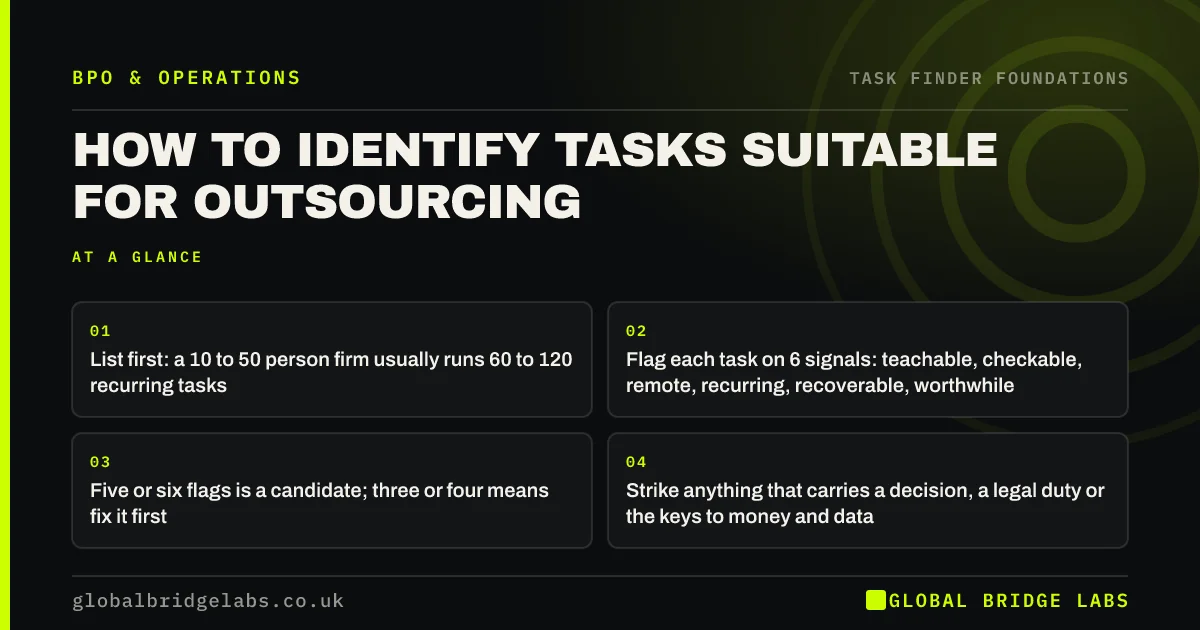
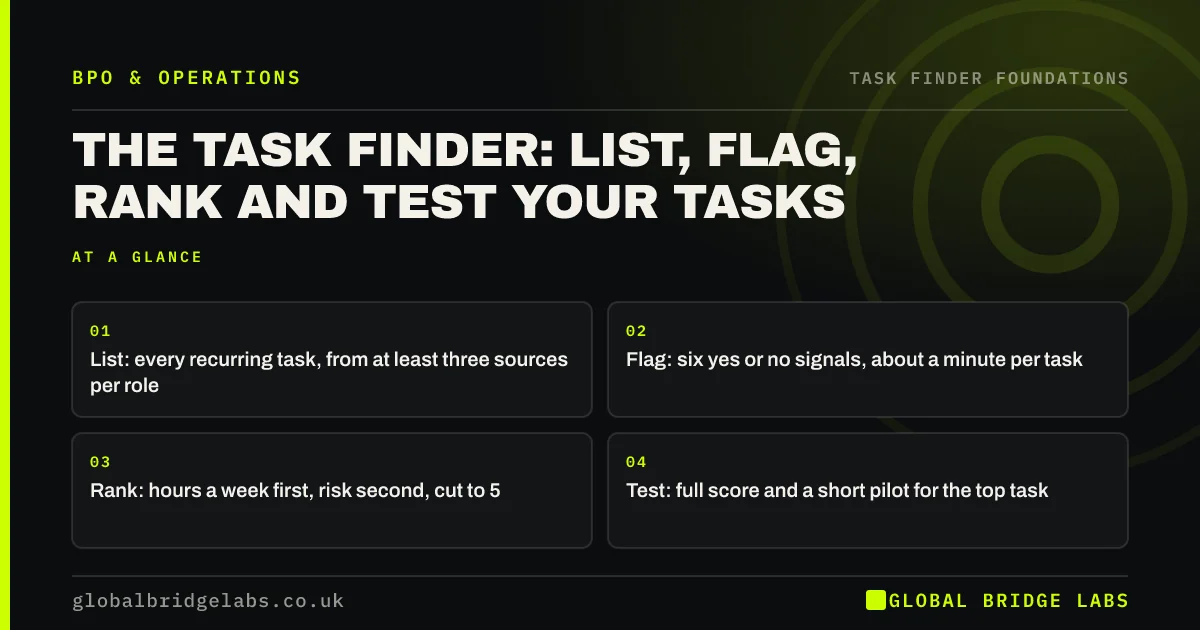
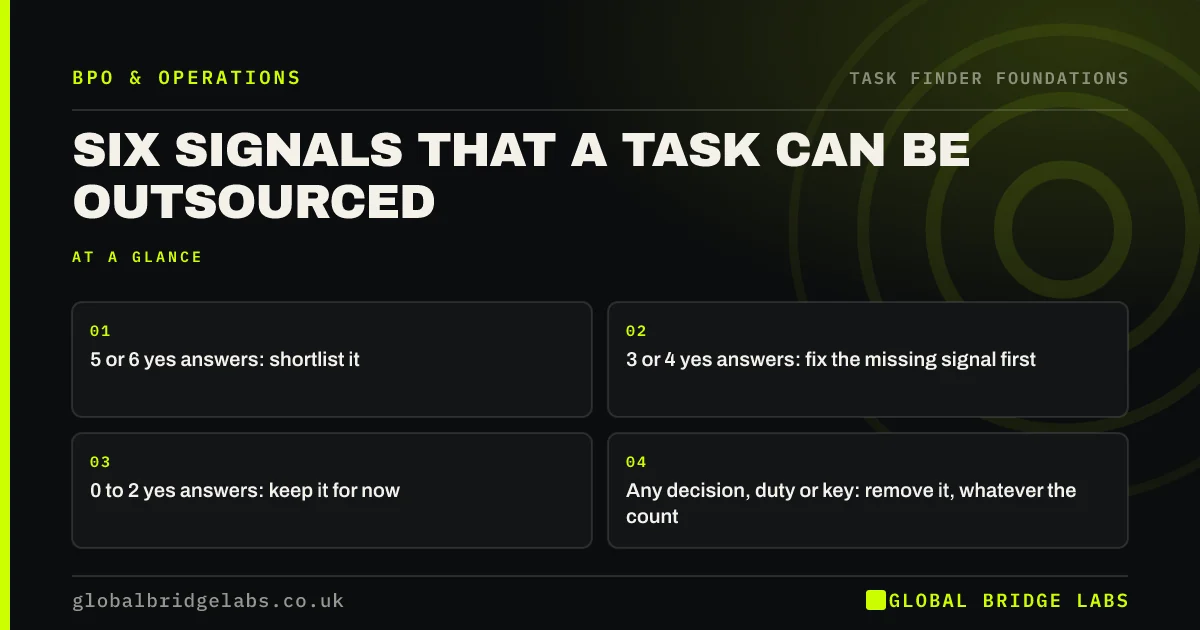
Tasks that look easy to outsource but are not share one trait: the visible steps are simple, but the work depends on judgement, exceptions or access that are invisible from outside. Booking a meeting, answering the phone or updating a price list can each hide decisions. Watch for tasks where the person doing it says 'it depends'.
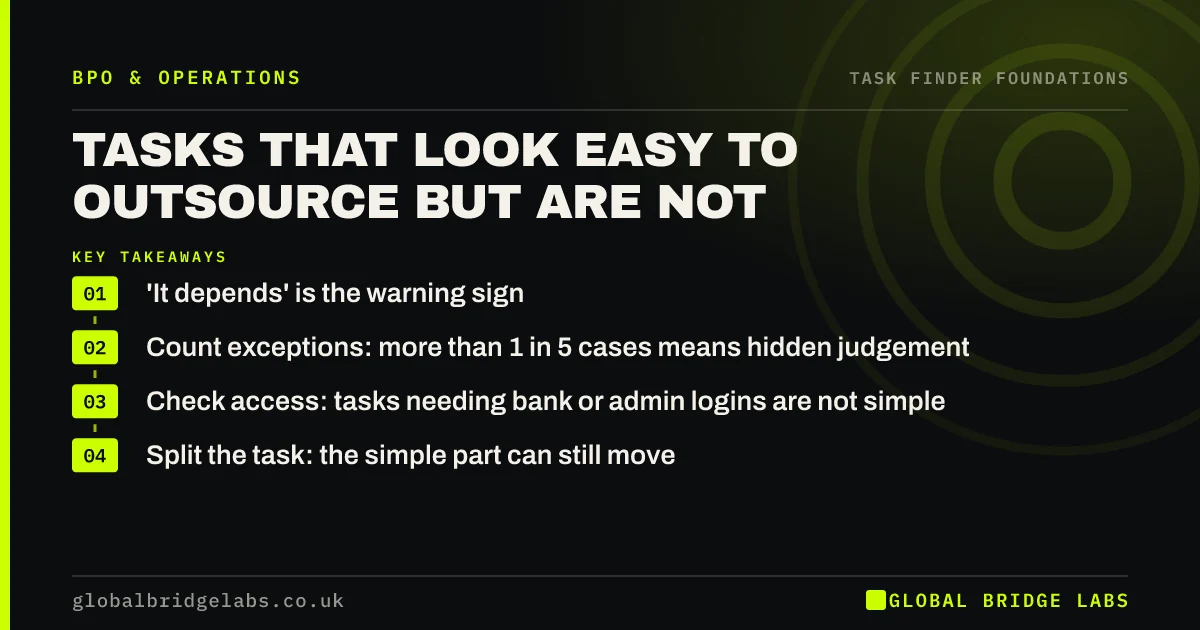
- 'It depends' is the warning sign.
- Count exceptions: more than 1 in 5 cases means hidden judgement.
- Check access: tasks needing bank or admin logins are not simple.
- Split the task: the simple part can still move.
Want a second look at a task you think is simple? Message us on WhatsApp.
Chat on WhatsApp →Why do some simple tasks fail when outsourced?
They fail because the simplicity was an illusion created by experience. The person doing the task makes small decisions without noticing: which customer to prioritise, which supplier will accept a late order, when a discount is fine. Outside the business, each of those decisions becomes a question, and the task slows down or goes wrong.
Which tasks most often look easier than they are?
These are the false positives we see most. Each can often be split so the routine part moves.
- Diary management: simple booking, but it decides whose time matters.
- Price list updates: simple edits, but some prices are judgement calls.
- First-line phone answering: simple greeting, but callers bring complex problems.
- Supplier payments: simple matching, but approval is a control.
- Social replies: simple messages, but tone and complaints carry risk.
How do you test a task for hidden judgement?
Take the last 20 times the task was done and sort them into 'followed the normal steps' and 'needed a decision'. If more than 4 of 20 needed a decision, the task carries judgement. Either write the decisions down as rules, or split the task so the routine cases move and the exceptions come back to you.
What does this look like in practice?
A pattern we see: an owner hands over 'just updating the website prices' and gets a flood of questions. The 20-case check shows many updates involve a judgement about margin. The fix is a split: the provider updates prices from an approved sheet, the owner fills in the sheet.
False positive checklist
- Ask the person doing it where it 'depends'.
- Sort the last 20 cases into routine and decision.
- Check the access the task needs.
- Write rules for the common decisions.
- Split the task if exceptions stay high.
Next step
Run the 20-case check on the task you are most confident about. If it passes, you have a strong candidate; if not, you have found the split before it cost you.
Message us on WhatsApp for the 20-case sheet, or book a 30-minute consultation.
Chat on WhatsApp →Sources and further reading
- Human factors: managing human failures · Health and Safety Executive
- Controllers and processors · Information Commissioner's Office
Frequently asked questions
Why do some outsourced tasks need so many questions?
Because the task contains decisions the original person made without noticing. Each one becomes a question for the provider. The fix is to write the common decisions down as rules, or to split the task so routine cases move and exceptions come back to someone inside.
How do I know if a task needs judgement?
Look at the last 20 times it was done. If more than four needed someone to decide something not covered by the normal steps, the task carries judgement. That does not rule it out, but it needs rules written or a split before it is handed over.
Can a task that needs judgement still be outsourced?
Often, partly. Most tasks have a routine core and a few decisions. Move the routine core with clear rules, and keep the decisions with a named person who answers within an agreed time. Many successful handovers work exactly this way.
Written by

Global Bridge Labs (GBL) is a UK–Sri Lanka partner for social media, websites and BPO. Everything here comes from client delivery, not theory.