On this page
Key takeaways
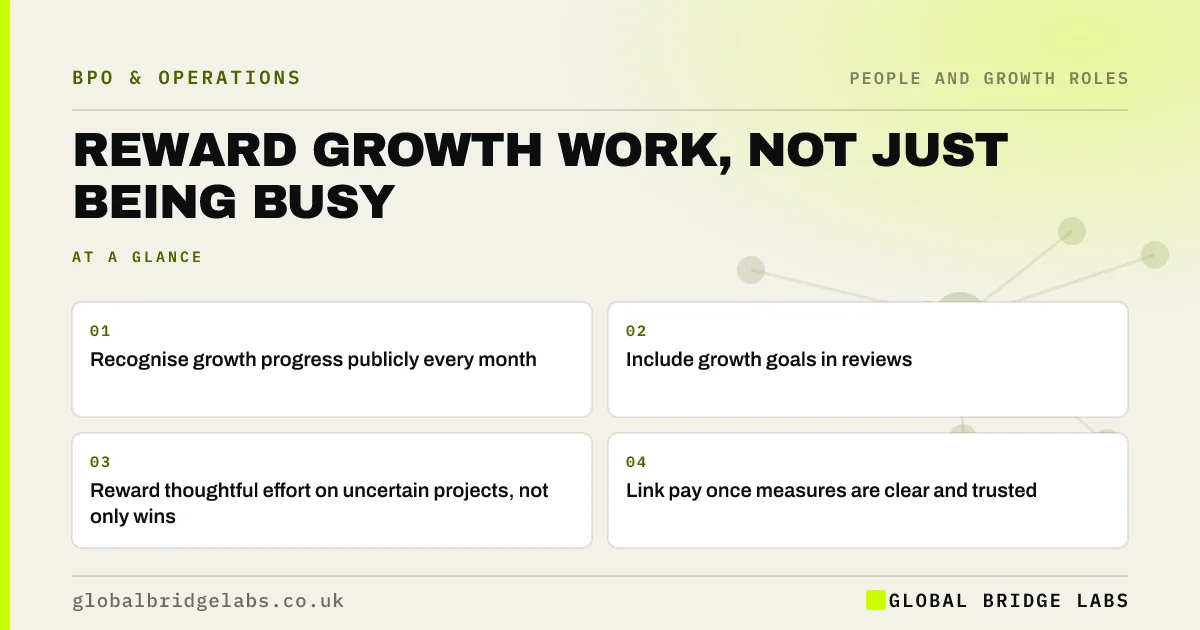
If reviews and recognition reward getting through the routine workload, people will keep prioritising it even after outsourcing. Reward growth contributions explicitly: in monthly recognition, in reviews and, once measures are trusted, in pay. Reward outcomes and effort on uncertain work, not just successes, or people will avoid anything risky.
- Recognise growth progress publicly every month.
- Include growth goals in reviews.
- Reward thoughtful effort on uncertain projects, not only wins.
- Link pay once measures are clear and trusted.
Want help aligning rewards with growth work? Message us on WhatsApp.
Chat on WhatsApp →Why do rewards matter for growth time?
Rewards matter because people do what the business visibly values. If praise goes to whoever cleared the most tickets, people will clear tickets. After outsourcing, the business wants growth work, so recognition and reviews need to say so; otherwise freed hours drift back to visible busyness.
How do you reward growth work?
- Monthly: name growth progress in team meetings.
- Quarterly: discuss growth goals in one-to-ones.
- Annually: include growth contributions in reviews and pay decisions.
- Celebrate learning from projects that did not work.
Should you link pay to growth?
Eventually, perhaps. Linking pay too early to new, uncertain goals encourages safe targets. Start with recognition and reviews, then add a modest component once measures are trusted. Make sure any scheme is fair, clear and consistent with minimum wage rules for lower-paid staff.
When do rewards backfire?
When they reward individual wins in work that needs teamwork, when targets can be gamed, or when only successes count. Reward the behaviour you want: taking on growth work, doing it well and sharing what was learnt.
What does this look like in practice?
A pattern we see: a firm's team meetings always thank the person who processed the most orders. After outsourcing, the director starts each meeting with one piece of growth progress. Within a quarter, people bring growth updates without being asked.
Reward checklist
- Recognise growth progress monthly.
- Add growth goals to reviews.
- Value effort on uncertain work.
- Link pay only when measures are trusted.
- Check rewards cannot be gamed.
Next step
At your next team meeting, start with one piece of growth progress and name the person behind it.
Message us on WhatsApp to discuss rewarding growth work, or book a 30-minute consultation.
Chat on WhatsApp →Sources and further reading
- Employee earnings in the UK (Annual Survey of Hours and Earnings) · Office for National Statistics
- National Minimum Wage and National Living Wage rates · GOV.UK
Frequently asked questions
How do you reward employees for growth?
Start with recognition: name growth progress publicly and discuss growth goals in one-to-ones. Include growth contributions in annual reviews. Add pay incentives only once measures are clear and trusted, and reward thoughtful effort on uncertain projects, not just wins. Be consistent, so people trust that growth work counts as much as clearing routine tasks.
Should bonuses be linked to growth targets?
Possibly, once targets are well understood. Linking bonuses to new, uncertain goals can encourage people to set safe targets or game the measures. Many small firms start with recognition and reviews, then add a modest growth component after a year.
What is wrong with rewarding being busy?
Busyness is not the same as useful output. Rewarding visible effort encourages people to fill time with routine tasks rather than harder, less visible growth work. After outsourcing, that pulls freed hours back into busywork instead of growth. Revisit the answer each quarter, because team capacity and priorities change as the business grows.
Written by

Global Bridge Labs (GBL) is a UK–Sri Lanka partner for social media, websites and BPO. Everything here comes from client delivery, not theory.