On this page
- 01Key takeaways
- 02Why is career progression hard in small firms?
- 03How does outsourcing create career steps?
- 04How do you support progression?
- 05When is a career path not realistic?
- 06What does this look like in practice?
- 07Career path checklist
- 08Next step
- 09Sources and further reading
- 10Frequently asked questions
Key takeaways
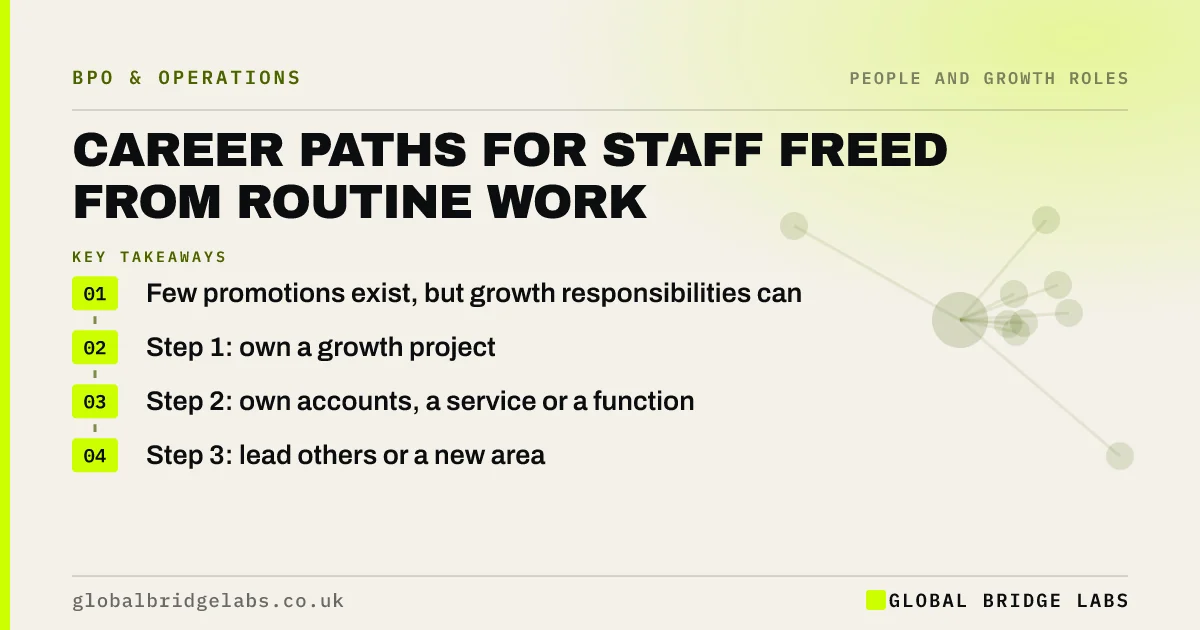
Small businesses struggle to offer career paths because there are few management roles and most people's time goes on routine work. Outsourcing routine tasks creates a different kind of path: from routine work to owning a growth project, then a set of accounts or a function, then leading others. Make those steps visible and people can see a future.
- Few promotions exist, but growth responsibilities can.
- Step 1: own a growth project.
- Step 2: own accounts, a service or a function.
- Step 3: lead others or a new area.
Want help designing growth-based career paths? Message us on WhatsApp.
Chat on WhatsApp →Why is career progression hard in small firms?
Career progression is hard in small firms because there are few layers of management and roles grow by accumulating tasks rather than responsibility. A capable person can spend years doing more of the same. Without a visible path, they look for one elsewhere.
How does outsourcing create career steps?
By removing routine work, outsourcing frees capable people to take on growth responsibilities that were never available before. Those responsibilities form steps.
- Owning a single growth project with a clear goal.
- Owning a portfolio of accounts, a service line or a function.
- Leading a small team or a new area of the business.
- Each step comes with clearer outcomes and more autonomy.
How do you support progression?
Agree a development plan with each person, train for the next step, review progress twice a year and link pay reviews to responsibilities taken on. Apprenticeship standards and short courses can support formal skills development.
When is a career path not realistic?
When the business is not growing or when someone prefers stable routine work. Not everyone wants progression; respect that and keep good routine roles available where they are needed.
What does this look like in practice?
A pattern we see: a junior administrator in a property firm takes on landlord onboarding as her first growth project after routine compliance tracking is outsourced. Two years later she manages the firm's landlord portfolio and a junior colleague.
Career path checklist
- Write the growth steps available in your business.
- Discuss them with each person.
- Agree the next step and training.
- Review twice a year.
- Link pay reviews to responsibilities.
Next step
Write down three growth responsibilities a capable team member could take on next year if routine work moved out.
Message us on WhatsApp for a growth career path outline, or book a 30-minute consultation.
Chat on WhatsApp →Sources and further reading
- Training and study at work: your rights · GOV.UK
- Employing an apprentice · GOV.UK
Frequently asked questions
How can small businesses offer career progression?
By creating steps based on responsibility rather than title: owning a growth project, then a set of accounts or a function, then leading others. Outsourcing routine work frees the time for these responsibilities. Make the steps visible, train for them and review progress regularly.
Do career paths need job titles?
Not necessarily. In small firms, clear responsibilities, autonomy and pay that reflects them often matter more than titles. That said, a title change can be a useful signal when someone takes on a significant new area, such as managing accounts or leading a small team.
What if there is nowhere for staff to progress?
If the business is not growing, progression options are limited, and honesty is better than promises. Development through new skills and projects can still be valuable. If the business is growing, outsourcing routine work is often what creates room for new responsibilities.
Written by

Global Bridge Labs (GBL) is a UK–Sri Lanka partner for social media, websites and BPO. Everything here comes from client delivery, not theory.