On this page
- 01Key takeaways
- 02What do diners want from a restaurant homepage?
- 03What belongs in the first screen?
- 04How should the menu appear?
- 05What about allergens and hygiene ratings?
- 06What slows restaurant homepages down?
- 07What does this look like in practice?
- 08Restaurant homepage checklist
- 09Next step
- 10Sources and further reading
- 11Frequently asked questions
Key takeaways
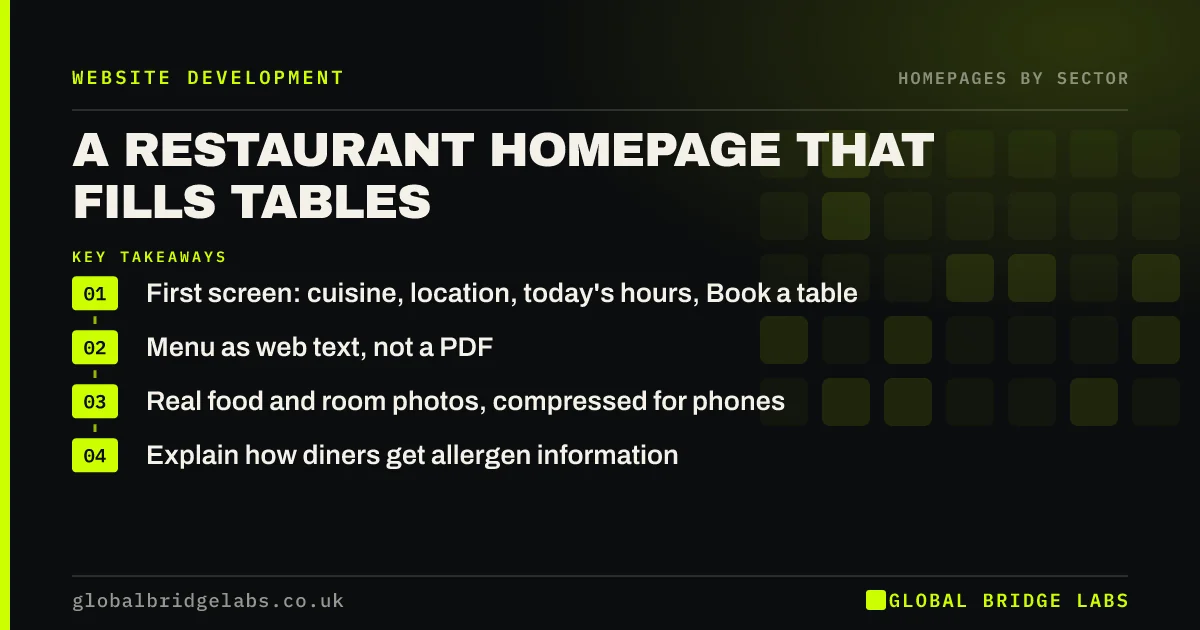
A restaurant homepage fills tables when the first screen shows what kind of food, where, when you are open and a 'Book a table' button, followed by the menu as real text, great photos that load fast and clear allergen information. Most diners are on a phone and close to deciding, so speed and simplicity matter more than design flourishes.
- First screen: cuisine, location, today's hours, Book a table.
- Menu as web text, not a PDF.
- Real food and room photos, compressed for phones.
- Explain how diners get allergen information.
Want your restaurant homepage reviewed? Message us on WhatsApp.
Chat on WhatsApp →What do diners want from a restaurant homepage?
Diners want to know what kind of food you serve, where you are, whether you are open, what it costs roughly and how to book. Many are deciding tonight, on a phone. A homepage that hides the menu in a PDF or opens with a slow video loses them to the next search result.
What belongs in the first screen?
The cuisine and style, the area, today's opening hours and a 'Book a table' button, with a strong photo of the food or room. If you take walk-ins, say so. A tappable phone number and a directions link help diners who are already on their way.
How should the menu appear?
As web text on its own page, linked clearly from the homepage, with prices. PDFs are slow and hard to read on phones, as Nielsen Norman Group has long found. Text menus also appear in search. Keep seasonal menus updated and dated.
What about allergens and hygiene ratings?
Food businesses must give allergen information for the 14 regulated allergens. Online, explain how diners can get it, and show menu allergen information if you publish it. Food hygiene ratings must be displayed at premises in Wales and Northern Ireland; showing a good rating online can help anywhere.
What slows restaurant homepages down?
Large photo galleries, background videos, Instagram feeds and embedded booking widgets. Compress photos, link to the booking flow rather than embedding a heavy widget, and drop feeds that duplicate your social profiles.
What does this look like in practice?
A pattern we see: a beautiful homepage with a full-screen video, the menu as a PDF and booking two clicks away. Replacing the video with a still, putting the menu in text and adding 'Book a table' to the header usually brings more online bookings from phone visitors.
Restaurant homepage checklist
- Show cuisine, area, today's hours and Book a table first.
- Put the menu in web text with prices.
- Compress food and room photos.
- Explain how to get allergen information.
- Link to booking rather than embedding a heavy widget.
- Add directions and a tappable number.
Next step
At 6pm tonight, search for your restaurant on your phone and try to book a table. Time how long it takes.
Message us on WhatsApp for a restaurant homepage review, or book a 30-minute consultation.
Chat on WhatsApp →Sources and further reading
- Allergen guidance for food businesses · Food Standards Agency
- Food hygiene ratings · Food Standards Agency
- PDF: still unfit for human consumption, 20 years later · Nielsen Norman Group
Frequently asked questions
What should a restaurant homepage include?
The type of food, location, today's opening hours, a clear 'Book a table' button, a link to the menu in web text, strong food photos, directions and a phone number. Most diners are on a phone, so keep it fast and simple.
Should a restaurant menu be a PDF?
It is better as web text. PDFs load slowly and are hard to read on phones, and text menus can appear in search results. If you must offer a PDF for printing, provide a text version too.
Do restaurants need allergen information online?
Food businesses must provide allergen information for the 14 regulated allergens. Online, tell diners how to get it, and if you publish menus, consider including allergen details. Check Food Standards Agency guidance for your type of business.
Written by

Global Bridge Labs (GBL) is a UK–Sri Lanka partner for social media, websites and BPO. Everything here comes from client delivery, not theory.