On this page
- 01Key takeaways
- 02What makes hospitality advertising different?
- 03Which channels matter most?
- 04How should a restaurant use social media?
- 05When do traditional channels help?
- 06What does it cost?
- 07What should you advertise, and when?
- 08What rules apply?
- 09What about discount platforms?
- 10What does this look like in practice?
- 11A weekly routine
- 12Next step
- 13Sources and further reading
- 14Frequently asked questions
Key takeaways
Restaurant advertising in the UK is local, visual and immediate. Social media and a current Google Business Profile do most of the work, because diners check photos, menus and reviews before they book. Leaflets and local press help with openings and quiet periods.
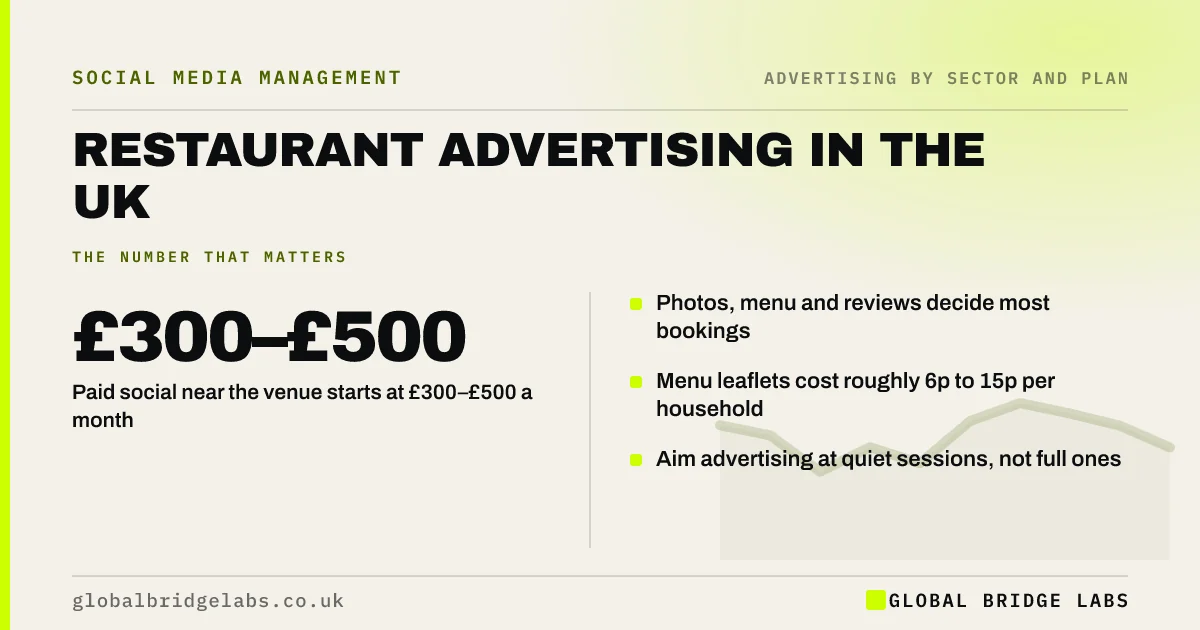
- Photos, menu and reviews decide most bookings.
- Paid social near the venue starts at £300–£500 a month.
- Menu leaflets cost roughly 6p to 15p per household.
- Aim advertising at quiet sessions, not full ones.
Want help filling your quiet nights? Message us on WhatsApp.
Chat on WhatsApp →What makes hospitality advertising different?
Hospitality sells a perishable product: an empty table tonight cannot be sold tomorrow. Most customers live or work within a short distance, decide close to the time and choose with their eyes. Advertising must therefore be local, frequent and easy to act on.
Which channels matter most?
Four channels carry most hospitality businesses.
- Google Business Profile: hours, menu, photos, reviews.
- Instagram and Facebook: dishes, people and events.
- Booking and review platforms diners already use.
- The premises: signage, boards and the window.
How should a restaurant use social media?
Post what makes people hungry and what makes them choose tonight: a dish, a special, a table by the window, the team. Short video does well. Name the day and the offer, and make booking one tap away. Reply to comments and messages during service hours.
When do traditional channels help?
Traditional channels help at specific moments. A menu leaflet to nearby homes suits a takeaway or a new opening. A local magazine suits Sunday lunch and private dining for older diners. A board or banner suits passing trade, subject to the council's rules on signs and pavement boards.
What does it cost?
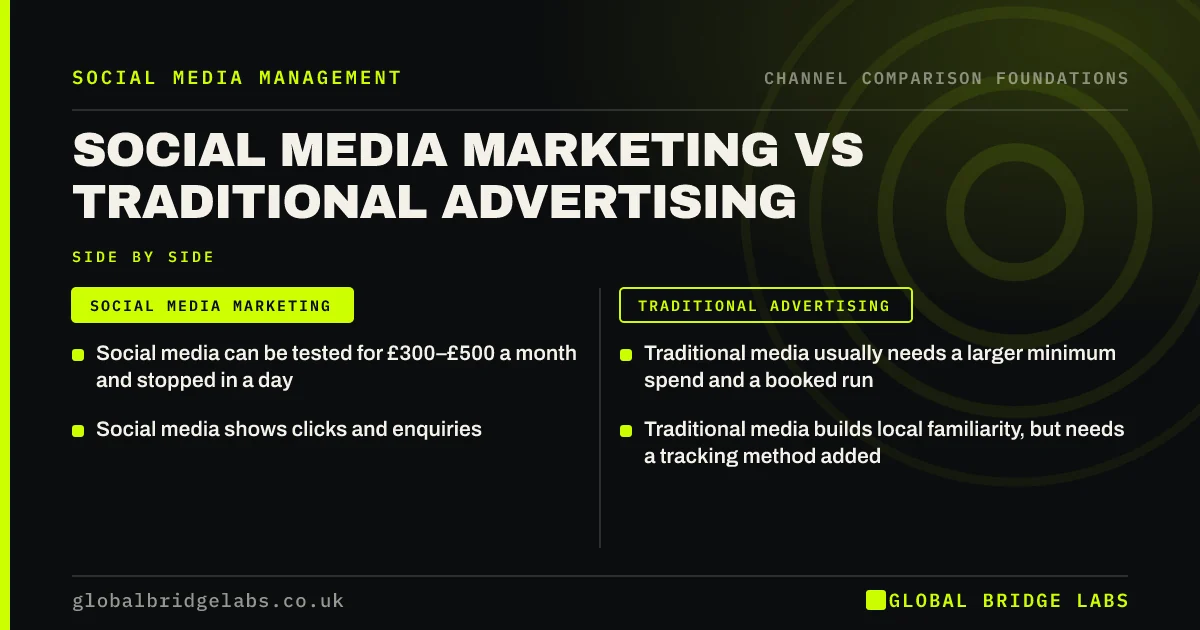
As indicative ranges, a menu drop costs 6p to 15p per household and a local print advert £150 to £1,000 an insertion. Paid social has a practical floor of £300–£500 a month. Most UK SMEs using an agency pay £950–£2,500 a month for managed social media.
- How much does advertising cost a UK small business?
- Restaurant and hospitality social media costs in the UK
Want a plan costed around your quiet sessions? Message us on WhatsApp and we will discuss your requirements.
Chat on WhatsApp →What should you advertise, and when?
Advertise the sessions you need to fill. If Fridays are full, promoting Friday wastes money. Aim offers at midweek, early evening or lunch. Plan around the calendar: Mother's Day, Christmas parties and local events are booked weeks ahead.
What rules apply?
Menus and adverts must not mislead on price, origin or dietary claims. Food businesses must provide allergen information, and anything you publish should match what is served. Promotions need clear conditions. Alcohol advertising has its own section of the advertising codes.
What about discount platforms?
Discount and voucher platforms can fill tables fast at a low margin. They suit a launch or a dead period. Used constantly, they teach customers to wait for a deal. Work out the profit per cover after the discount and commission before agreeing.
What does this look like in practice?
A pattern we see with independent venues: posts go up when it is quiet and stop when it is busy, so the page shows the venue at its emptiest. A simple routine of photographing three dishes and one busy moment each week keeps the profile closer to the truth.
A weekly routine
- Monday: check hours, menu and listings are current.
- Tuesday: post the midweek offer.
- Thursday: post a dish and the weekend availability.
- Saturday: capture photos and short clips in service.
- Sunday: reply to every review from the week.
Next step
List your sessions for a typical week and mark each full, steady or quiet. Point next month's advertising at the quiet ones only.
Message us on WhatsApp with your quiet sessions and we will suggest a plan, or book a 30-minute consultation.
Chat on WhatsApp →Sources and further reading
- Google Business Profile Help · Google
- Allergen guidance for food businesses · Food Standards Agency
- UK Code of Non-broadcast Advertising and Direct & Promotional Marketing (CAP Code) · ASA / CAP
- Meta Business Help Centre · Meta
Frequently asked questions
What is the best way to advertise a restaurant?
Keep your Google Business Profile current with hours, menu and photos, collect and reply to reviews, and post appetising dishes and offers on Instagram and Facebook. Add leaflets or local press for openings and quiet periods.
How much should a restaurant spend on advertising?
There is no fixed figure. Many independents set aside a few per cent of turnover, weighted towards quiet sessions and seasonal peaks. Start with a paid social test of £300–£500 a month and track the bookings it brings.
Do leaflets work for restaurants and takeaways?
They work well for takeaways and deliveries, because a menu is kept and reused. For dine-in restaurants they suit openings and special offers. Deliver within the area people will realistically travel from. Add an offer code so you can count the orders each drop brings.
How do I get more customers on quiet nights?
Create a reason specific to that night, such as a set menu or an event, and promote it on social media and to your email or message list a few days ahead. Do not discount the nights that already fill.
Written by

Global Bridge Labs (GBL) is a UK–Sri Lanka partner for social media, websites and BPO. Everything here comes from client delivery, not theory.