On this page
Key takeaways
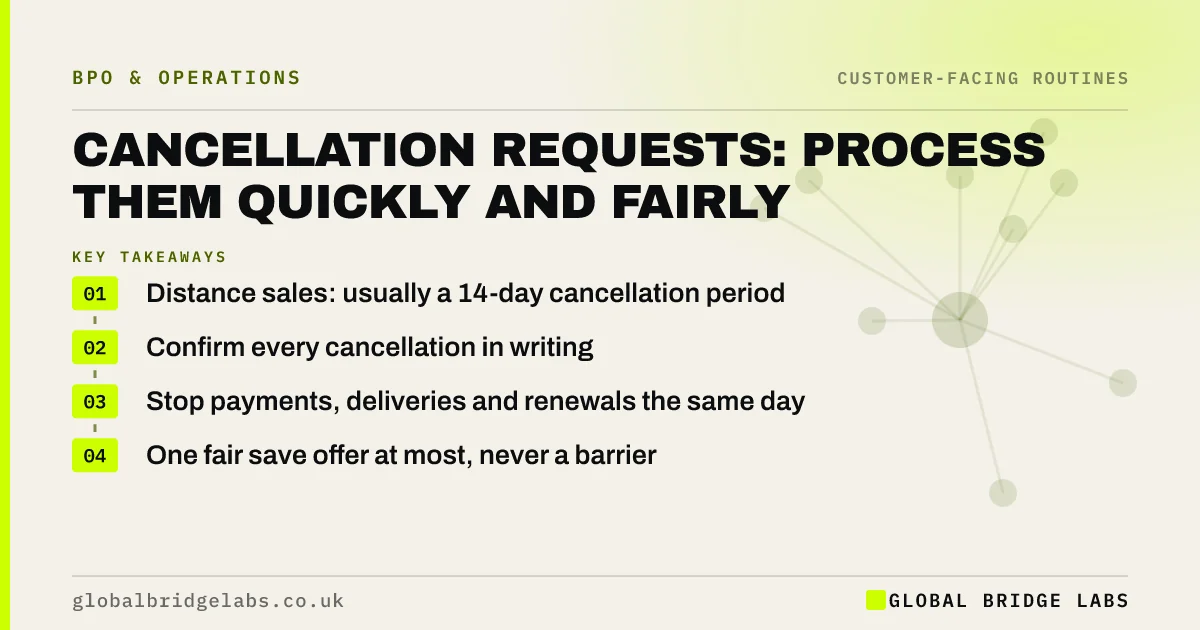
Cancellation requests should be processed quickly, confirmed in writing and followed through: payments stopped, deliveries cancelled, refunds issued where due. For most distance sales, the Consumer Contracts Regulations give a 14-day cancellation period. Making cancellation hard creates complaints and legal risk, so design the routine to be fast and fair.
- Distance sales: usually a 14-day cancellation period.
- Confirm every cancellation in writing.
- Stop payments, deliveries and renewals the same day.
- One fair save offer at most, never a barrier.
Want a cancellation routine that is fast and fair? Message us on WhatsApp with your monthly volume.
Chat on WhatsApp →What does a cancellation routine involve?
It involves logging the request, checking what the customer bought and their rights, confirming the cancellation, stopping any upcoming payment, delivery or renewal, processing a refund where due and recording the reason. Each step is repeatable, and missing one, such as a renewal, creates a second complaint.
What rights do customers have?
Under the Consumer Contracts Regulations 2013, consumers buying at a distance or off-premises can usually cancel within 14 days, with some exceptions such as personalised goods. Services started in the period may be charged proportionately if the customer asked for an early start. Check GOV.UK guidance for your products and keep your terms clear.
Is a save attempt fair?
One genuine offer, such as a pause or a cheaper plan, can be fair and useful. Repeated attempts, hidden cancel options or forcing a phone call are not, and the CMA has taken a close interest in practices that make leaving harder than joining. In an illustrative routine, one offer is made; if declined, the cancellation is completed at once.
Want help writing a fair save offer and cancellation script? Send us your current process on WhatsApp.
Chat on WhatsApp →When should cancellations stay in-house?
Keep cancellations of large business contracts in-house, because they usually involve notice periods, final invoices and relationships that need a manager. Consumer and small subscription cancellations suit a routine well, with disputes referred.
What does this look like in practice?
A pattern we see: a cancelled customer is charged again because the renewal was not stopped. Adding 'stop all future payments' as a required step before the request closes ends those complaints.
Cancellation checklist
Run every cancellation with these steps.
- Request logged with a reference.
- Rights and terms checked.
- Written confirmation sent.
- Payments, deliveries and renewals stopped.
- Refund issued where due.
- Reason recorded for monthly review.
Next step
Send us your cancellation process and monthly volume. We will suggest a fast, fair routine and say plainly what a team could handle.
Message us on WhatsApp about cancellation handling, or book a 30-minute consultation.
Chat on WhatsApp →Sources and further reading
- Consumer Contracts (Information, Cancellation and Additional Charges) Regulations 2013 · legislation.gov.uk
- Unfair commercial practices guidance (CMA207) · Competition and Markets Authority
Frequently asked questions
How long do customers have to cancel an online order in the UK?
Under the Consumer Contracts Regulations, consumers buying online or by phone can usually cancel within 14 days, with exceptions such as personalised or perishable goods. For services, the period usually runs from the day the contract is made. Check GOV.UK guidance for your situation.
Should you try to stop customers cancelling?
One genuine offer, such as a pause or a cheaper option, is reasonable. Repeated attempts, hidden cancel options or forcing customers to call can be unfair and draw regulatory attention. If the customer declines the offer, complete the cancellation promptly and confirm it in writing.
Can cancellation requests be outsourced?
Yes. A managed team can log requests, confirm cancellations, stop payments and deliveries, process refunds within rules and record reasons. Large business contract cancellations and disputes should stay with a named manager in your business.
Written by

Global Bridge Labs (GBL) is a UK–Sri Lanka partner for social media, websites and BPO. Everything here comes from client delivery, not theory.