On this page
Key takeaways
Product photo editing at volume means applying the same steps to every image: background removal or cleaning, straightening, cropping to a set ratio, colour correction, resizing, compression and consistent file names. It is repetitive and standard-driven, so it suits a dedicated team. An image standard keeps every product looking like it belongs in the same shop.
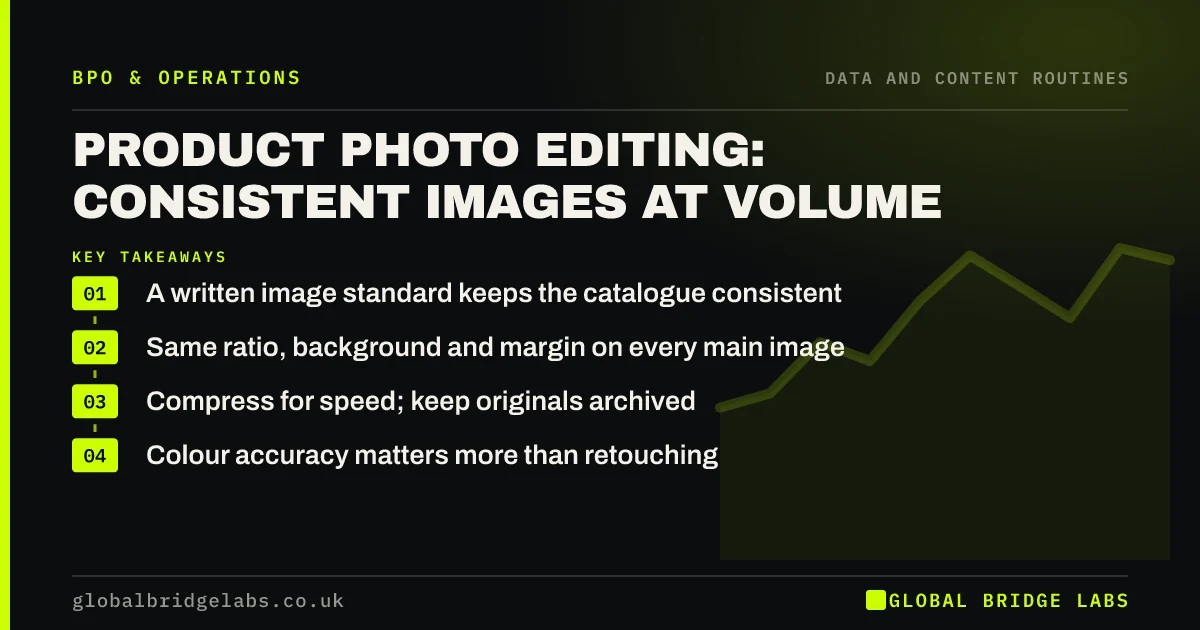
- A written image standard keeps the catalogue consistent.
- Same ratio, background and margin on every main image.
- Compress for speed; keep originals archived.
- Colour accuracy matters more than retouching.
Product images looking inconsistent? Message us on WhatsApp with your monthly image count.
Chat on WhatsApp →What does product photo editing involve?
For each image: remove or clean the background, straighten and centre the product, crop to the agreed ratio, correct colour and exposure so it matches the real item, resize for the web, compress, name the file and add alt text. Main images follow stricter rules than lifestyle images, especially on marketplaces.
What should an image standard specify?
Write the standard once and give it to whoever edits. It removes the back-and-forth over each batch and makes checking quick.
- Canvas size and aspect ratio.
- Background colour and product margin.
- Shadow: none, natural or added.
- Maximum file size and format.
- File naming and alt text pattern.
What does editing take?
In an illustrative example, 600 images a month at 3 to 6 minutes each for background removal and standard adjustments is 30 to 60 hours. These are example figures. Complex items, such as jewellery or glass, take longer; simple items on a plain background take less.
Send us a sample of your images on WhatsApp and we will estimate the editing time with you.
Chat on WhatsApp →When should editing stay in-house?
Keep editing in-house, or with your photographer, for campaign and brand imagery where creative judgement matters. Avoid editing that changes how the product really looks, such as altering colour or hiding flaws, because customers who receive something different will return it and may have a complaint under consumer law.
What does this look like in practice?
A pattern we see: a catalogue built over years has five different image styles, making the shop look unfinished. Re-editing the main images to one standard is a contained project that lifts the whole site.
Photo editing checklist
Check each batch against these points.
- Ratio and canvas match the standard.
- Background and margins consistent.
- Colour matches the real product.
- File size within limit.
- Names and alt text follow the pattern.
Next step
Send us a few current product images and your monthly volume. We will suggest an image standard and say plainly what a team could handle.
Message us on WhatsApp about product photo editing, or book a 30-minute consultation.
Chat on WhatsApp →Sources and further reading
- Google Images SEO best practices · Google Search Central
- Google Merchant Center Help · Google
Frequently asked questions
What is included in product photo editing?
Typical product photo editing includes background removal or cleaning, straightening, cropping to a set ratio, colour and exposure correction, resizing, compression and consistent file naming. Some services also add shadows, combine variants or write alt text, depending on the standard you set.
How much does product photo editing cost?
It depends on complexity and volume. Simple background removal is quick, while jewellery, glass or clothing with fine edges take longer. Price it by the time per image times volume, using an indicative hourly rate, and agree the standard first so quotes are comparable.
Can product photo editing be outsourced?
Yes. It is one of the most commonly outsourced repetitive tasks for online sellers. Give the team a written image standard, sample before-and-after images and a batch schedule. Keep brand and campaign imagery with your photographer or designer.
Written by

Global Bridge Labs (GBL) is a UK–Sri Lanka partner for social media, websites and BPO. Everything here comes from client delivery, not theory.