On this page
Key takeaways
Product listing work covers creating new product pages, filling attributes, uploading images, setting prices and variants, and keeping it all current. It is high volume and template-driven, so it suits a dedicated team working from a listing standard. Consistent listings also help Google Merchant Center and marketplace feeds pass validation.
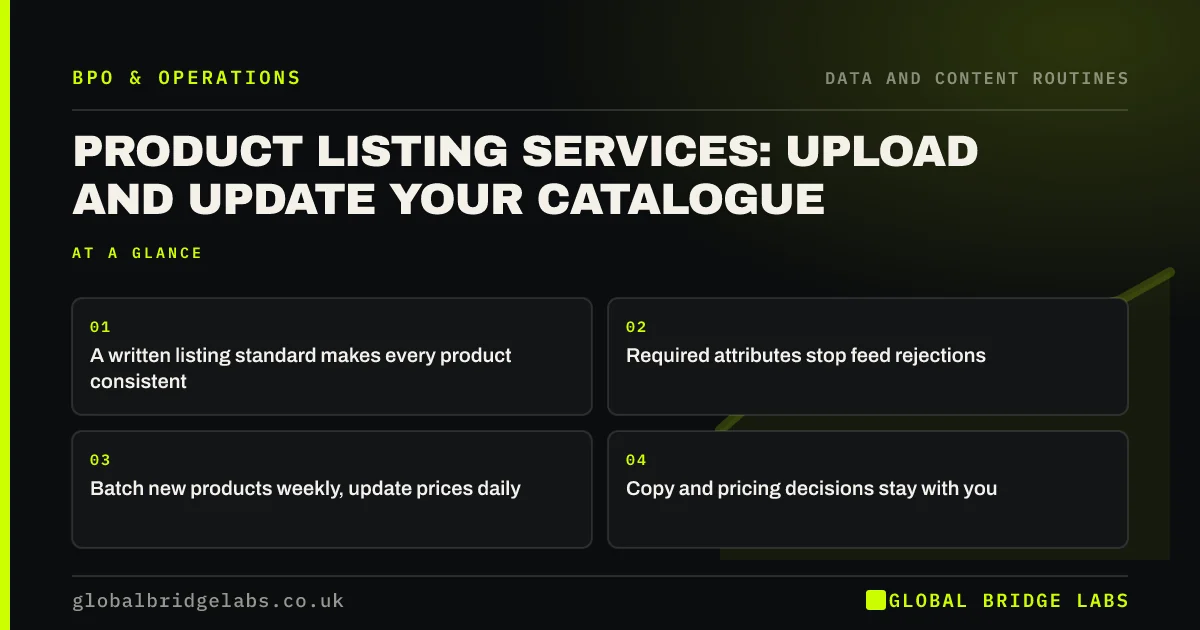
- A written listing standard makes every product consistent.
- Required attributes stop feed rejections.
- Batch new products weekly, update prices daily.
- Copy and pricing decisions stay with you.
Products waiting weeks to go live? Message us on WhatsApp with your monthly new-product count.
Chat on WhatsApp →What does product listing work involve?
It involves taking supplier or internal product data and turning it into complete listings: title, description, attributes such as size and material, variants, images, price, stock and category. Then it means keeping them current as prices, stock and ranges change. Most of it follows the same steps for every product.
What should a listing standard include?
A listing standard is a one-page rule set that makes every product look and read the same. It removes guesswork for whoever creates the listing and reduces feed errors. Google Merchant Center, for example, rejects products with missing required attributes.
- Title format: brand, product, key attribute, size.
- Required attributes by category.
- Image count, order and background.
- Description structure and banned claims.
- Variant and SKU naming rules.
What does listing work take?
In an illustrative example, a retailer adding 150 products a month at 12 minutes each, with images supplied, needs about 30 hours, plus a few hours of price and stock updates. These are example figures. Slow listing has a cost too: products sitting in a backlog cannot sell.
- Count your task volumes before you outsource anything
- How to improve e-commerce operational efficiency
Send us your product volumes on WhatsApp and we will estimate the routine with you.
Chat on WhatsApp →When should listings stay in-house?
Keep listings in-house for hero products where copy and positioning are part of the brand, and for regulated products where claims need careful checking, such as supplements or cosmetics. A team can still prepare the attributes and images for your final edit.
What does this look like in practice?
A pattern we see: new stock arrives in the warehouse weeks before it appears on the site, because listing waits for one busy person. A weekly listing routine with a standard closes that gap.
Listing routine checklist
Set up the routine with these points.
- A one-page listing standard.
- Required attributes by category.
- Weekly batch for new products.
- Daily price and stock updates.
- Feed errors checked weekly.
Next step
Send us a few current listings and your monthly product volume. We will suggest a listing standard and say plainly what a team could take on.
Message us on WhatsApp about product listings, or book a 30-minute consultation.
Chat on WhatsApp →Sources and further reading
- Google Merchant Center Help · Google
- Consumer Contracts (Information, Cancellation and Additional Charges) Regulations 2013 · legislation.gov.uk
Frequently asked questions
What does a product listing service do?
A product listing service creates and updates product pages for online stores and marketplaces: titles, descriptions, attributes, variants, images, prices, stock and categories. A good one works to your listing standard so every product is consistent and passes feed and marketplace checks.
How long does it take to list a product?
With images and supplier data supplied, a standard product often takes around 10 to 15 minutes to list well, and a product with many variants takes longer. Time grows when data is missing, so a complete supplier data sheet speeds things up most.
Can product uploads be outsourced?
Yes. Product uploads are repetitive and template-driven, which suits a managed team. Give them a written listing standard, access to your store admin and a weekly batch. Keep final copy for hero products and any regulated claims under your own review.
Written by

Global Bridge Labs (GBL) is a UK–Sri Lanka partner for social media, websites and BPO. Everything here comes from client delivery, not theory.