On this page
- 01Key takeaways
- 02Why plan maintenance rather than react?
- 03What goes into a maintenance calendar?
- 04Which maintenance work can be outsourced?
- 05When is planned maintenance scheduling overkill?
- 06What does this look like in practice?
- 07Planned maintenance checklist
- 08Next step
- 09Sources and further reading
- 10Frequently asked questions
Key takeaways
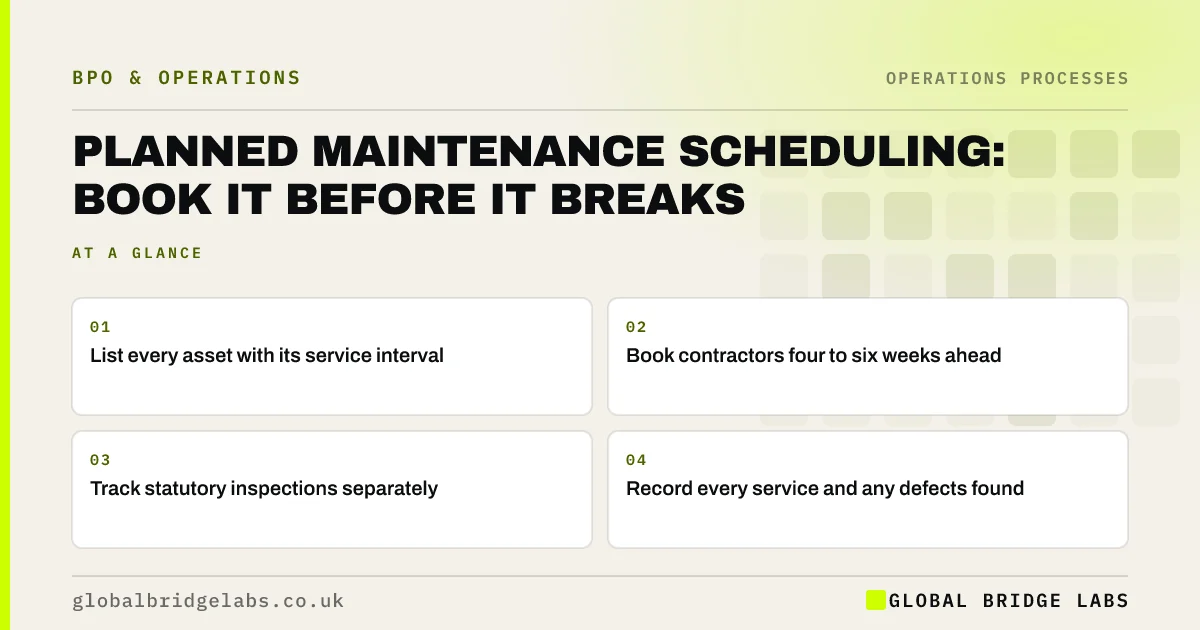
Planned maintenance scheduling books servicing and inspections before equipment, vehicles or premises fail. A maintenance calendar lists every asset, its service interval and the next due date, with contractors booked ahead. Statutory inspections, such as thorough examinations of lifting equipment, must happen on time. The scheduling outsources well.
- List every asset with its service interval.
- Book contractors four to six weeks ahead.
- Track statutory inspections separately.
- Record every service and any defects found.
Want a maintenance calendar template? Message us on WhatsApp.
Chat on WhatsApp →Why plan maintenance rather than react?
Breakdowns cost more than servicing: emergency call-out rates, lost production, missed deliveries and unhappy customers. Planned maintenance spreads the work, lets you book at normal rates and catches defects early. For some equipment, inspections are also a legal requirement.
What goes into a maintenance calendar?
Each asset with its location, service interval from the manufacturer or regulations, last service date, next due date, contractor and cost. Add statutory inspections, such as LOLER thorough examinations of lifting equipment and gas safety checks, with their legal intervals. Colour-code anything overdue.
- Asset, location and contractor.
- Service interval and next due date.
- Statutory inspections and legal intervals.
- Defects found and actions taken.
Which maintenance work can be outsourced?
Keeping the calendar, booking contractors ahead, confirming visits with whoever is on site, chasing reports, recording defects and checking invoices. The business approves spend, decides on repairs or replacement and makes sure equipment found unsafe is taken out of use.
- Engineer scheduling: fill the diary and cut wasted miles
- Compliance monitoring: owners, evidence and early warnings
Want your servicing booked ahead automatically? Message us on WhatsApp.
Chat on WhatsApp →When is planned maintenance scheduling overkill?
With very few assets, a manufacturer's reminder or a phone calendar may be enough. A planned schedule pays off once you have several sites, vehicles or machines, or any equipment with statutory inspection duties.
What does this look like in practice?
A pattern we see: servicing is booked only when someone remembers, so several assets fall due in the same busy month. A calendar spreads visits across the year and avoids the clash.
Planned maintenance checklist
Keep these current.
- Asset list with service intervals.
- Statutory inspections tracked.
- Contractors booked four to six weeks ahead.
- Service records and defects logged.
- Overdue items reported weekly.
Next step
Send us a list of the equipment, vehicles and premises you maintain. We will suggest a calendar and what scheduling it would involve.
Message us on WhatsApp, or book a 30-minute consultation.
Chat on WhatsApp →Sources and further reading
- Health and safety basics for your business · Health and Safety Executive
- Managing risks and risk assessment at work · Health and Safety Executive
Frequently asked questions
What is planned maintenance scheduling?
Planned maintenance scheduling is booking servicing and inspections of equipment, vehicles and premises at set intervals, before they fail, using a calendar that shows every asset, its interval, its next due date and its contractor.
Which maintenance is a legal requirement?
Some inspections are required by law at set intervals, such as thorough examinations of lifting equipment under LOLER and gas safety checks in certain premises. Employers also have a general duty to maintain work equipment in a safe condition. Check the rules for your equipment.
Can maintenance scheduling be outsourced?
Yes. Keeping the calendar, booking contractors, confirming visits, chasing reports and recording defects can be run remotely by a managed team. The business approves spend, decides on repairs and takes unsafe equipment out of use.
Written by

Global Bridge Labs (GBL) is a UK–Sri Lanka partner for social media, websites and BPO. Everything here comes from client delivery, not theory.