On this page
Key takeaways
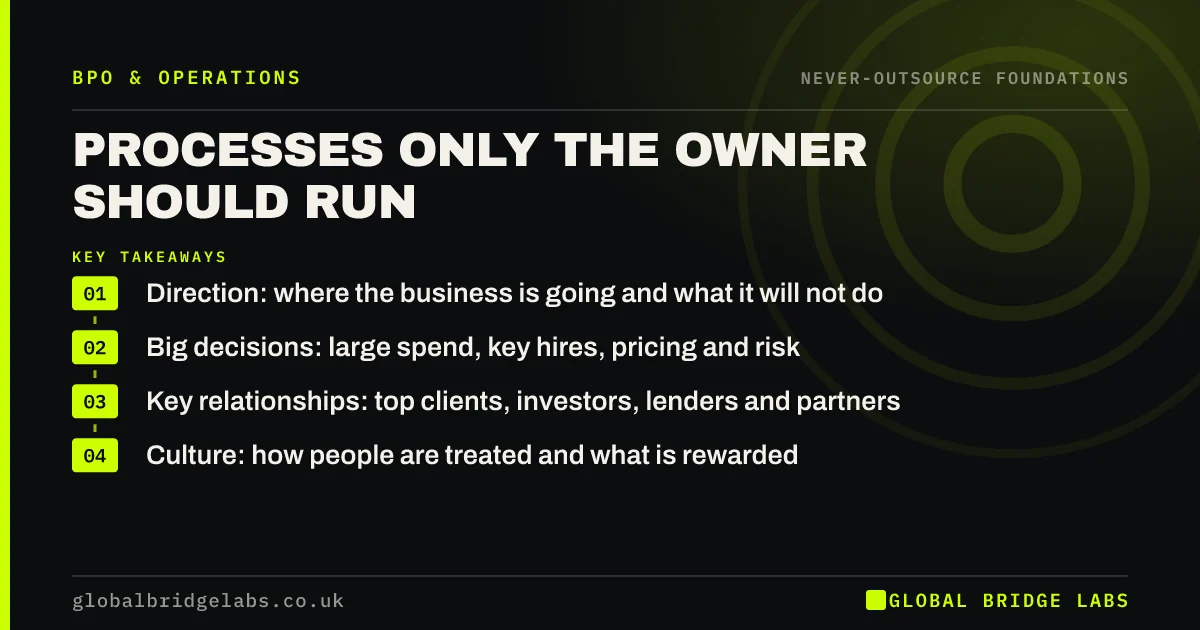
Owner-only tasks are the few things nobody else can do for the business: setting direction, making the biggest money and people decisions, holding the most important relationships and protecting the culture. Everything else, including much of what owners do every day, can be delegated to staff or outsourced. Most owners spend too little time on the first list.
- Direction: where the business is going and what it will not do.
- Big decisions: large spend, key hires, pricing and risk.
- Key relationships: top clients, investors, lenders and partners.
- Culture: how people are treated and what is rewarded.
Want to see how much of your week is owner-only work? Message us on WhatsApp.
Chat on WhatsApp →Why should only the owner run these?
Because they depend on authority, accountability and relationships that sit with the owner personally. A lender wants to hear from the owner. A key client expects the owner at renewal. Staff watch what the owner rewards. Delegating these sends a signal, and outsourcing them removes the owner from the business.
What are the owner-only processes?
The specific list varies, but these appear in most SMEs.
- Setting annual goals and strategy.
- Approving large investments and borrowing.
- Final say on senior hires and exits.
- Pricing changes and major discounts.
- Relationships with the top 10 to 20% of clients.
- Investor, bank and partner relationships.
- Crisis response and public statements.
How do you find time for owner-only work?
Log a fortnight of your time in 30-minute blocks and tag each block as owner-only, delegable or outsourceable. Owners commonly find owner-only work is a minority of their week. Move the outsourceable work first, because it frees time fastest without needing a new hire.
What changes as the business grows?
The list narrows. In a business of five, the owner may still do sales and hiring. At 50, managers own those and the owner keeps strategy, senior people, key relationships and capital. The point is to hand things on deliberately, not let them drift.
What does this look like in practice?
A pattern we see: an owner logs a fortnight and finds most of their week is admin and chasing. Moving invoicing, scheduling and inbox triage to an outsourced team gives them back the time for client visits and planning they had been postponing for months.
Owner-only checklist
- Log two weeks of your time in 30-minute blocks.
- Tag each block owner-only, delegable or outsourceable.
- Write your owner-only list on one page.
- Move the outsourceable work first.
- Block weekly time for owner-only work.
Next step
Start the time log on Monday. In two weeks you will know exactly how much of your week only you can do.
Message us on WhatsApp for our time log template, or book a 30-minute consultation.
Chat on WhatsApp →Sources and further reading
- Business population estimates for the UK and regions 2025 · Department for Business and Trade
- Labour productivity · Office for National Statistics
Frequently asked questions
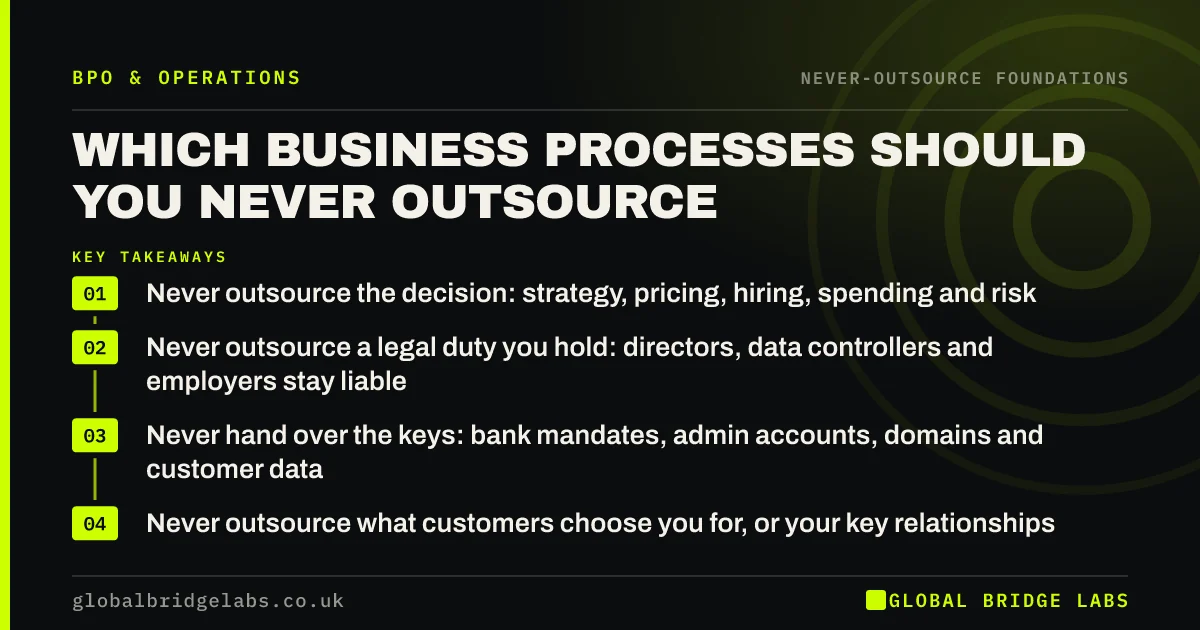
What tasks should a business owner never delegate?
Setting direction and strategy, approving large spending and borrowing, final decisions on senior hires and exits, pricing changes, key client and investor relationships, and crisis response. These depend on the owner's authority and relationships. Most other work can be delegated or outsourced with clear limits.
What should a small business owner focus on?
Growth decisions, key relationships, people and culture, and the quality of what the business sells. Owners often spend most of their time on admin instead. Logging your time for two weeks shows how much could be handed to staff or an outsourced team.
How do I stop doing everything myself?
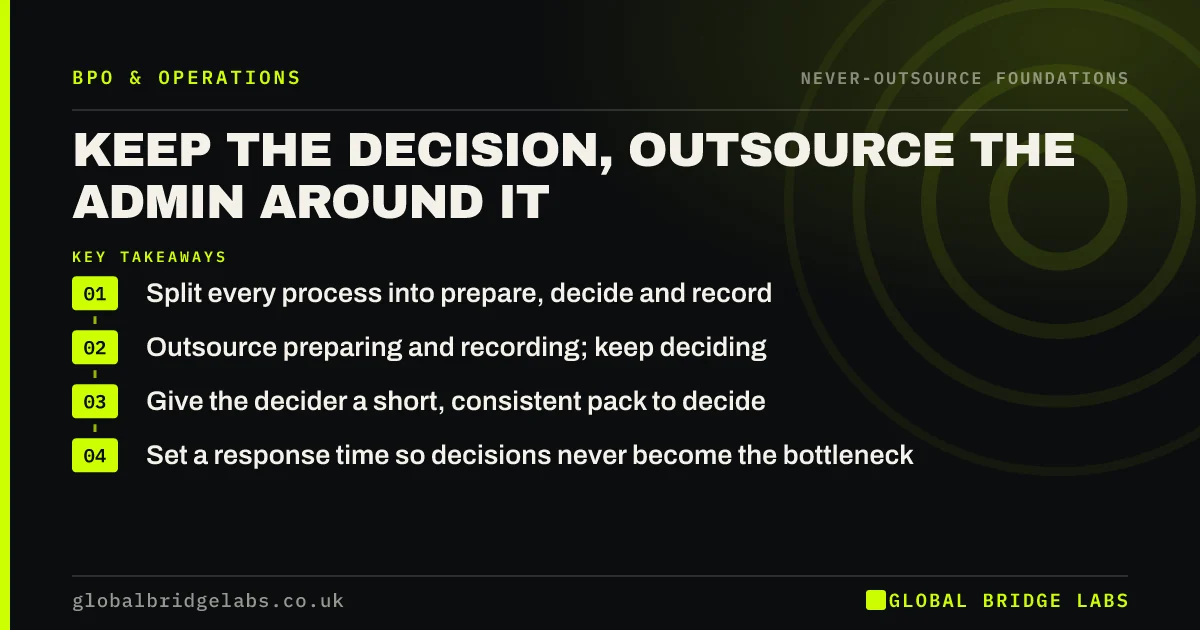
Log your time, separate owner-only work from the rest, document the most repetitive tasks and hand them over one process at a time. Start with work that is frequent, rules-based and low risk, such as invoicing, scheduling or inbox triage, and keep approvals with you.
Written by

Global Bridge Labs (GBL) is a UK–Sri Lanka partner for social media, websites and BPO. Everything here comes from client delivery, not theory.