On this page
- 01Key takeaways
- 02Which is riskier, organic or paid social?
- 03How do you limit paid social risk?
- 04How do you limit organic social risk?
- 05What risks apply to both?
- 06How do you balance the two risks?
- 07What does this look like in practice?
- 08Risk checklist
- 09Next step
- 10Sources and further reading
- 11Frequently asked questions
Key takeaways
Paid social carries the bigger financial risk: money is spent whether or not ads work. Organic social risks time and opportunity: months of posting that may produce little. Limit paid risk with fixed test budgets and end dates; limit organic risk with clear goals and quarterly reviews. Neither is risk-free.
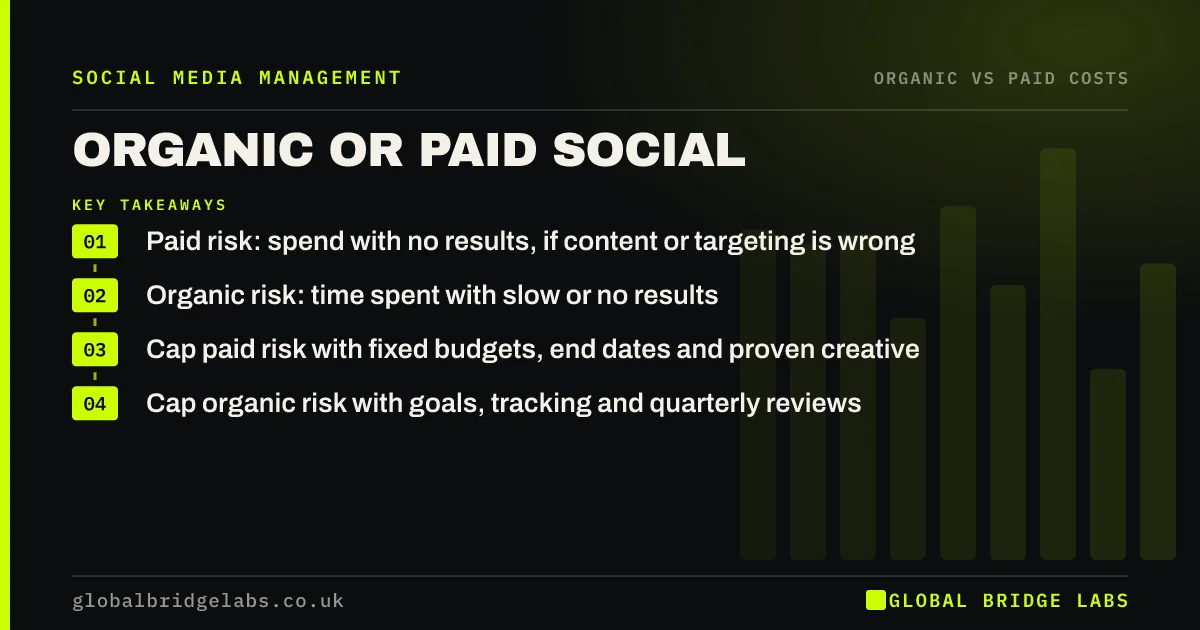
- Paid risk: spend with no results, if content or targeting is wrong.
- Organic risk: time spent with slow or no results.
- Cap paid risk with fixed budgets, end dates and proven creative.
- Cap organic risk with goals, tracking and quarterly reviews.
Want to limit the risk of your next social media push? Message us on WhatsApp.
Chat on WhatsApp →Which is riskier, organic or paid social?
Paid is riskier in cash terms, because spend leaves the business immediately and only results justify it. Organic is riskier in time and opportunity: hours that could have gone elsewhere, and slow results that may not arrive. The right question is which risk you can afford.
How do you limit paid social risk?
Limit paid risk with a fixed test budget you can afford to lose, an end date, one platform, one objective and creative that already worked organically. Meta's budget settings let you cap daily or lifetime spend so a campaign cannot overspend.
- Set a lifetime budget and end date.
- Test on one platform first.
- Use proven organic posts as ads.
- Stop or change after a set review date.
How do you limit organic social risk?
Limit organic risk by setting a clear goal, tracking enquiries from the start and reviewing every quarter. If three months of consistent posting produce no signal, change the platform, message or format rather than continuing blindly.
What risks apply to both?
Both depend on platforms you do not control. Accounts can be restricted, reach rules change and policies tighten. Meta's Advertising Standards and community rules apply to all business activity. Keeping a direct contact list and a website reduces dependence on any one platform.
How do you balance the two risks?
Balance the risks by keeping organic steady as a low-cash base and using paid in controlled tests. As evidence builds, increase paid where it is proven. The IPA's long and short-term research supports a mix rather than an all-or-nothing bet.
What does this look like in practice?
A pattern we see: a start-up spent its whole launch budget on one month of ads with untested creative and got little back. A safer plan, three months of organic testing then a capped ad budget behind the two best posts, would have spent less and learned more. Its next product launch followed that order.
Risk checklist
- Decide the most you can afford to lose on ads.
- Set lifetime budgets and end dates.
- Use proven creative for paid.
- Set organic goals and track enquiries.
- Review both quarterly.
- Keep a direct contact list off-platform.
Next step
Write down the maximum you could lose on a paid test without harm. Set that as a lifetime budget with an end date, and run organic alongside with a three-month goal.
Message us on WhatsApp for a low-risk test plan, or book a 30-minute consultation.
Chat on WhatsApp →Sources and further reading
- About budgets · Meta
- Meta Advertising Standards · Meta Transparency Center
- The Long and the Short of It: balancing short and long-term marketing strategies · IPA
Frequently asked questions
Can you lose money on social media ads?
Yes. If the ads, audience or offer do not work, the spend produces little return. You can limit losses with lifetime budgets, end dates, one platform at a time and creative that has already performed organically. Treat early campaigns as tests with a fixed cost.
Is organic social media a waste of time?
It can be if posting is inconsistent, aimed at the wrong audience or judged on likes rather than enquiries. With clear goals, a suitable platform and consistent useful content, most small businesses see results within three to six months. Review quarterly and change what is not working.
How much should I risk on a first paid campaign?
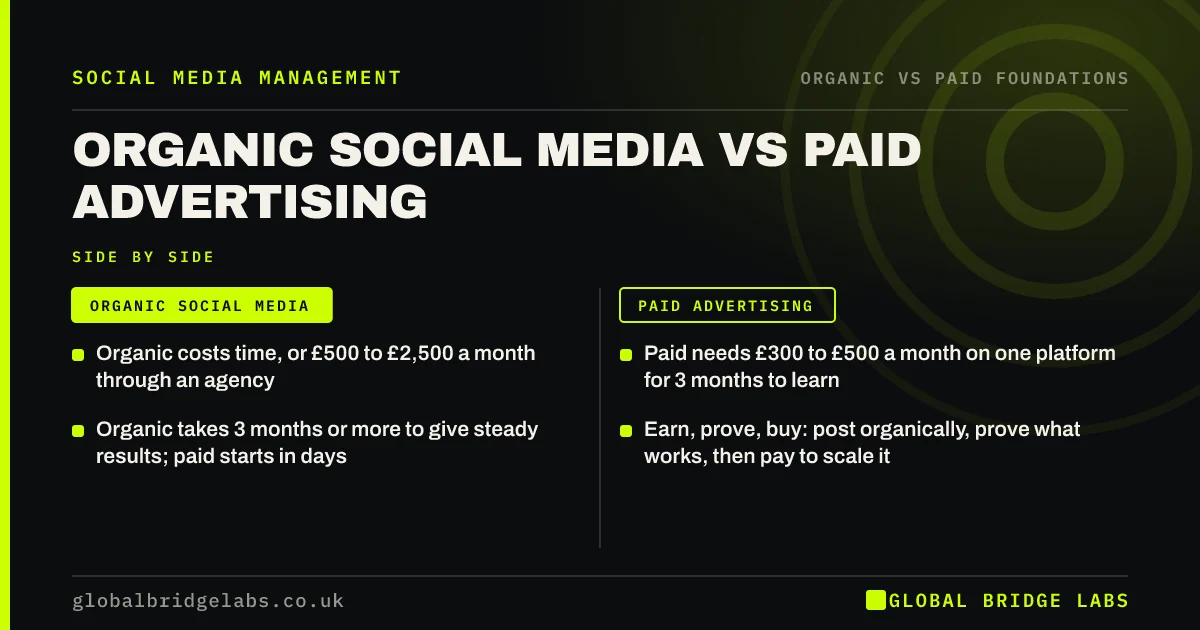
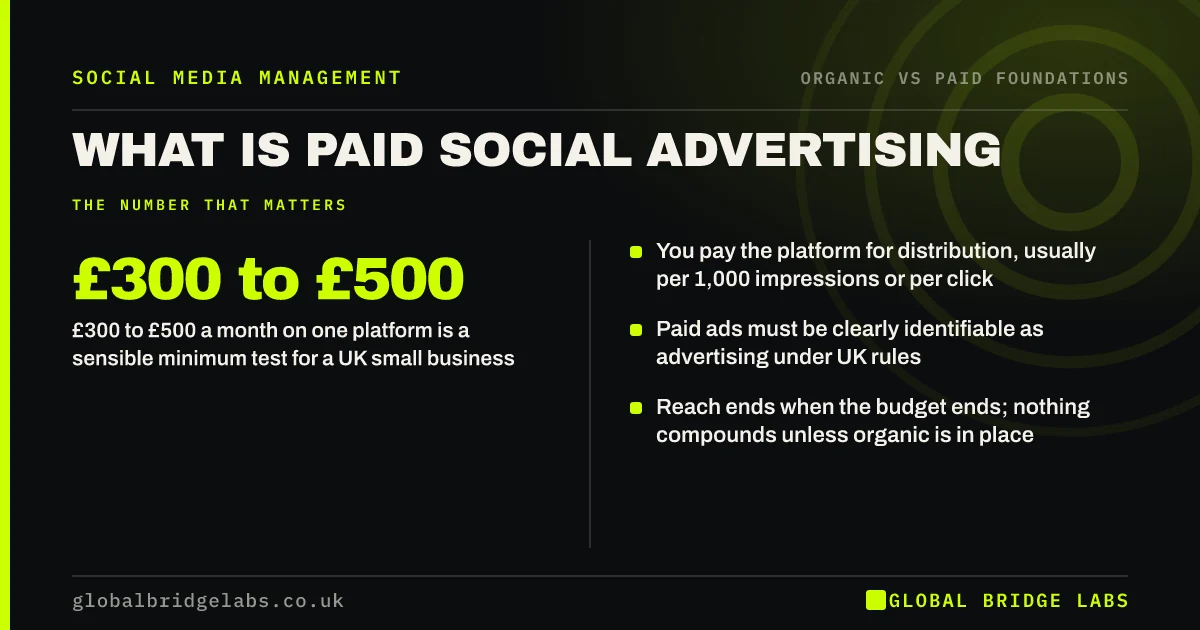
Risk only what you could lose without harming the business, and enough to learn something: for many UK small businesses, about £300 to £500 a month for three months on one platform. Set it as a capped budget with a review date before you start.
Written by

Global Bridge Labs (GBL) is a UK–Sri Lanka partner for social media, websites and BPO. Everything here comes from client delivery, not theory.