On this page
- 01Key takeaways
- 02What is the difference between organic and paid reach?
- 03Why is organic reach often low?
- 04What does paid reach actually buy?
- 05How much does paid reach cost?
- 06Which reach do you need?
- 07What does this look like in practice?
- 08Reach checklist
- 09Next step
- 10Sources and further reading
- 11Frequently asked questions
Key takeaways
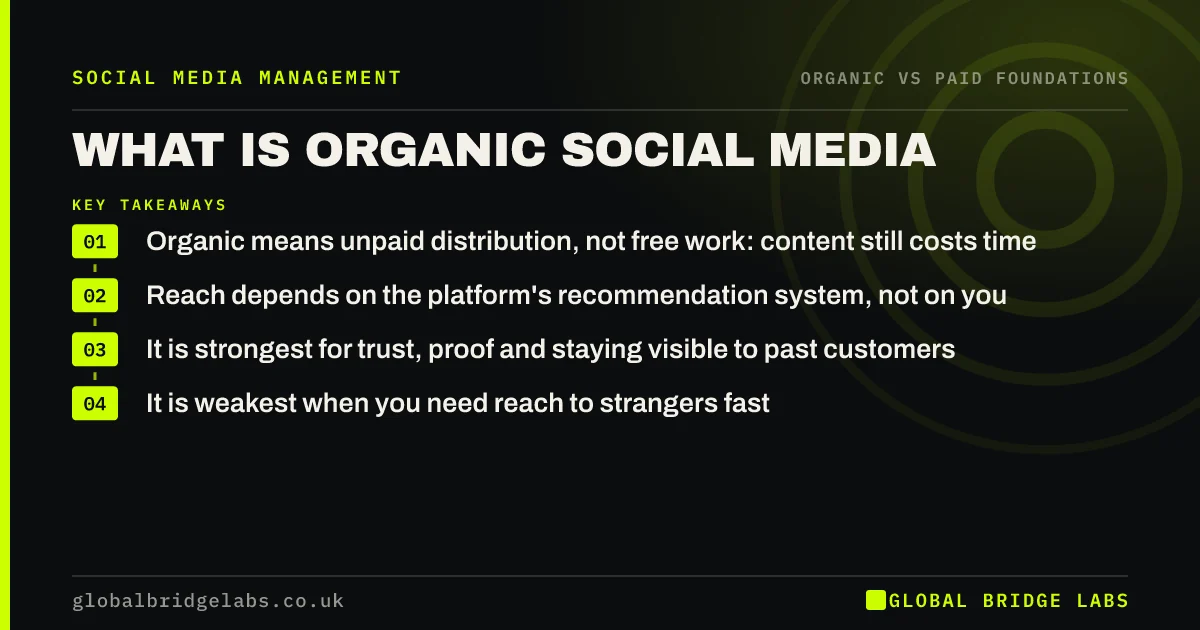
Organic reach is the number of people who see a post without paid promotion; paid reach is the number who see it because you paid. Organic reach depends on how the platform ranks your post and often covers a small share of followers on page-based feeds. Paid reach is predictable for the money, but stops when spend stops.
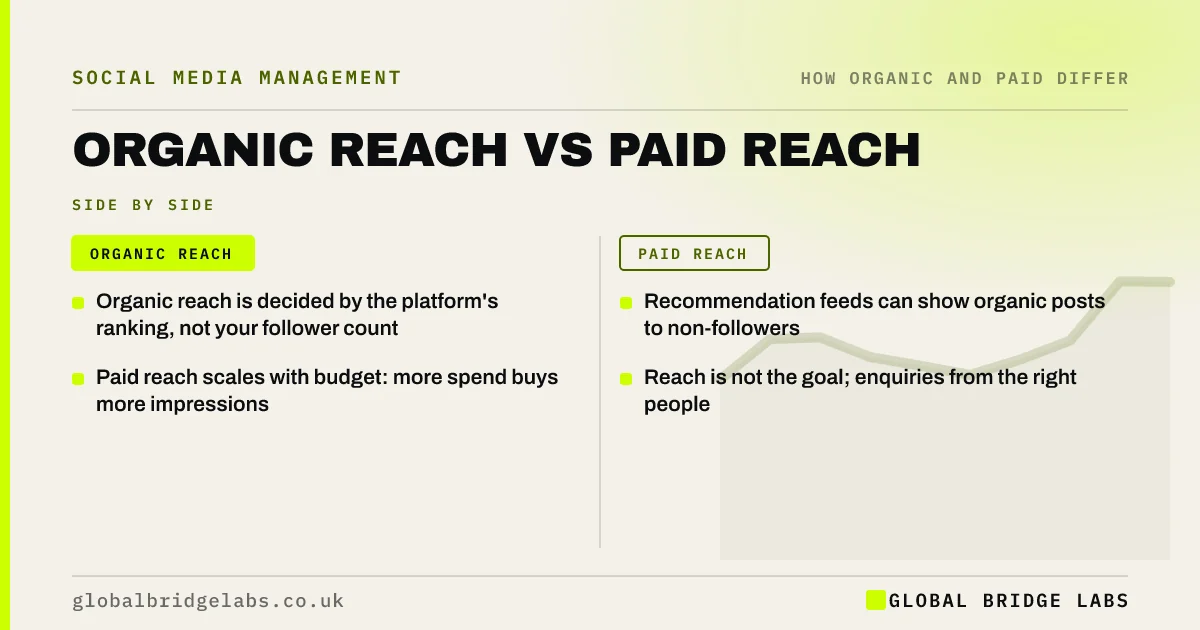
- Organic reach is decided by the platform's ranking, not your follower count.
- Recommendation feeds can show organic posts to non-followers.
- Paid reach scales with budget: more spend buys more impressions.
- Reach is not the goal; enquiries from the right people are.
Want to see how much of your reach is organic? Send us your insights on WhatsApp.
Chat on WhatsApp →What is the difference between organic and paid reach?
Organic reach counts unique people who saw your content through unpaid distribution: their feed, your profile, shares or recommendations. Paid reach counts people who saw it as an ad. Platform insights usually separate the two, so you can see how much of a boosted post's audience came from each.
Why is organic reach often low?
Organic reach is low on page-based feeds because platforms show each person a ranked selection of thousands of possible posts. Meta, LinkedIn and TikTok all describe ranking based on predicted interest. Your post competes with friends, creators and advertisers. Posts that start conversations or get saved tend to travel further.
- Too many posts compete for each feed slot.
- Ranking favours predicted interest.
- Static updates usually travel less far than video.
- Low early engagement limits further distribution.
What does paid reach actually buy?
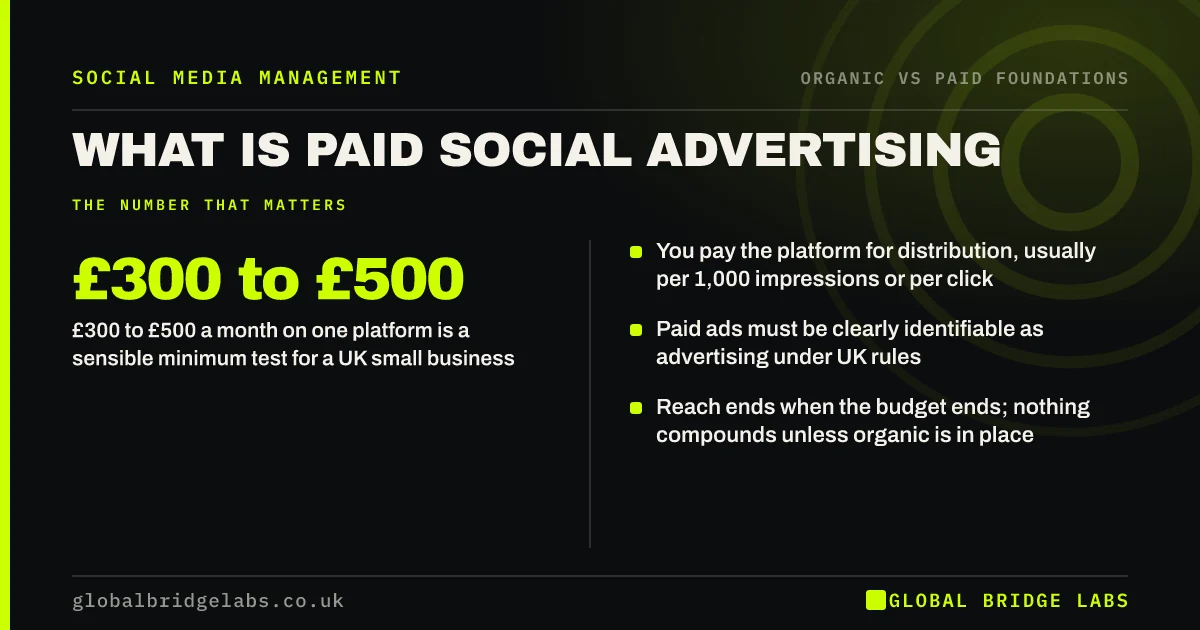
Paid reach buys impressions in front of an audience you define, at a price set by auction. You can choose location, interests, job titles or your own customer lists. What it does not buy is attention or trust: the content still has to earn a response once it is seen.
How much does paid reach cost?
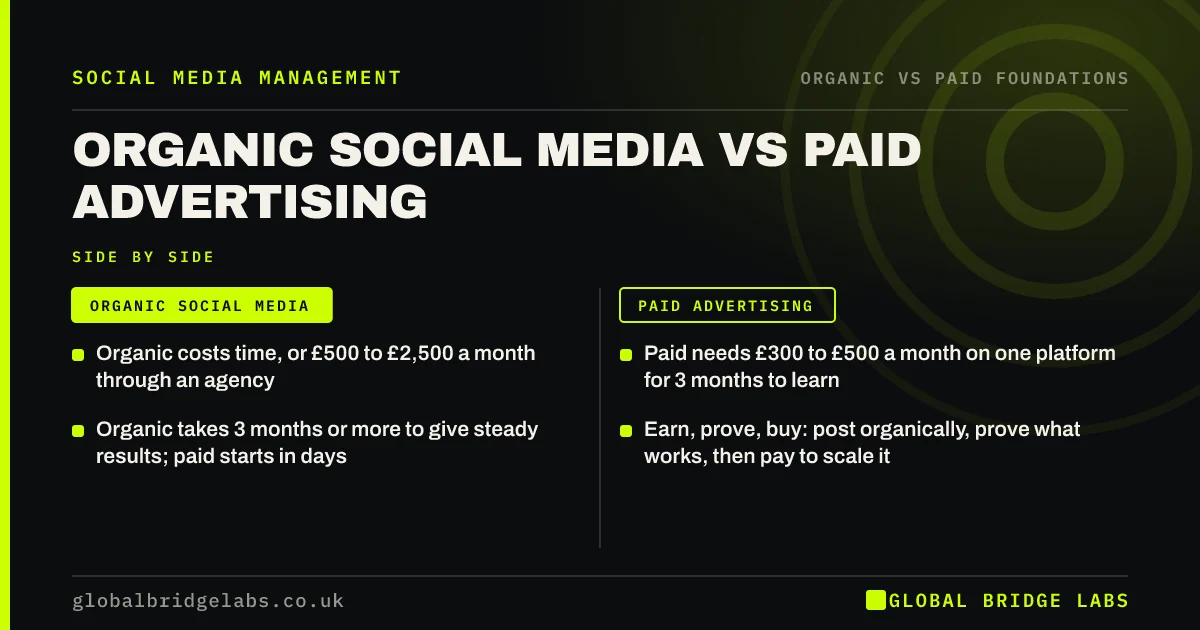
Paid reach is usually priced per 1,000 impressions (CPM). For UK small business campaigns, CPMs vary widely by platform, audience and season, and are typically highest in the run-up to Christmas. Plan a test on one platform at £300 to £500 a month rather than chasing a reach number.
Which reach do you need?
You need paid reach when you must put a message in front of a specific new audience, at a set time. Organic reach is enough when your goal is credibility with people already aware of you, or when a recommendation feed is already spreading your posts. Judge by enquiries, not reach alone.
What does this look like in practice?
A pattern we see: a local bakery was disappointed that its page posts reached only a few hundred of its several thousand followers. Moving to short videos of morning bakes increased organic reach to non-followers nearby, and a £10-a-day ad in the week before Easter guaranteed the order deadline was seen by local families.
Reach checklist
- Check organic and paid reach separately in insights.
- Compare reach to followers and non-followers.
- Test video against static posts for organic reach.
- Use paid reach for deadlines and new audiences.
- Track enquiries per 1,000 people reached.
- Ignore reach that does not lead to action.
Next step
Look at your last ten posts and note organic reach and enquiries for each. If organic reach to the right people is rising, keep going; if you need a specific audience by a date, plan paid reach.
Message us on WhatsApp for a reach review of your account, or book a 30-minute consultation.
Chat on WhatsApp →Sources and further reading
- Meta Business Help Centre · Meta
- How TikTok recommends videos #ForYou · TikTok Newsroom
- LinkedIn relevance: optimising the member experience · LinkedIn Help
Frequently asked questions
What is a good organic reach on social media?
There is no single good figure, because it depends on platform, format and audience. A more useful measure is whether reach to relevant people is growing over time and whether it leads to enquiries. Compare your own posts against each other rather than against industry averages from very different accounts.
Does boosting a post increase organic reach?
Boosting increases paid reach. Any extra organic reach comes indirectly, when people who saw the paid version engage and share. Platforms do not say that paying improves the ranking of your other organic posts, so treat boosting as buying views, not as a way to fix weak organic reach.
Why do my posts reach more non-followers than followers?
Recommendation-led feeds, such as TikTok's For You and Instagram Reels, show content to people likely to be interested regardless of whether they follow you. If non-follower reach is high, your content is being recommended, which is a good sign. Make sure your profile converts those visitors.
Written by

Global Bridge Labs (GBL) is a UK–Sri Lanka partner for social media, websites and BPO. Everything here comes from client delivery, not theory.