On this page
- 01Key takeaways
- 02Can you target organic posts?
- 03What can paid targeting do?
- 04What limits apply to paid targeting?
- 05Is narrow targeting always better?
- 06When should you use each?
- 07What does this look like in practice?
- 08Targeting checklist
- 09Next step
- 10Sources and further reading
- 11Frequently asked questions
Key takeaways
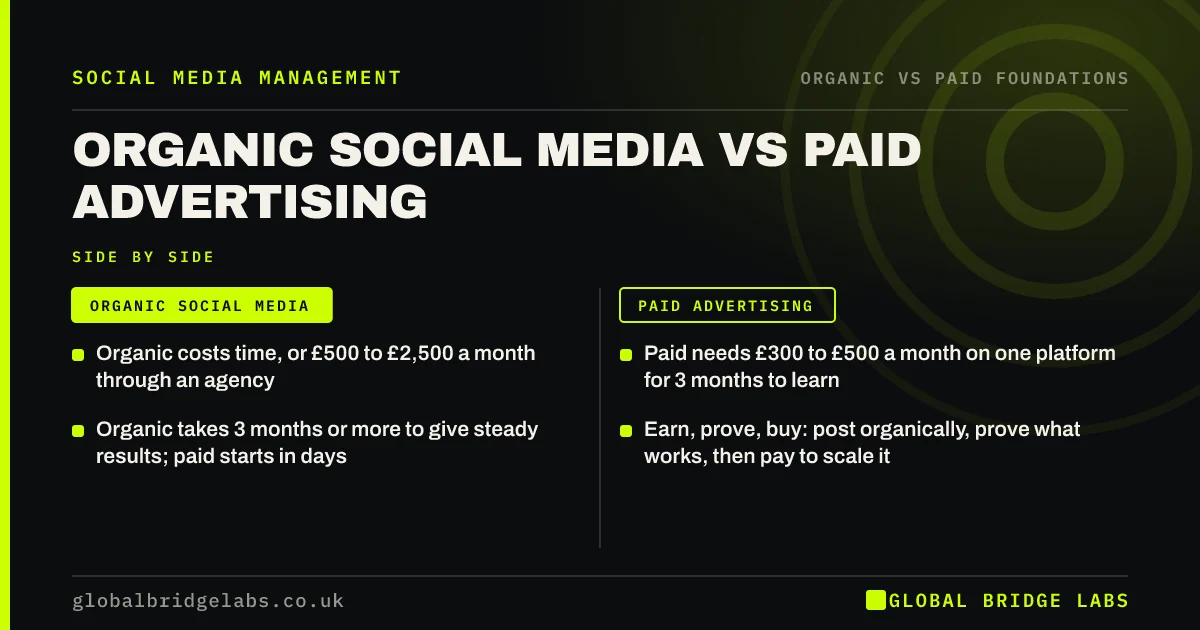
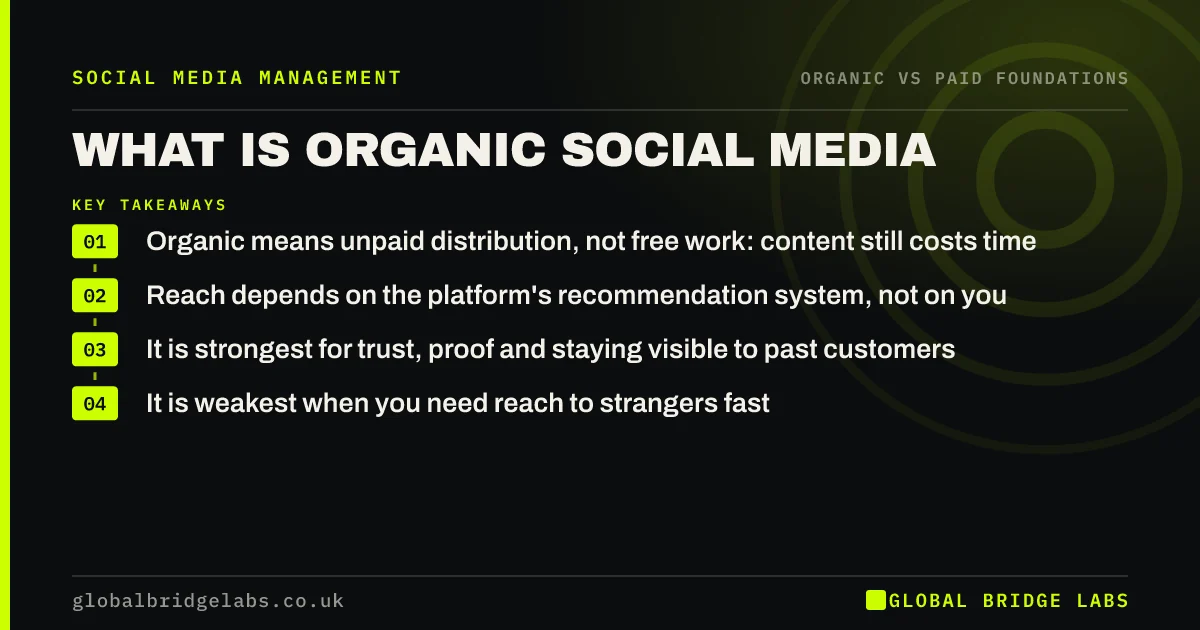
Organic targeting is indirect: you shape who sees posts through topics, hashtags, groups and location tags, but the platform decides. Paid targeting is direct: you choose location, age, interests, job titles or your own customer lists. Use organic to attract the right people over time and paid when a specific audience must see a message.
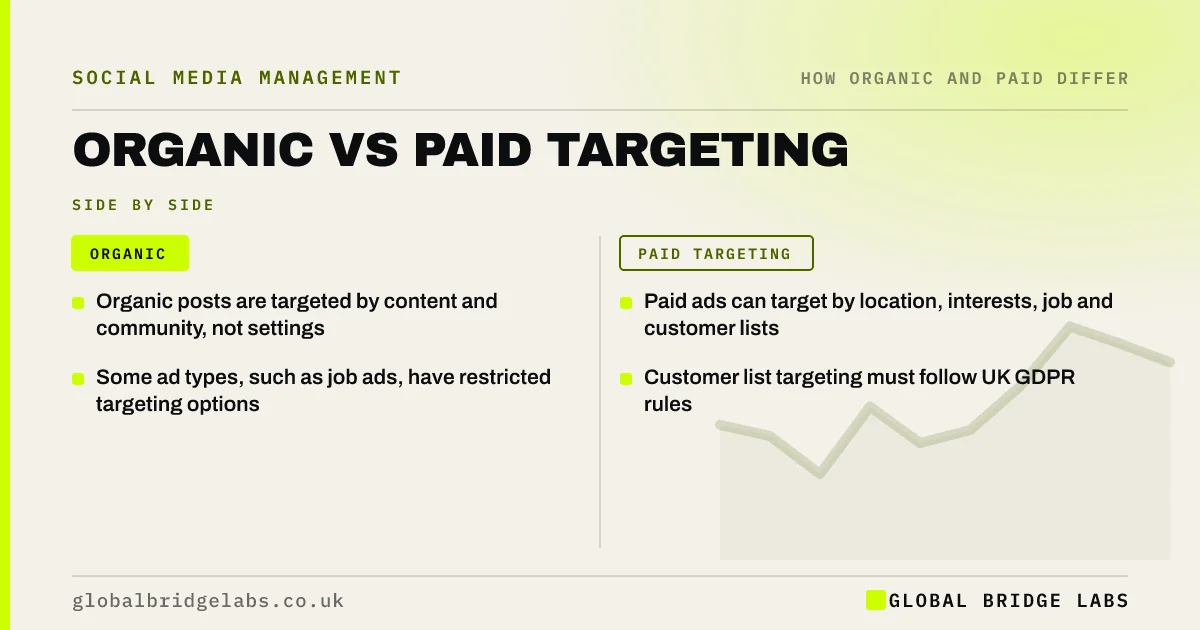
- Organic posts are targeted by content and community, not settings.
- Paid ads can target by location, interests, job and customer lists.
- Some ad types, such as job ads, have restricted targeting options.
- Customer list targeting must follow UK GDPR rules.
Want to know who you can reach with ads? Ask us on WhatsApp.
Chat on WhatsApp →Can you target organic posts?
Only indirectly. Organic posts reach people the platform predicts will be interested, based on the content, past engagement and signals such as location tags, captions and groups. You influence targeting by talking about what your ideal customer cares about, posting in the right groups and tagging your area.
- Write for one specific customer type.
- Post in local or sector groups.
- Use location tags and clear captions.
- Collaborate with accounts your buyers follow.
What can paid targeting do?
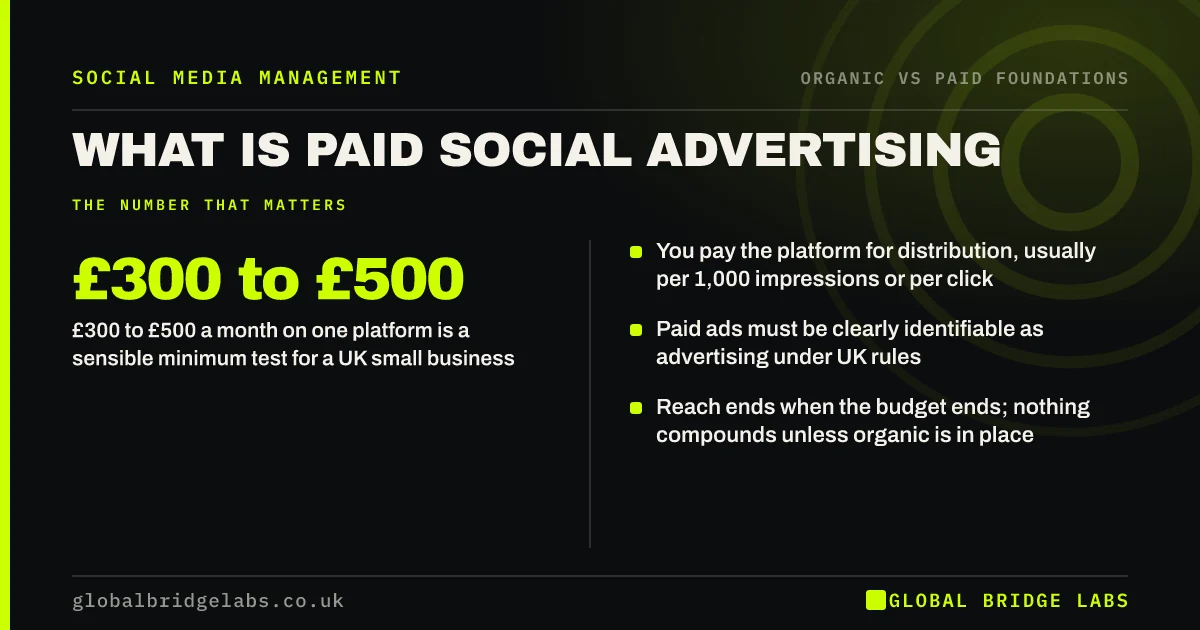
Paid targeting lets you choose who sees an ad by location, age, interests, behaviours, job titles on LinkedIn, and custom audiences built from website visitors, engagers or customer lists. Meta and LinkedIn both offer lookalike-style audiences that find people similar to your customers.
What limits apply to paid targeting?
Targeting is restricted for some ad types. Meta's Special Ad Categories, covering employment, housing, credit and social issues, limit options such as age and detailed targeting. Using customer lists requires a lawful basis under UK GDPR, and the ICO's direct marketing guidance applies.
Want help defining an ad audience that fits your budget? Message us on WhatsApp.
Chat on WhatsApp →Is narrow targeting always better?
No. Very narrow audiences make ads expensive and slow to learn. Platforms increasingly find buyers well with broad targeting and strong creative. For small budgets, a sensible approach is a clear location plus broad interests, and letting the ad content do the filtering.
When should you use each?
Use organic to attract and keep the right audience over time through useful, specific content. Use paid when a defined group must see something: homeowners in three postcodes, finance directors in a sector, or people who visited your pricing page.
What does this look like in practice?
A pattern we see: a commercial cleaning firm posted organically to a mostly residential following and won no office contracts. A LinkedIn ad campaign targeting office and facilities managers within 20 miles, using its best organic case study, reached the decision-makers its organic posts never did.
Targeting checklist
- Describe your ideal customer in one sentence.
- Shape organic content around their questions.
- Join and post in groups they use.
- Use paid when a defined audience must see you.
- Check special ad category rules for your ad type.
- Confirm a lawful basis before uploading customer lists.
Next step
Write down the one audience your organic posts are not reaching but need to. If you cannot reach them through content and groups within three months, test a small paid campaign aimed at them.
Message us on WhatsApp for an audience plan, or book a 30-minute consultation.
Chat on WhatsApp →Sources and further reading
- Meta Business Help Centre · Meta
- How to choose a Special Ad Category · Meta
- Direct marketing and privacy and electronic communications · Information Commissioner's Office
Frequently asked questions
How do I get my organic posts to the right people?
Write about the problems your ideal customers have, use clear captions and location tags, post in groups where they spend time, and engage with accounts they follow. Platforms learn who responds and show future posts to similar people. Consistency over several months matters more than any single tactic.
Can I target my competitors' followers with ads?
Most platforms no longer let you target another business's followers directly. You can target interests related to your sector, which may include people who follow competitors. A better approach is often targeting your own website visitors and engagers, who already know you.
Is it legal to upload customer emails for ad targeting?
It can be, if you have a lawful basis under UK GDPR and your privacy notice tells customers their data may be used this way. The ICO's direct marketing guidance applies. Many businesses rely on consent or legitimate interests, but check your own position before uploading any list.
Written by

Global Bridge Labs (GBL) is a UK–Sri Lanka partner for social media, websites and BPO. Everything here comes from client delivery, not theory.