On this page
- 01Key takeaways
- 02What is a social media algorithm?
- 03What signals do algorithms use?
- 04How do the main platforms differ?
- 05What does this mean for a small business?
- 06Which algorithm tactics should you ignore?
- 07What does this look like in practice?
- 08Why do small accounts sometimes outperform large ones?
- 09Your algorithm checklist for small businesses
- 10Next step
- 11Sources and further reading
- 12Frequently asked questions
Key takeaways
Social media algorithms decide which posts each person sees by predicting how likely that person is to engage with each post. They use signals about the viewer, the post and the account, then test posts on small groups before showing them more widely. For a small business, the lesson is simple: post consistently for a clear audience and make each post worth engaging with.
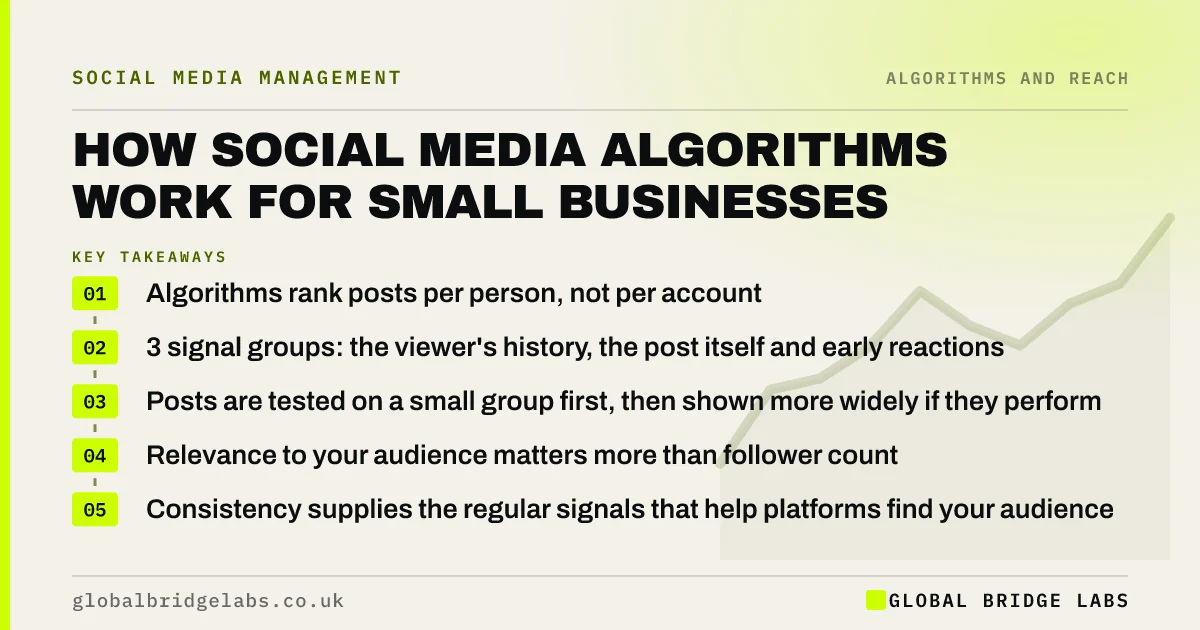
- Algorithms rank posts per person, not per account.
- 3 signal groups: the viewer's history, the post itself and early reactions.
- Posts are tested on a small group first, then shown more widely if they perform.
- Relevance to your audience matters more than follower count.
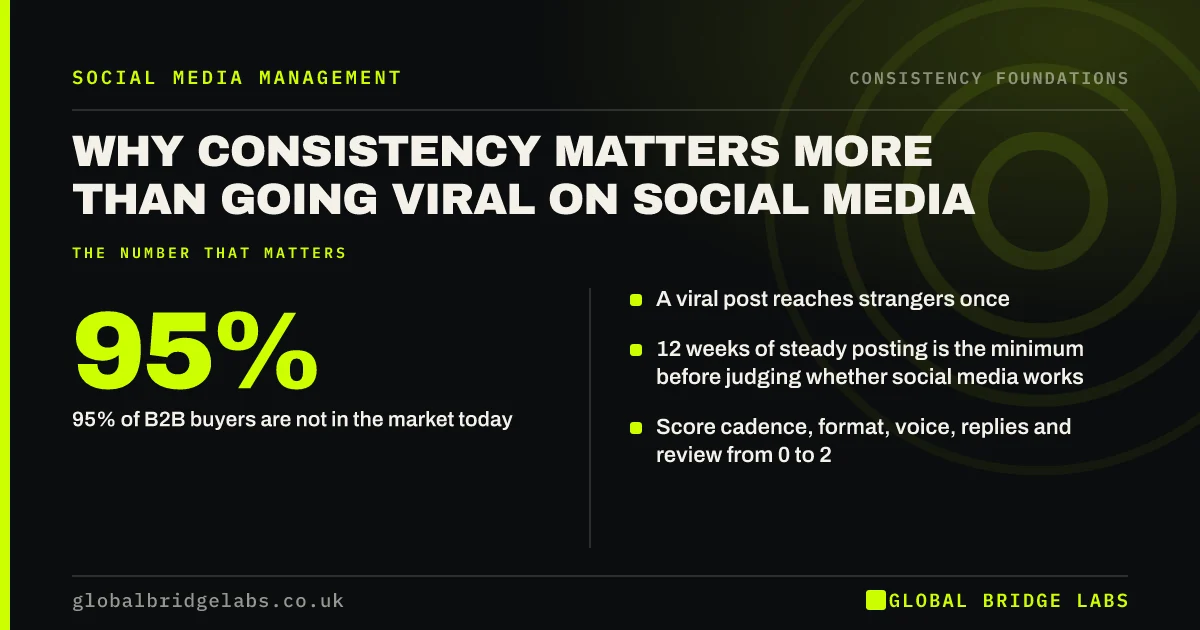
- Consistency supplies the regular signals that help platforms find your audience.
Want your posts reviewed against how the algorithms actually rank them? Message us on WhatsApp.
Chat on WhatsApp →What is a social media algorithm?
A social media algorithm is a ranking system that orders posts in each person's feed according to how relevant the platform predicts they will be. Instead of showing posts in time order, platforms estimate which posts each viewer is most likely to watch, read, react to or share, and show those first.
This is why two people following the same accounts see different feeds, and why your posts reach a different share of your followers each time.
What signals do algorithms use?
Platforms describe their signals in slightly different terms, but most fall into three groups.
- Viewer signals: what this person has watched, liked, saved, commented on or followed before.
- Post signals: the topic, format, captions, audio, length and language of the post.
- Response signals: how the first viewers react, including watch time, saves, shares and comments.
How do the main platforms differ?
- TikTok: heavily recommendation-led; most views come from people who do not follow you. Follower count is not a direct factor.
- Instagram: mixes followers and recommendations; Reels lean towards recommendations, feed posts towards followers.
- Facebook: favours posts from pages and groups people interact with, plus some recommended content.
- LinkedIn: ranks for professional relevance; comments and conversation carry weight.
- YouTube: recommendations driven by watch behaviour and viewer satisfaction.
What does this mean for a small business?
It means you do not need a big audience, but you do need a clear one. Algorithms look for people likely to engage with your post. If your content is consistently aimed at the same kind of buyer, the platform has an easier job finding more people like them.
It also means every post is judged on its own. A strong post from a small account can travel; a weak post from a large one may not. That is good news for businesses that post consistently, because each post is a fresh chance rather than a verdict on the account.
Want to know whether your content is clearly aimed at one buyer? Send us five posts on WhatsApp.
Chat on WhatsApp →Which algorithm tactics should you ignore?
- Engagement bait such as comment YES if you agree. Platforms say they demote it.
- Posting at exactly the same minute every day. Predictable days matter more than minutes.
- Dozens of hashtags. A few relevant ones help categorise; more add little.
- Deleting and reposting posts that underperform. It rarely helps and can confuse followers.
- Buying followers. It adds people who never engage, which weakens later posts.
What does this look like in practice?
A UK wedding venue was posting general inspiration content to appeal to everyone. Reach was reasonable but enquiries were low. We narrowed the content to couples planning weddings in the region: real weddings at the venue, costs explained, and supplier recommendations. Reach fell slightly at first, then enquiries rose, because the platforms were now showing the posts to people who resembled the venue's buyers.
Why do small accounts sometimes outperform large ones?
Because algorithms judge each post on predicted relevance, not on the size of the account. A small account whose followers are closely matched to its content often sees a higher share of followers engage, and that early engagement helps the post travel. A large account with many uninterested followers can see the opposite.
This is why follower quality and consistency matter more than follower count for a small business. A few hundred relevant local followers engaging every week is a stronger foundation than thousands of followers gained from one viral post.
Your algorithm checklist for small businesses
- Write one sentence describing the buyer every post is for.
- Use the format the platform currently favours, such as short video on Reels and TikTok.
- Open every post with the point, not a preamble.
- Post consistently so the platform keeps learning who your content suits.
- Reply to comments quickly to extend conversations.
- Judge posts on saves, shares and replies from relevant people, not just views.
Next step
Write one sentence describing the buyer every post is for. Check your last ten posts against it. The ones that do not fit are teaching the algorithm to show your content to the wrong people.
Message us on WhatsApp and we will check your last ten posts against your buyer.
Chat on WhatsApp →Sources and further reading
- How TikTok recommends videos #ForYou · TikTok Newsroom
- LinkedIn relevance: optimising the member experience · LinkedIn Help
- How YouTube works: recommendations · YouTube
- Meta Business Help Centre · Meta
Frequently asked questions
How do social media algorithms decide what to show?
They predict how likely each person is to engage with each post, using that person's history, the post's content and how early viewers react. Posts predicted to be most relevant are shown first. Posts that perform well with early viewers are often shown to more people.
Do algorithms hide business posts?
Platforms do not hide business posts as a rule, but business posts often compete with content from friends and creators. Posts that feel like adverts tend to get less engagement and therefore less reach. Useful, specific posts aimed at a clear audience perform better.
How often do social media algorithms change?
Constantly, in small ways, and occasionally in larger ones that platforms announce. Chasing each change is rarely worthwhile for a small business. The underlying principle, showing people content they are likely to engage with, has stayed stable for years.
Can small businesses beat the algorithm?
There is nothing to beat. The algorithm is trying to show people relevant content, and your job is to create relevant content for a clear audience. Consistent, specific posts aimed at your buyers work with the algorithm rather than against it.
Do algorithms favour video over images?
Many platforms currently promote short-form video heavily, especially Instagram Reels, TikTok and YouTube Shorts. Images and text still perform well on LinkedIn and in Facebook groups. Choose the format your buyers engage with on each platform, and prioritise a format you can produce consistently.
Written by

Global Bridge Labs (GBL) is a UK–Sri Lanka partner for social media, websites and BPO. Everything here comes from client delivery, not theory.