On this page
- 01Key takeaways
- 02Should a sole trader spend time or money on social?
- 03How much time should a sole trader spend on social?
- 04What organic content works for sole traders?
- 05When should a sole trader pay for ads?
- 06What is your time worth?
- 07What does this look like in practice?
- 08Sole trader checklist
- 09Next step
- 10Sources and further reading
- 11Frequently asked questions
Key takeaways
Sole traders trade time for money directly, so the choice is personal: an hour on social is an hour not earning. Organic works if you can protect two to three hours a week and show your face and work. Paid suits sole traders who are busy but need steady enquiries, using a small budget behind proven posts.
- Protect a fixed weekly slot for organic, or it will not happen.
- Show your face: people buy from sole traders, not logos.
- Paid suits busy sole traders who need steady enquiries.
- Keep any ad budget small and on one platform.
Working on your own? Tell us about your business on WhatsApp.
Chat on WhatsApp →Should a sole trader spend time or money on social?
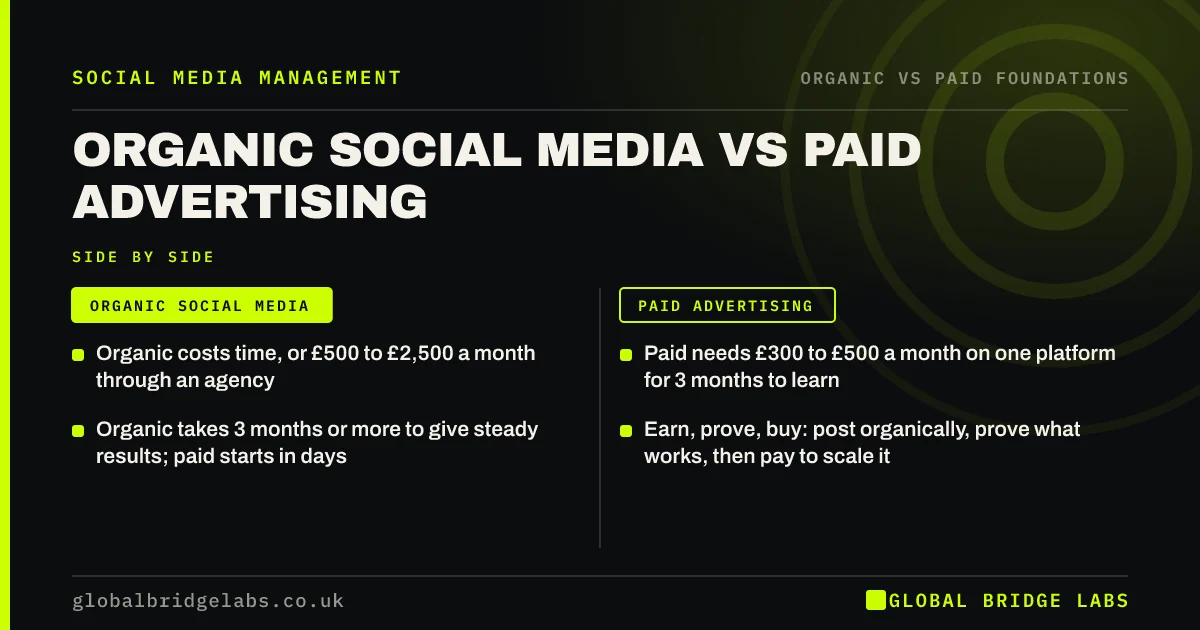
It depends on what your time is worth and how busy you are. If you have quiet periods, organic posting is low-cost. If you are fully booked but need a steady pipeline, a small paid budget behind proven posts may cost less than the hours organic needs. Most sole traders do a little of both.
How much time should a sole trader spend on social?
Two to three hours a week is realistic for most sole traders: one short planning session, quick photos or videos during work, and set times for replies. Batching content on one day saves time.
- Plan once a week or month.
- Capture photos and clips while you work.
- Post two or three times a week.
- Reply at fixed times each day.
What organic content works for sole traders?
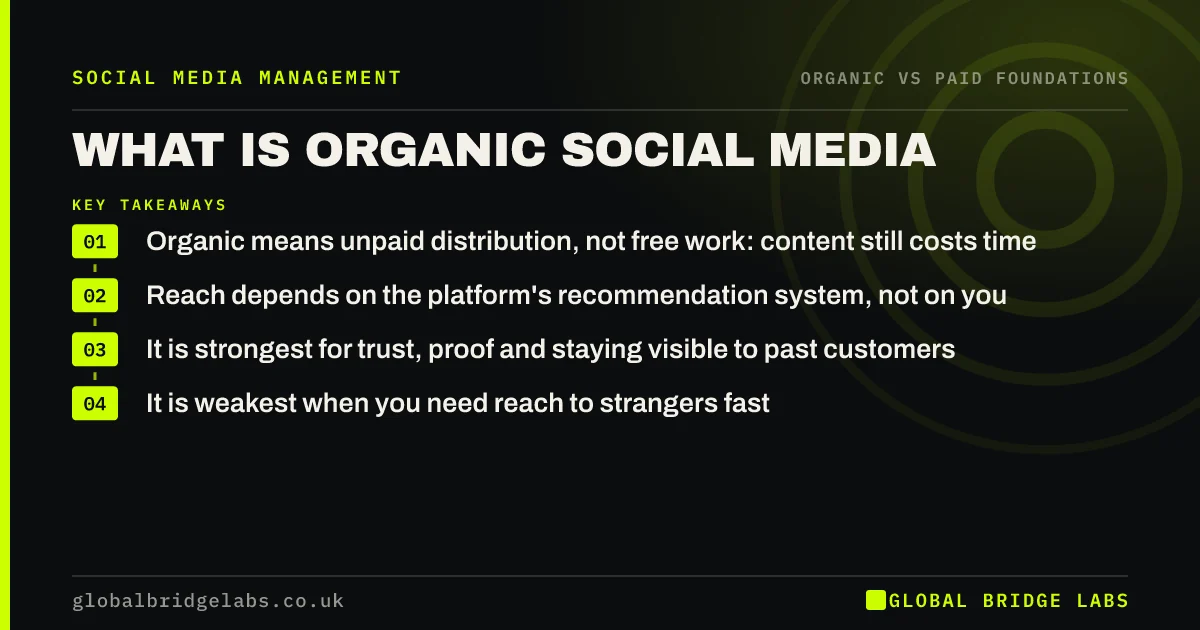
People buy from people, so show yourself: your work, your process, your customers' reactions and your honest advice. Short, unpolished videos often outperform designed graphics for sole traders.
When should a sole trader pay for ads?
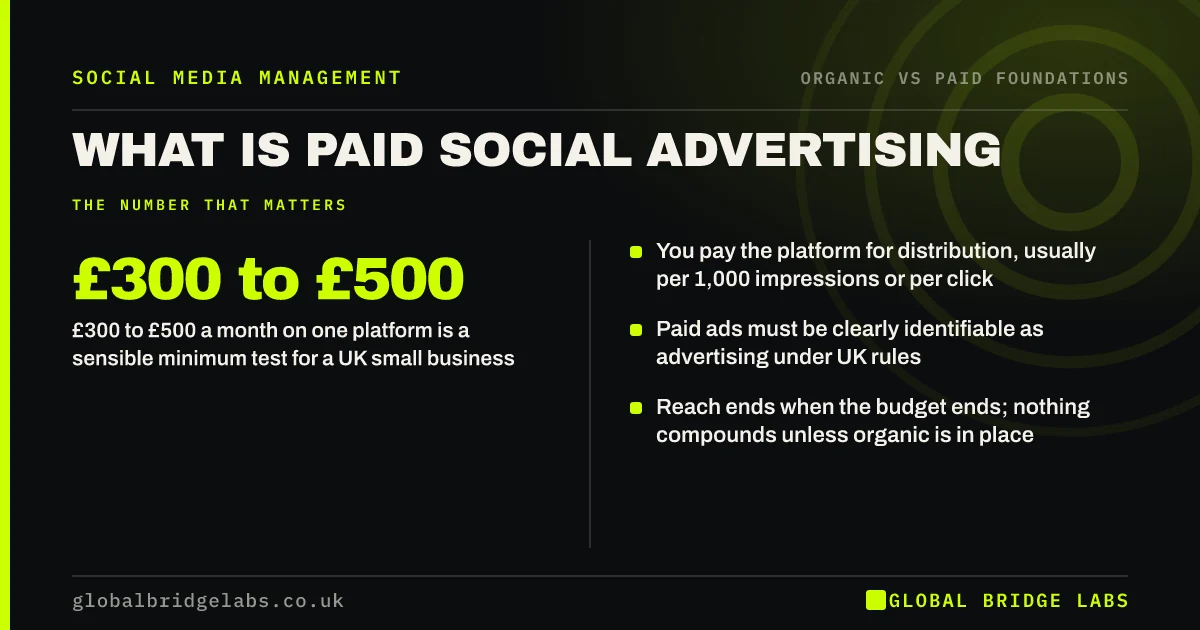
Pay for ads when you have capacity to fill but no time to post more, when a new service needs launching, or when you are moving into a new area. Use a small budget on one platform behind a post that already brought enquiries.
What is your time worth?
Work out your hourly rate after costs. If an hour of posting brings less than an hour of paid work would, consider paying for help or ads. ONS earnings data can help benchmark, but your own rate matters most.
What does this look like in practice?
A pattern we see: a self-employed gardener spent evenings designing graphics that got little response. Switching to 30-second clips filmed on site, posted twice a week, brought more enquiries in less time. In his quiet winter months, a small local ad behind his best clip kept bookings coming in.
Sole trader checklist
- Set a fixed weekly social media slot.
- Film or photograph while you work.
- Show your face and voice.
- Reply at set times each day.
- Use a small ad budget for quiet periods.
- Compare time spent with enquiries gained.
Next step
Block two hours a week in your diary for social media for the next month. Track enquiries, then decide whether more time or a small ad budget is the better next step.
Message us on WhatsApp for a sole trader social plan, or book a 30-minute consultation.
Chat on WhatsApp →Sources and further reading
- Business population estimates for the UK and regions 2025 · Department for Business and Trade
- Employee earnings in the UK (Annual Survey of Hours and Earnings) · Office for National Statistics
- Meta Business Help Centre · Meta
Frequently asked questions
Is social media worth it for a sole trader?
Usually, yes, because many customers check social profiles before contacting a sole trader. It does not need to take much time: two or three short posts a week showing your work and face can be enough. Track enquiries to make sure the time pays back.
Should sole traders use Facebook ads?
They can, with a small, focused budget on one platform behind a post that already works. Ads are most useful in quiet periods, for new services or when moving into a new area. Avoid spreading a small budget across many platforms or boosting random posts.
How can a sole trader save time on social media?
Plan content monthly, capture photos and clips during normal work, batch editing and scheduling into one session, and reply at fixed times. Reuse each piece across platforms. If time is still short, consider paying for help with routine posting and keeping only the personal content yourself.
Written by

Global Bridge Labs (GBL) is a UK–Sri Lanka partner for social media, websites and BPO. Everything here comes from client delivery, not theory.