On this page
Key takeaways
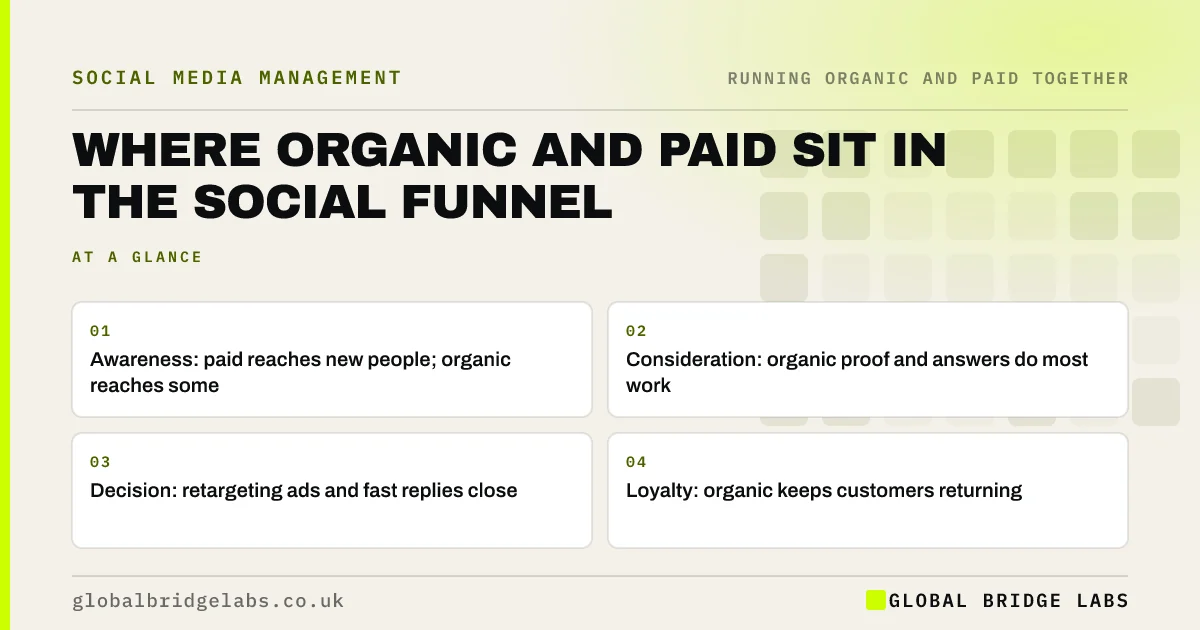
In a simple social funnel, paid ads do most awareness work with new audiences, organic content does most consideration work by showing proof and answering questions, and retargeting ads plus direct messages close the decision. Organic also keeps existing customers coming back. Mapping each piece of content to a stage stops you asking one post to do everything.
- Awareness: paid reaches new people; organic reaches some.
- Consideration: organic proof and answers do most work.
- Decision: retargeting ads and fast replies close.
- Loyalty: organic keeps customers returning.
Want your content mapped to a funnel? Message us on WhatsApp.
Chat on WhatsApp →What is a social media funnel?
A social media funnel describes the stages people pass through: becoming aware of you, considering you, deciding to buy and returning. Different content and spending suit each stage. It is a planning tool, not a rigid path; people jump around.
What does each stage need?
Each stage needs a different job done.
- Awareness: reach new, relevant people.
- Consideration: proof, answers and personality.
- Decision: a clear offer and easy next step.
- Loyalty: reasons to come back and recommend.
Where does paid fit best?
Paid fits best at awareness, reaching people who will not find you organically, and at decision, retargeting engaged people with a clear offer. Meta's engagement audiences let you retarget people who interacted with organic posts.
Want a funnel map for your business? Message us on WhatsApp and we will discuss your requirements.
Chat on WhatsApp →Where does organic fit best?
Organic fits best at consideration and loyalty: showing real work, answering questions and staying in touch with customers. It also contributes to awareness through shares and recommendation feeds. The IPA's work supports balancing long-term brand building with short-term activation.
How do you measure a funnel?
Measure each stage on its own: reach for awareness, engagement and profile visits for consideration, enquiries and sales for decision, repeat rate for loyalty. GA4 attribution helps see how channels contribute along the way.
What does this look like in practice?
A pattern we see: a garden landscaping firm ran ads straight to a quote form with little success. Mapping a funnel, awareness ads with project videos, organic posts answering cost and timing questions, and retargeting ads offering a free design visit, produced more quote requests at a lower cost.
Funnel checklist
- List your content by funnel stage.
- Use paid for awareness to new audiences.
- Use organic for proof and answers.
- Retarget engagers with a clear offer.
- Reply to messages within hours.
- Measure each stage on its own terms.
Next step
Sort last month's posts and ads into the four stages. Fill the emptiest stage first, usually consideration content or a retargeting offer.
Message us on WhatsApp for a funnel mapping session, or book a 30-minute consultation.
Chat on WhatsApp →Sources and further reading
Frequently asked questions
Do small businesses need a full social media funnel?
A simple version helps. Even small businesses benefit from knowing which posts build awareness, which build trust and which ask for the sale. You do not need complex campaigns: a few ads for reach, regular proof posts and a retargeting offer cover most needs.
Should every post have a call to action?
No. Consideration posts such as answers, stories and behind the scenes build trust without asking for anything. Too many hard sells push people away. Use clear calls to action on decision-stage posts and ads, and keep the rest genuinely helpful so people want to keep seeing you.
Is organic only for the top of the funnel?
No. Organic often does more at the middle and bottom than at the top: proof, answers and direct conversations help people decide. It also keeps existing customers returning and recommending you. Paid is usually better for reaching brand-new people at the top of the funnel.
Written by

Global Bridge Labs (GBL) is a UK–Sri Lanka partner for social media, websites and BPO. Everything here comes from client delivery, not theory.