On this page
- 01Key takeaways
- 02What is different about advertising an online shop?
- 03What does each digital channel do?
- 04Where does social media fit?
- 05Which offline channels suit e-commerce?
- 06When does television make sense?
- 07What does it cost?
- 08Which numbers should an online shop watch?
- 09What rules apply?
- 10What does this look like in practice?
- 11Next step
- 12Sources and further reading
- 13Frequently asked questions
Key takeaways
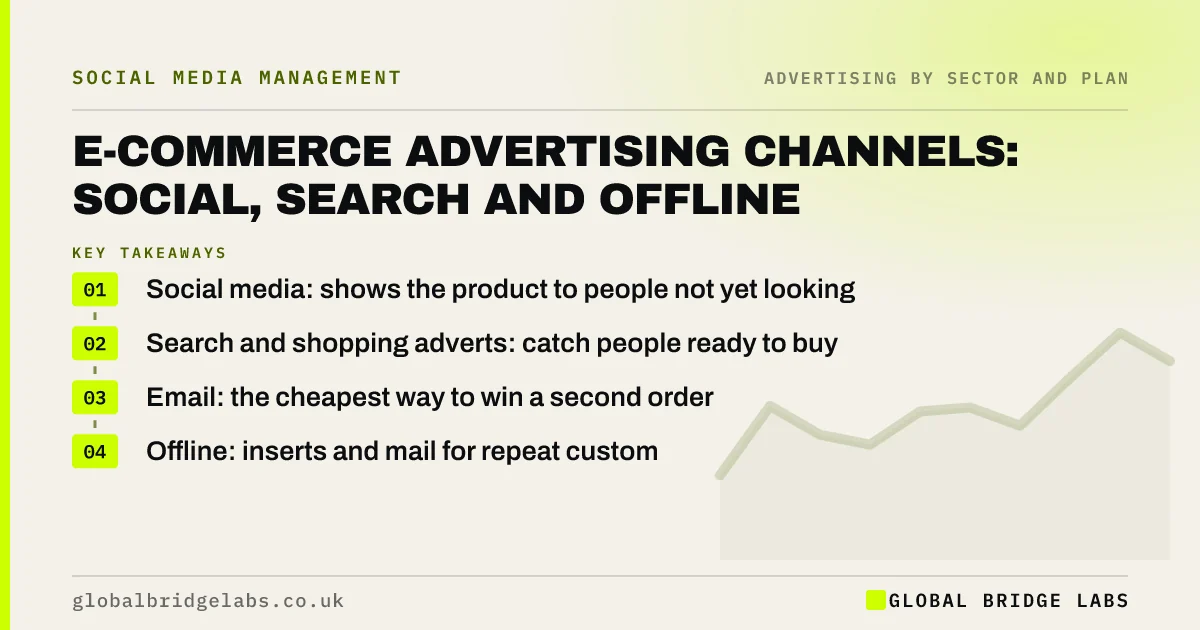
E-commerce advertising channels are mostly digital, because the shop is. Social media creates demand, search captures it and email brings buyers back. Offline channels play a smaller, specific part: parcel inserts, catalogues and, for larger brands, television.
- Social media: shows the product to people not yet looking.
- Search and shopping adverts: catch people ready to buy.
- Email: the cheapest way to win a second order.
- Offline: inserts and mail for repeat custom.
Want your online shop's channels reviewed? Message us on WhatsApp.
Chat on WhatsApp →What is different about advertising an online shop?
An online shop can sell nationwide, measures every order and lives or dies on repeat purchases. Internet sales make up a substantial share of UK retail, according to the Office for National Statistics. Competition is a click away, so advertising must both find new buyers and keep existing ones.
What does each digital channel do?
Give each channel one job.
- Social media posts: show the product in use.
- Paid social: reach new people who match your buyers.
- Search and shopping adverts: appear for product searches.
- Email and messages: prompt the second and third order.
- Marketplaces: reach people who start their search there.
Where does social media fit?
Social media is the shop window. Most people are not searching for your product, so they need to see it. Photos, short video, customer content and paid adverts aimed at lookalike audiences create demand. Platform shopping features can shorten the path from seeing to buying.
Which offline channels suit e-commerce?
A few offline channels earn their place because they reach existing customers at home.
- Parcel inserts: a card or offer in every order.
- Direct mail or a small catalogue to past buyers.
- Partner inserts in another brand's parcels.
- Markets and pop-ups to meet buyers and gather content.
When does television make sense?
Television makes sense late. Addressable TV campaigns typically start at several thousand pounds plus production. It suits a brand with a proven message from social video, healthy margins and a site that converts. Ofcom's Media Nations 2026 found 70% of people watched broadcasters' programmes weekly in 2025.
What does it cost?
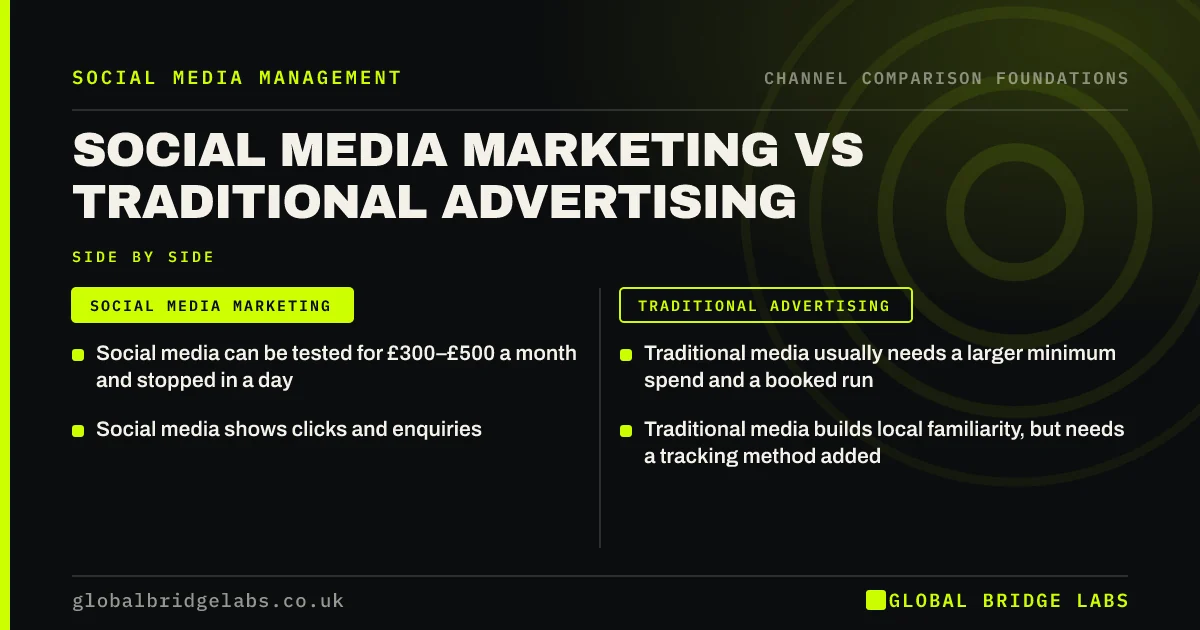
Paid social has a practical floor of £300–£500 a month, and most online shops need more to scale. Most UK SMEs using an agency pay £950–£2,500 a month for managed social media. Addressed mail costs roughly 60p to £1.20 an item, and a parcel insert only pennies.
Want a channel plan costed against your margins? Message us on WhatsApp and we will discuss your requirements.
Chat on WhatsApp →Which numbers should an online shop watch?
Watch cost per order by channel, average order value, repeat purchase rate and the share of visitors who buy. Profit depends on what a customer spends over time, not on the first order. A channel that looks expensive can still pay if its customers return.
What rules apply?
Distance selling rules give consumers information and cancellation rights, usually 14 days. Marketing emails and texts to individuals need consent or the soft opt-in for existing customers under PECR. Postal marketing falls under UK GDPR. Fake reviews and false urgency claims are banned.
What does this look like in practice?
A pattern we see with growing online shops: nearly all spend goes on finding new customers, and nothing is done to bring back those already won. Adding a parcel insert and a follow-up email sequence costs little and usually lifts repeat orders before any new advertising is bought.
Next step
Work out what share of last month's orders came from returning customers. If it is low, fix repeat custom before spending more on new traffic.
Message us on WhatsApp with that share and we will suggest where to focus, or book a 30-minute consultation.
Chat on WhatsApp →Sources and further reading
- Internet sales as a percentage of total retail sales · Office for National Statistics
- Online and distance selling for businesses · GOV.UK
- Electronic and telephone marketing under PECR · Information Commissioner's Office
- Media Nations 2026: TV, video, radio and audio in the UK · Ofcom
Frequently asked questions
What is the best advertising channel for e-commerce?
No single channel. Social media creates demand, search and shopping adverts capture it, and email brings buyers back. Most online shops need all three, weighted by their margins and how often customers reorder. Start with the one that matches how people find your product today, and add the others as orders grow.
Does offline advertising work for online shops?
In specific forms, yes. Parcel inserts, direct mail and small catalogues to existing customers can lift repeat orders. Broad offline media such as radio or outdoor rarely suit a small online shop selling nationwide. Give each insert or mailing its own discount code so repeat orders can be traced.
How much should an online shop spend on advertising?
Set it from your margin. Decide the most you can pay for an order and still profit, allowing for repeat purchases, and spend up to that cost per order. Start small, measure and scale what stays under the limit.
Is social media or Google better for selling products online?
They do different jobs. Google reaches people already searching for a product. Social media shows products to people who were not looking. Products people search for suit Google first, and products people discover suit social media first.
Written by

Global Bridge Labs (GBL) is a UK–Sri Lanka partner for social media, websites and BPO. Everything here comes from client delivery, not theory.