On this page
- 01Key takeaways
- 02What is direct mail?
- 03How do the costs compare?
- 04What do the data rules say?
- 05Who should you write to?
- 06Which gets more attention?
- 07When does direct mail win?
- 08When does social media win?
- 09How do you use the two together?
- 10What does this look like in practice?
- 11Next step
- 12Sources and further reading
- 13Frequently asked questions
Key takeaways
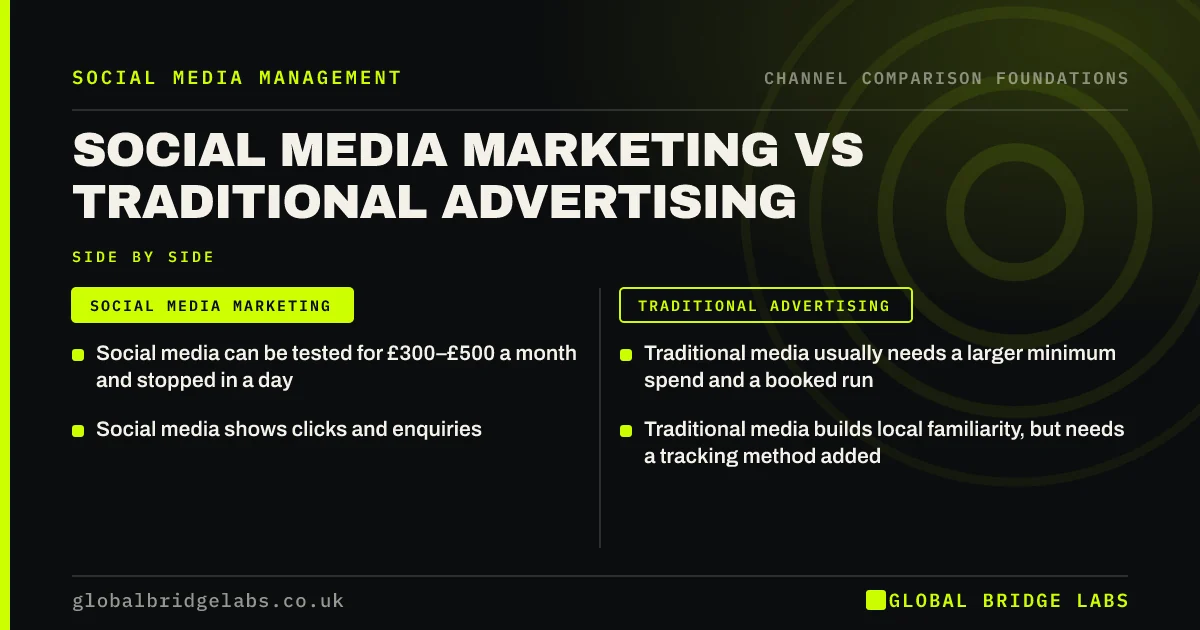
Direct mail vs social media is a question of depth against breadth. Direct mail sends a personal, physical message to a named person, at a high cost per item. Social media reaches far more people for the same money, with less attention from each.
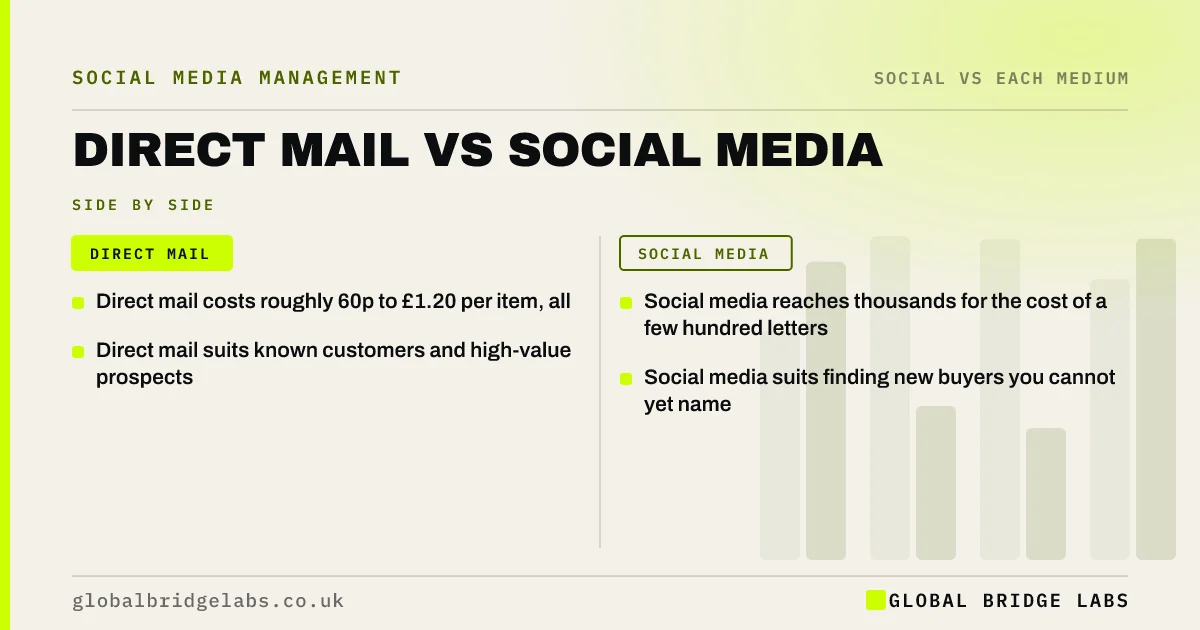
- Direct mail costs roughly 60p to £1.20 per item, all in.
- Social media reaches thousands for the cost of a few hundred letters.
- Direct mail suits known customers and high-value prospects.
- Social media suits finding new buyers you cannot yet name.
Thinking about a mailing? Message us on WhatsApp and we will help you plan it properly.
Chat on WhatsApp →What is direct mail?
Direct mail is addressed post sent to named people or businesses: letters, postcards, catalogues and packs. It differs from a leaflet drop because it uses personal data. That makes it more personal and more regulated.
How do the costs compare?
Direct mail is expensive per contact. As an indicative range, a mailed item costs 60p to £1.20 including print, data and postage, so 500 letters cost £300 to £600. That sum would fund a month of social ads seen by thousands. Direct mail has to earn its cost through a much higher response from a carefully chosen list.
- How much does advertising cost a UK small business?
- Cost per lead by channel: comparing social media and offline
Want a mailing costed against a social campaign? Message us on WhatsApp and we will discuss your requirements.
Chat on WhatsApp →What do the data rules say?
Postal marketing to named individuals is covered by UK GDPR. You need a lawful basis, which is often legitimate interests, and you must tell people how you use their data and stop if they object. The electronic marketing rules in PECR do not cover post. The ICO also expects you to screen bought lists against the Mailing Preference Service.
- Record your lawful basis for mailing.
- Offer an easy way to opt out, and honour it.
- Check where any bought list came from.
- Screen against the Mailing Preference Service.
Who should you write to?
Write to people with a reason to open the envelope. Past customers, lapsed customers and enquirers who did not buy respond best, because they know you. Cold lists respond far less and carry more legal risk. For business buyers, a short list of named decision makers can justify a well-made pack.
Which gets more attention?
A letter gets more attention per person. It is handled, opened and often kept, while a social post competes with everything else in the feed. JICMAIL, the industry body that measures mail, tracks how long items stay in the home and how often they are looked at, and addressed mail consistently outlasts unaddressed items.
When does direct mail win?
Direct mail wins when you know exactly who you want and each sale is worth a good deal. It suits reactivating past customers, renewals, invitations and high-value business prospects.
- Past customers due a service or renewal.
- A short list of high-value prospects.
- Invitations to an event or opening.
- Customers who do not use email or social media.
When does social media win?
Social media wins when you do not yet know who the buyers are, when the sale is small, or when the budget cannot stand a pound per contact. It is also the better tool for staying visible between mailings at almost no extra cost.
How do you use the two together?
Use them in sequence. Send the letter, then show social ads in the same week to the same area or, where your privacy information allows it, to a matched customer list. People who notice both are more likely to respond. Put a short web address or code on the letter so replies can be counted.
What does this look like in practice?
A pattern we see with service firms that hold years of customer records: new-customer advertising gets all the budget while past customers hear nothing. A plain letter to the last three years' customers, followed by regular social posts, is often the cheapest campaign the firm has run.
Next step
Count how many past customers you hold a postal address for and when each last heard from you. That list is your first mailing.
Message us on WhatsApp for help planning the mailing and the social follow-up, or book a 30-minute consultation.
Chat on WhatsApp →Sources and further reading
- Direct marketing and privacy and electronic communications · Information Commissioner's Office
- Lawful basis for processing personal data · Information Commissioner's Office
- Mailing Preference Service · Mailing Preference Service
- Joint Industry Committee for Mail: audience measurement for mail and door drops · JICMAIL
Frequently asked questions
Is direct mail still effective?
Yes, when sent to the right people. Addressed mail is opened and kept more than most adverts, so it works well for past customers, renewals and high-value prospects. It is costly per item, so it performs poorly when sent to large cold lists.
Do I need consent to send marketing by post in the UK?
Not necessarily. Postal marketing falls under UK GDPR, not PECR, and many organisations rely on legitimate interests instead of consent. You must still be transparent, offer an opt-out and stop when someone objects. Check any bought list carefully.
Is direct mail more expensive than social media advertising?
Per person reached, yes, by a wide margin. A mailed item often costs 60p to £1.20, while social ads reach a person for a fraction of a penny. Direct mail can still be good value when response is high and each sale is valuable.
What is the difference between direct mail and a door drop?
Direct mail is addressed to a named person and uses personal data, so data protection law applies. A door drop is an unaddressed leaflet delivered to every home in an area. Direct mail is more personal and costs more per item.
Written by

Global Bridge Labs (GBL) is a UK–Sri Lanka partner for social media, websites and BPO. Everything here comes from client delivery, not theory.