On this page
- 01Key takeaways
- 02Is organic social media dead?
- 03Where does organic still work best?
- 04What does organic social do that ads cannot?
- 05Why does organic stop working for some businesses?
- 06When should you add paid?
- 07What does this look like in practice?
- 08Is organic working? Checklist
- 09Next step
- 10Sources and further reading
- 11Frequently asked questions
Key takeaways
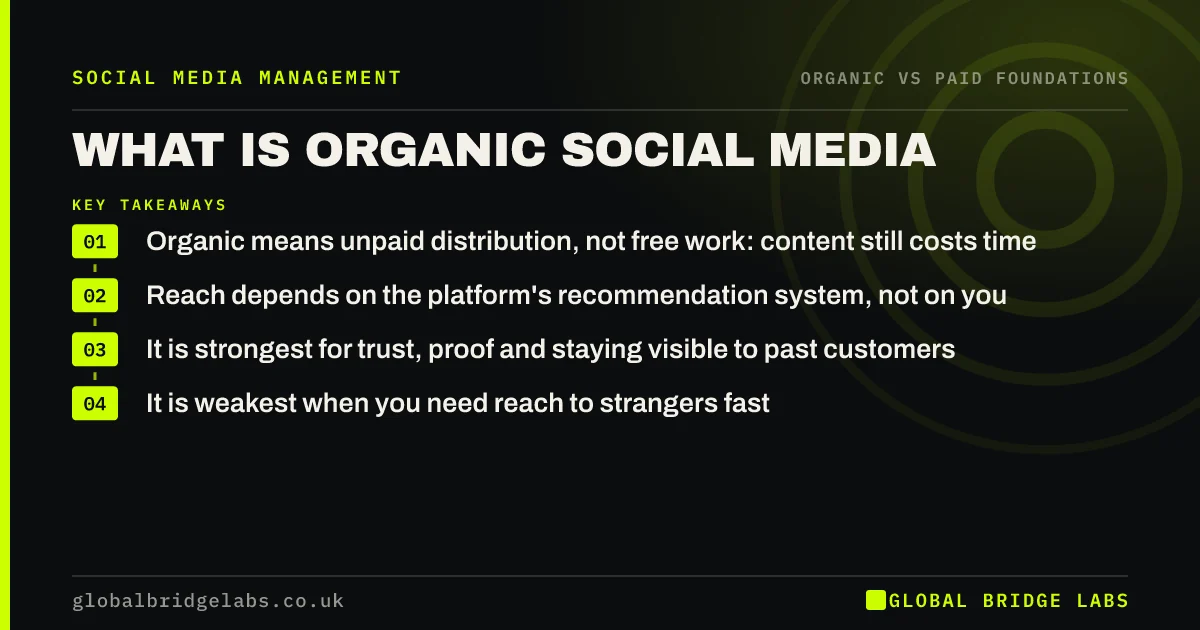
Organic social media still works for small businesses, but not the way it did. Page posts no longer reach most followers by default. Instead, recommendation feeds show useful, engaging content to people who do not follow you. Organic works best now for trust, search-like discovery, local communities and keeping past customers close.
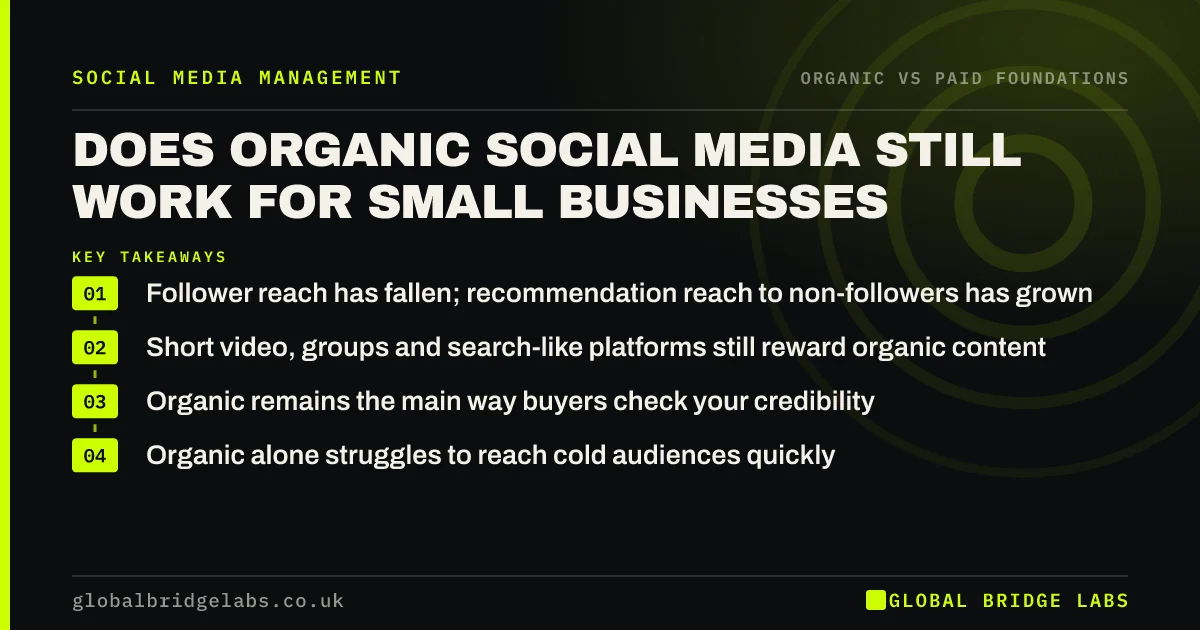
- Follower reach has fallen; recommendation reach to non-followers has grown.
- Short video, groups and search-like platforms still reward organic content.
- Organic remains the main way buyers check your credibility.
- Organic alone struggles to reach cold audiences quickly.
Not sure whether organic is working for you? Send us your profile on WhatsApp.
Chat on WhatsApp →Is organic social media dead?
No. Organic social is not dead, but the old model of posting to followers and expecting them to see it has largely gone. Platforms now rank content by predicted interest. TikTok explains that its For You feed recommends videos based on how people interact with content, not on who they follow, which opens reach to small accounts.
Where does organic still work best?
Organic works best on recommendation-led video feeds, in community groups, on search-led platforms like Pinterest and YouTube, and on LinkedIn for personal profiles. It works less well for business pages posting static updates to followers, where organic reach is often a small fraction of the audience.
- Short-form video on TikTok, Reels and Shorts.
- Local and sector groups.
- Pinterest and YouTube, which behave like search.
- Founder and staff profiles on LinkedIn.
What does organic social do that ads cannot?
Organic builds a visible track record. When someone sees your ad, hears your name or gets a referral, they check your profile. An active, credible profile converts that interest; an empty one loses it. Ofcom's research shows social media is a routine part of how UK adults find and judge information.
Why does organic stop working for some businesses?
Organic usually fails because of inconsistent posting, content about the business rather than the buyer, the wrong platform, or judging it on the wrong numbers. It also fails when expected to do paid's job: reaching thousands of strangers by Friday. Fix those before deciding organic does not work.
When should you add paid?
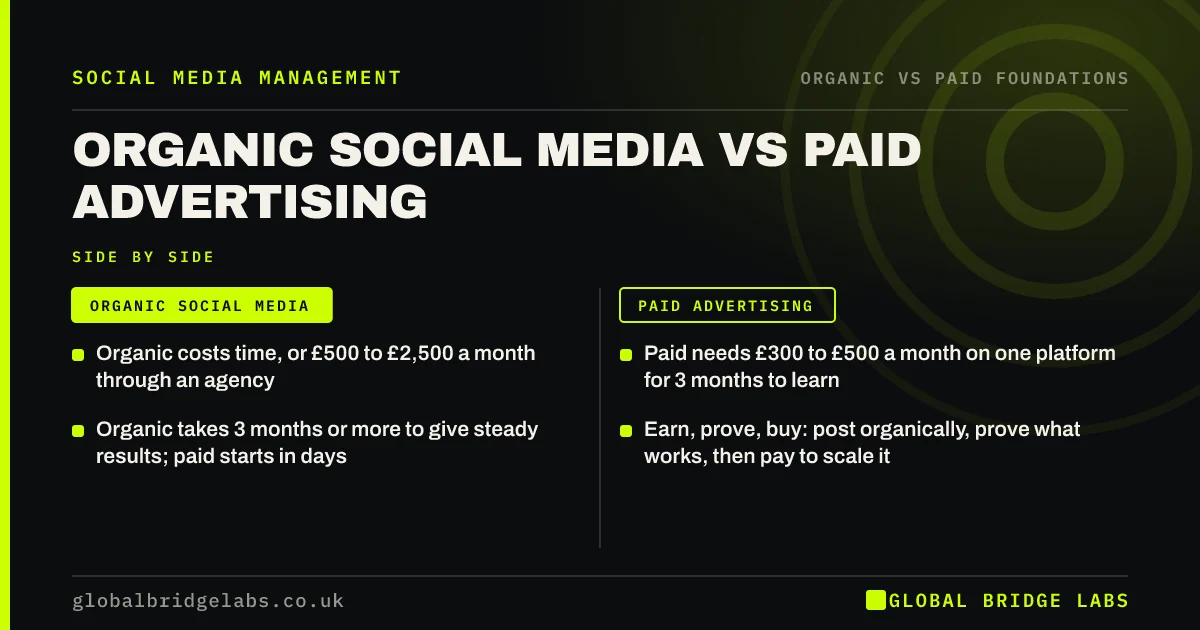
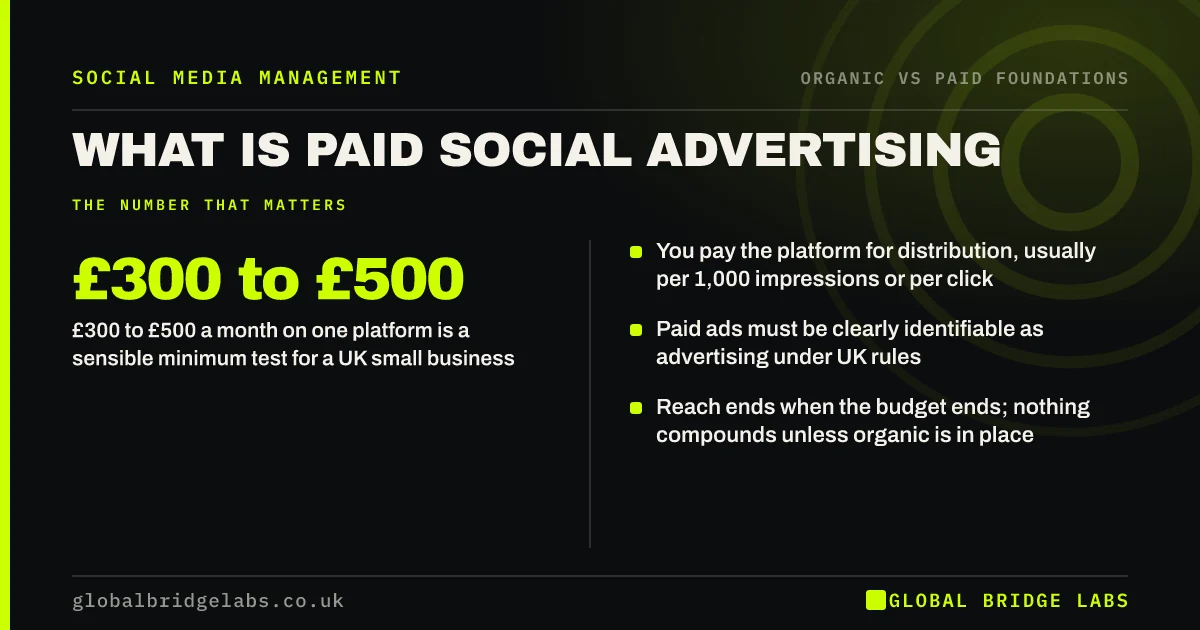
Add paid when organic has shown what works and you want more of it, faster, or when you need to reach people who will never find you organically. Organic and paid work best together: organic finds and proves the message, paid scales it.
What does this look like in practice?
A pattern we see: a garden design firm said organic had stopped working after its page reach fell. Switching from photo posts to short before-and-after videos, and posting in two local homeowner groups, brought more enquiries in a quarter than the previous year of page posts, without ads.
Is organic working? Checklist
- Check reach to non-followers, not just followers.
- Compare video and static post performance.
- Check posting consistency over the last 90 days.
- Count enquiries that mention your posts.
- Review whether you are on your buyers' platform.
- Test community groups where your buyers ask questions.
Next step
Pull your last 90 days of posts and sort them by reach to non-followers and by enquiries. Do more of the top five formats for the next month before deciding whether organic still works for you.
Message us on WhatsApp for an organic performance review, or book a 30-minute consultation.
Chat on WhatsApp →Sources and further reading
- How TikTok recommends videos #ForYou · TikTok Newsroom
- LinkedIn relevance: optimising the member experience · LinkedIn Help
- Adults' media use and attitudes · Ofcom
Frequently asked questions
Why has my organic reach dropped?
Organic reach usually drops because the platform now favours recommended content over follower updates, because posting has become less consistent, or because formats such as static images get less distribution than short video. Check what changed in your own posting first, then compare formats before blaming the algorithm.
Is organic social media worth it for B2B?
Yes, especially on LinkedIn, where posts from founders and staff often reach far more people than company page posts. B2B buyers check suppliers before talking to them, and an active, useful profile helps. Organic is slower for B2B, so it works best alongside sales outreach or targeted paid campaigns.
How long does organic social take to work?
Most small businesses need three to six months of consistent posting before organic social produces steady enquiries. Early signs, such as saves, shares and messages, often appear within the first eight weeks. If nothing changes after six months, review the platform, the message and the offer.
Written by

Global Bridge Labs (GBL) is a UK–Sri Lanka partner for social media, websites and BPO. Everything here comes from client delivery, not theory.