On this page
- 01Key takeaways
- 02Why has my social media reach dropped?
- 03What are the seven checks to run?
- 04How do you measure reach fairly?
- 05What should you not do when reach drops?
- 06How do you recover reach?
- 07What does this look like in practice?
- 08What reach changes are normal?
- 09When should you worry about a reach drop?
- 10Next step
- 11Sources and further reading
- 12Frequently asked questions
Key takeaways
When social media reach drops, check the boring explanations first: a posting gap, a change in content mix, seasonality, a comparison against one unusually strong post, or a platform-wide change. Most drops have an ordinary cause. Chasing viral formats to recover reach usually makes the underlying problem worse.
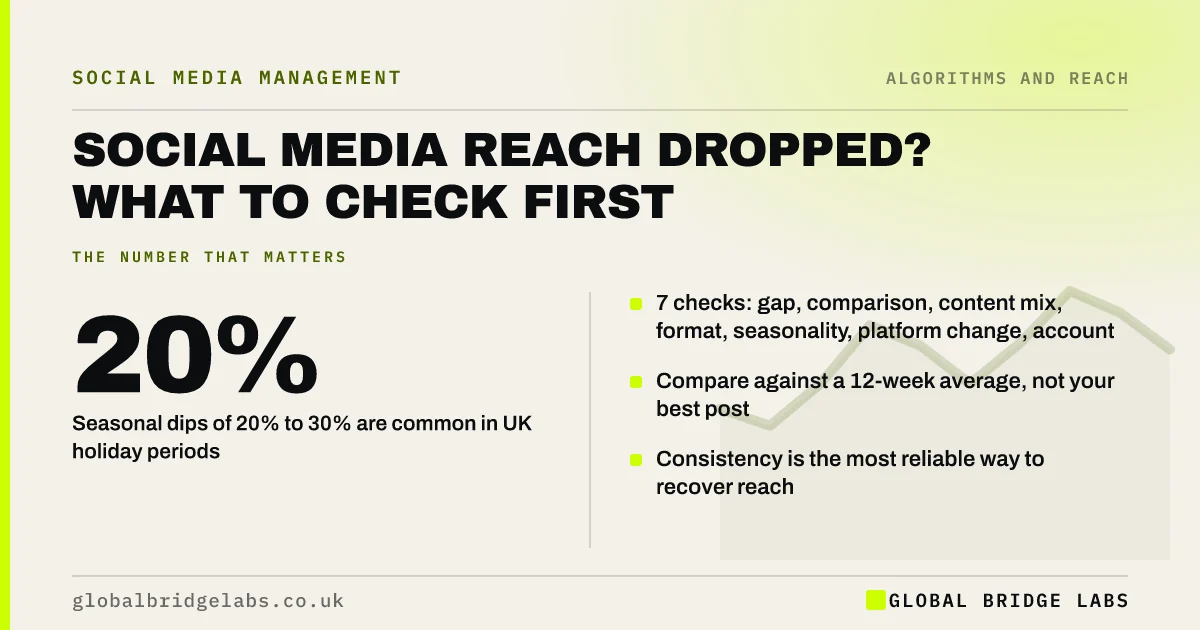
- 7 checks: gap, comparison, content mix, format, seasonality, platform change, account status.
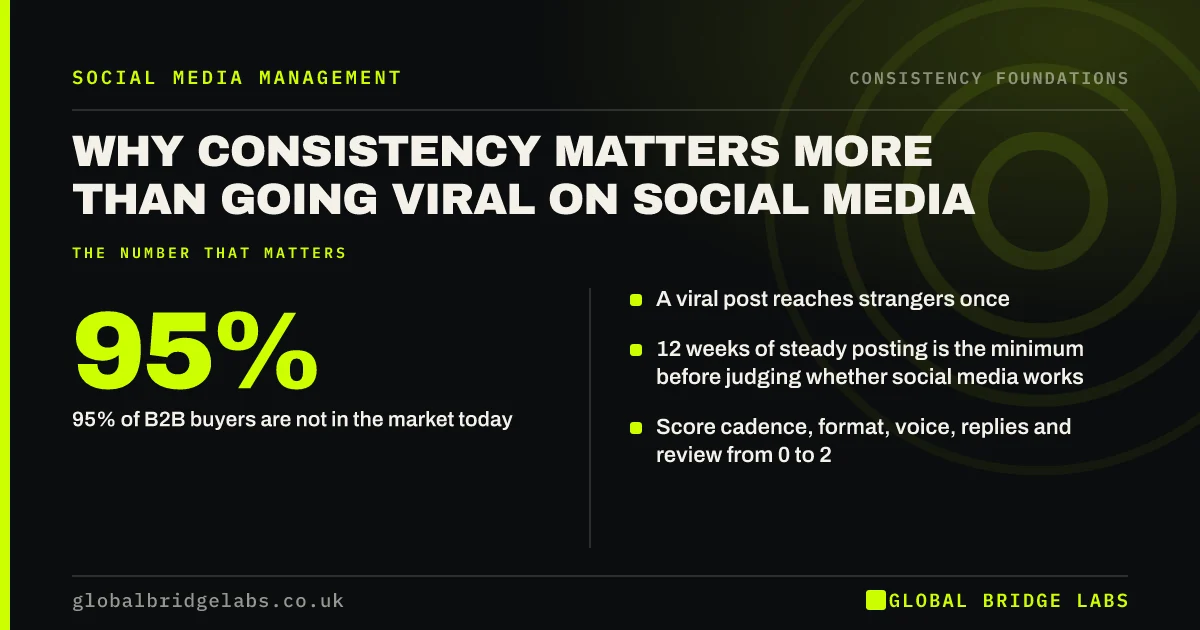
- Compare against a 12-week average, not your best post.
- Seasonal dips of 20% to 30% are common in UK holiday periods.
- Consistency is the most reliable way to recover reach.
- Do not change everything at once. You will not know what worked.
Reach has dropped and you are not sure why? Send us your last 12 weeks of data on WhatsApp.
Chat on WhatsApp →Why has my social media reach dropped?
The most common reasons are a gap or slowdown in posting, a change in what you post, seasonal changes in audience activity, comparing against an unusually strong period, and platform updates. Less often, an account restriction or policy issue limits distribution.
Work through the checks in order. Most businesses find the cause in the first three.
What are the seven checks to run?
- Gap: did posting slow down or stop in the weeks before the drop?
- Comparison: are you comparing against a viral post or an unusually good month?
- Content mix: did you change topics, tone or the balance of promotional posts?
- Format: did you switch formats, for example from video to images?
- Seasonality: is this a UK holiday period or a quiet season for your sector?
- Platform change: have other accounts in your sector reported the same drop?
- Account status: are there any warnings, restrictions or policy notices?
How do you measure reach fairly?
Compare your average reach per post over the last four weeks with your average over the previous 12 weeks. Single posts vary too much to judge, and a single viral post can make everything after it look like failure.
Also check reach among followers and non-followers separately where the platform shows it. A drop in follower reach suggests engagement problems; a drop in non-follower reach often reflects recommendation changes.
Want a fair reach comparison built for your account? Message us on WhatsApp.
Chat on WhatsApp →What should you not do when reach drops?
- Do not post a burst of content to compensate. It often lowers engagement per post.
- Do not switch to trend content aimed at strangers.
- Do not buy followers or engagement. It damages future reach.
- Do not change several things at once.
- Do not panic over one or two weeks. Look at the 12-week trend.
How do you recover reach?
Return to a steady cadence, post content your core audience has engaged with before, reply to every comment quickly and encourage conversation. Give it four to eight weeks before judging. If reach does not recover, test one change at a time, such as a new format, for at least four weeks.
What does this look like in practice?
A UK garden centre saw Instagram reach fall by about half in August and assumed the algorithm had changed. The checks showed three causes: it had posted a third less during staff holidays, it had switched from plant care tips to product adverts, and it was comparing against a spring post that had gone unusually wide.
Returning to three posts a week with care tips restored reach to its 12-week average within six weeks.
What reach changes are normal?
Week-to-week swings are normal because every post reaches a different share of your audience. In the UK accounts we manage, individual post reach commonly varies by half or more around the average without anything being wrong. What deserves attention is a sustained fall in the four-week average compared with the previous 12 weeks.
Seasonal patterns are also normal. Many UK consumer audiences are less active during summer holidays and between Christmas and New Year, and B2B audiences drop sharply in August and late December.
When should you worry about a reach drop?
- The four-week average is well below the 12-week average and the drop has lasted a month or more.
- Engagement from your regular followers has also fallen, not just reach from strangers.
- Enquiries or profile visits from your target audience have fallen at the same time.
- The account has received a warning or restriction notice.
Next step
Run the seven checks before changing anything. Most reach drops have ordinary causes and ordinary fixes, and consistency is usually the main one.
Message us on WhatsApp and we will run the seven checks on your account.
Chat on WhatsApp →Sources and further reading
- Meta Business Help Centre · Meta
- How TikTok recommends videos #ForYou · TikTok Newsroom
- Engagement rate and bounce rate · Google Analytics Help
Frequently asked questions
Why did my Instagram reach drop suddenly?
Common causes are a posting gap, a change in content or format, seasonal audience changes, comparison with an unusually strong post, or a platform update. Check each in turn. Occasionally, account restrictions limit reach, so review any notices in the account status section.
How do I fix low reach on social media?
Return to a steady, sustainable cadence, post content your core audience engages with, reply to comments and give it four to eight weeks. Change one thing at a time so you can see what works. Avoid bursts, trend-chasing and bought followers.
Is it normal for reach to go up and down?
Yes. Reach varies with each post, the season and platform changes. Judge it on the average over several weeks rather than individual posts. Steady accounts see smaller swings than accounts that post in bursts.
Does reach matter for small businesses?
Reach matters only if it reaches the right people. For most small businesses, reach among followers and local buyers is more valuable than broad reach. Enquiries, profile visits and branded searches are better measures of business value.
Did the algorithm change or is it my content?
Check whether other accounts in your sector report the same drop at the same time. If they do, a platform change is likely. If not, look at your own posting gaps, content mix and format changes first. Most reach drops for small businesses have causes inside the account.
Written by

Global Bridge Labs (GBL) is a UK–Sri Lanka partner for social media, websites and BPO. Everything here comes from client delivery, not theory.