On this page
- 01Key takeaways
- 02Why should the business set service standards?
- 03What do good service standards look like?
- 04How is an outsourced team measured?
- 05When should standards change?
- 06What does this look like in practice?
- 07Service standards checklist
- 08Next step
- 09Sources and further reading
- 10Frequently asked questions
Key takeaways
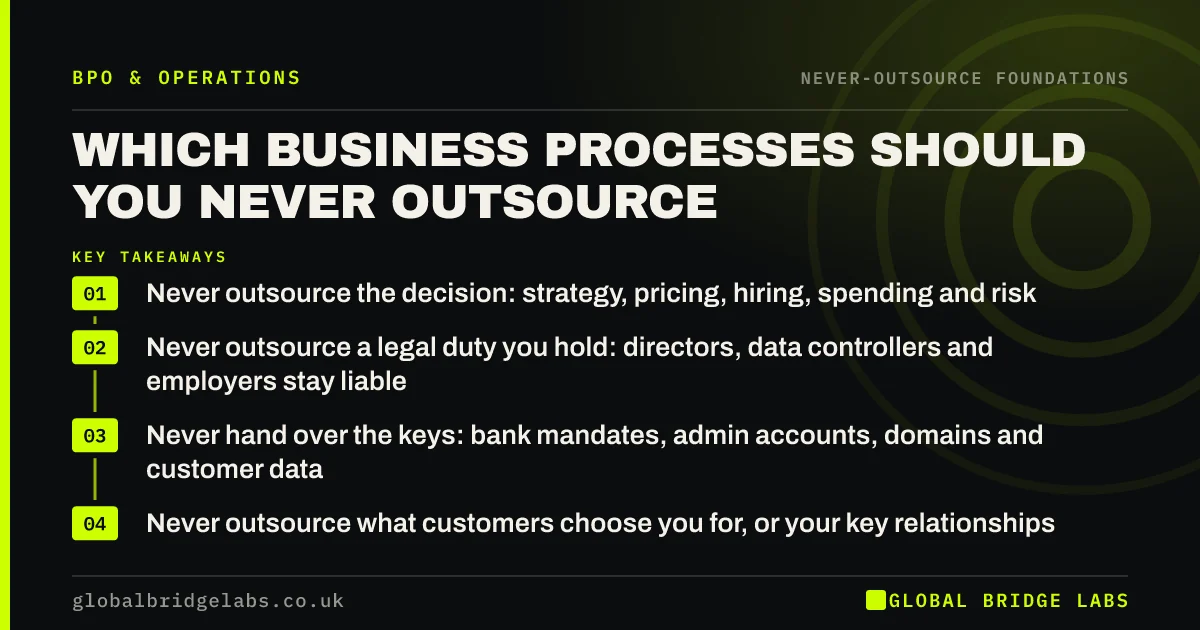
Customer service standards define how quickly, how well and in what tone you serve customers. The business must set them, because they express what your brand promises. An outsourced team can meet them, report against them and suggest improvements. Write five to eight standards with numbers, such as replying to emails within four UK business hours.
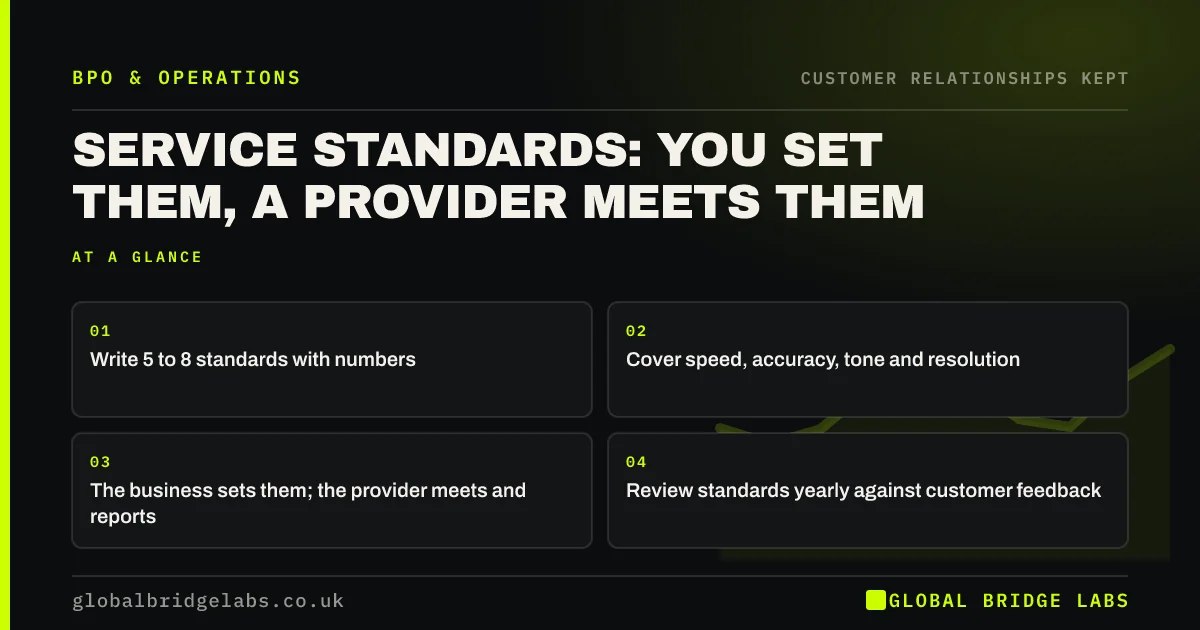
- Write 5 to 8 standards with numbers.
- Cover speed, accuracy, tone and resolution.
- The business sets them; the provider meets and reports.
- Review standards yearly against customer feedback.
Want help writing service standards a team can meet? Message us on WhatsApp.
Chat on WhatsApp →Why should the business set service standards?
Because service is part of what customers buy. Whether you answer in an hour or a day, sound formal or friendly, and solve problems first time are brand decisions. A provider can advise on what is achievable at what cost, but the promise belongs to you.
What do good service standards look like?
Specific, measurable and tied to what customers value.
- Answer calls within 30 seconds in UK hours.
- Reply to emails within 4 business hours.
- Resolve 80% of queries at first contact.
- Acknowledge complaints within 1 business day.
- Use the customer's name and our tone guide.
How is an outsourced team measured?
Against the same standards, reported weekly or monthly, with a sample of calls and emails reviewed for quality. Agree what happens when standards are missed: a review, an improvement plan and, if persistent, contract remedies. Measure customer outcomes too, not just speed.
When should standards change?
When customer feedback shows what they value has changed, when a competitor resets expectations, or when costs require a trade-off. Change them deliberately, tell the provider and update the contract, rather than letting them drift.
What does this look like in practice?
A pattern we see: a provider hits its response time target while customers complain about unhelpful answers. Adding a first-contact resolution standard and a monthly quality sample fixes the gap between the metric and the experience.
Service standards checklist
- Write 5 to 8 numbered standards.
- Include quality, not just speed.
- Agree reporting and sampling.
- Agree remedies for missed standards.
- Review standards yearly.
Next step
Ask three customers what good service from you looks like. Turn their answers into your first standards.
Message us on WhatsApp, or book a 30-minute consultation.
Chat on WhatsApp →Sources and further reading
- UK Customer Satisfaction Index · Institute of Customer Service
- Designing services that deliver (Shostack, 1984) · Harvard Business Review
Frequently asked questions
What are customer service standards?
They are written, measurable commitments about how a business serves customers, such as response times, first-contact resolution, accuracy and tone. They guide staff and providers and let you measure whether service matches your brand promise.
Who should set customer service standards?
The business, because standards express what it promises customers. A provider can advise on what is achievable and what it will cost, then meet and report against the standards, but the decision on the level of service stays with you.
How do you measure an outsourced service team?
Against agreed standards for speed, resolution and quality, reported regularly, with a sample of calls and emails reviewed by someone in your business. Include customer satisfaction or feedback measures so the team is judged on outcomes, not just speed.
Written by

Global Bridge Labs (GBL) is a UK–Sri Lanka partner for social media, websites and BPO. Everything here comes from client delivery, not theory.