On this page
Key takeaways
Brand voice ownership means the business decides how it sounds, what it claims and what it never says. Agencies, copywriters and outsourced service teams can write in that voice, often very well. But the voice guide, the approval of new claims and the final say on tone stay with you. A one-page guide is enough for most SMEs.
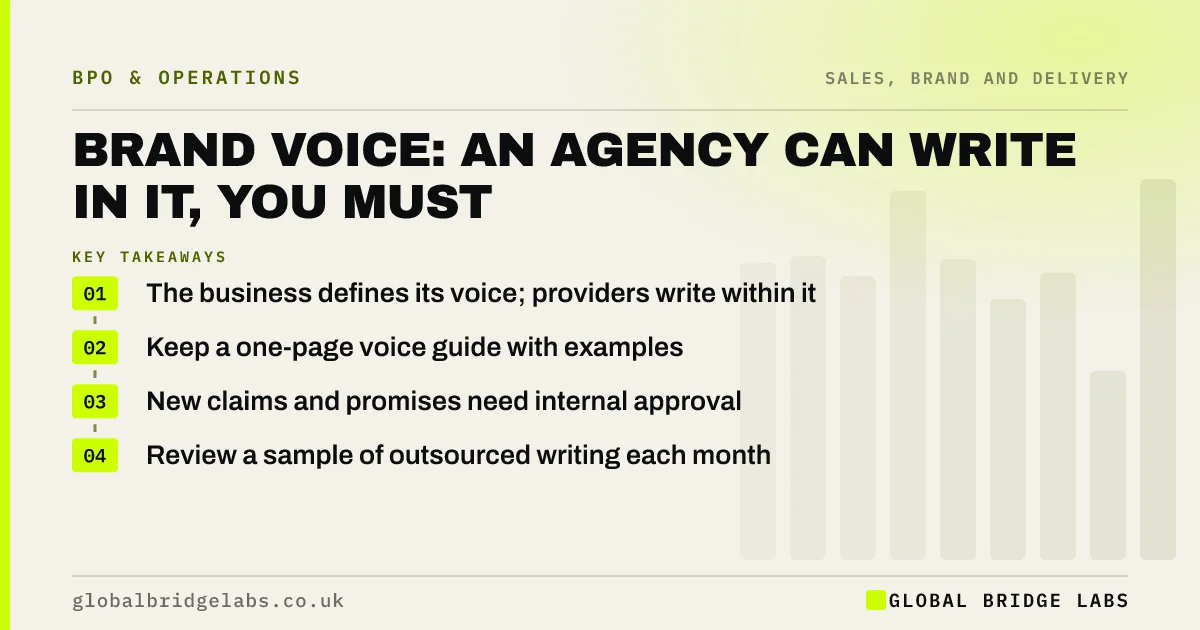
- The business defines its voice; providers write within it.
- Keep a one-page voice guide with examples.
- New claims and promises need internal approval.
- Review a sample of outsourced writing each month.
Want a one-page voice guide your providers can follow? Message us on WhatsApp.
Chat on WhatsApp →Why must the business own its voice?
Because voice is how customers recognise you across every channel, and claims made in your name are your legal responsibility. If each provider invents its own tone, your brand fragments. If a provider makes a claim you cannot support, advertising rules hold you responsible.
What goes in a voice guide?
One page, with examples rather than adjectives.
- Three words that describe how you sound.
- Words and phrases you use and avoid.
- Example good and bad sentences.
- Claims you can make and their evidence.
- Topics to always escalate.
How do agencies and teams write in your voice?
Give them the guide, a set of your best past examples and early feedback. Approve the first few weeks of work closely, then move to sampling. Customer service teams need the voice too, in their templates and scripts.
What about claims and promises?
Advertising rules expect you to hold evidence for objective claims before you make them. Any new claim, such as 'fastest in the area' or 'guaranteed results', should be approved by someone who can confirm it is true. Providers should flag these rather than invent them.
What does this look like in practice?
A pattern we see: a business's website, social posts and customer emails sound like three different companies because three providers write them. A one-page guide shared with all three brings them into line within a month.
Brand voice checklist
- Write a one-page voice guide.
- Share it with every provider.
- Approve new claims internally.
- Sample outsourced writing monthly.
- Update the guide yearly.
Next step
Collect five pieces of writing from different providers and read them side by side. If they sound different, start the voice guide.
Message us on WhatsApp, or book a 30-minute consultation.
Chat on WhatsApp →Sources and further reading
- Recognising ads: brand-owned and paid social media · ASA / CAP
- Unfair commercial practices guidance (CMA207) · Competition and Markets Authority
Frequently asked questions
Who should own a company's brand voice?
The business, usually the owner or a marketing lead. They decide how the brand sounds, which claims it makes and what it avoids. Agencies and copywriters can help define and apply the voice, but the final say stays inside.
Can an agency write in our brand voice?
Yes, with a clear voice guide, examples of good writing and close feedback in the early weeks. After that, reviewing a sample of their work each month keeps the voice consistent.
What is a tone of voice guide?
It is a short document describing how a brand sounds, with words to use and avoid, example sentences, approved claims and topics that need escalation. It helps everyone writing for the business, in-house or outsourced, sound consistent.
Written by

Global Bridge Labs (GBL) is a UK–Sri Lanka partner for social media, websites and BPO. Everything here comes from client delivery, not theory.