On this page
Key takeaways
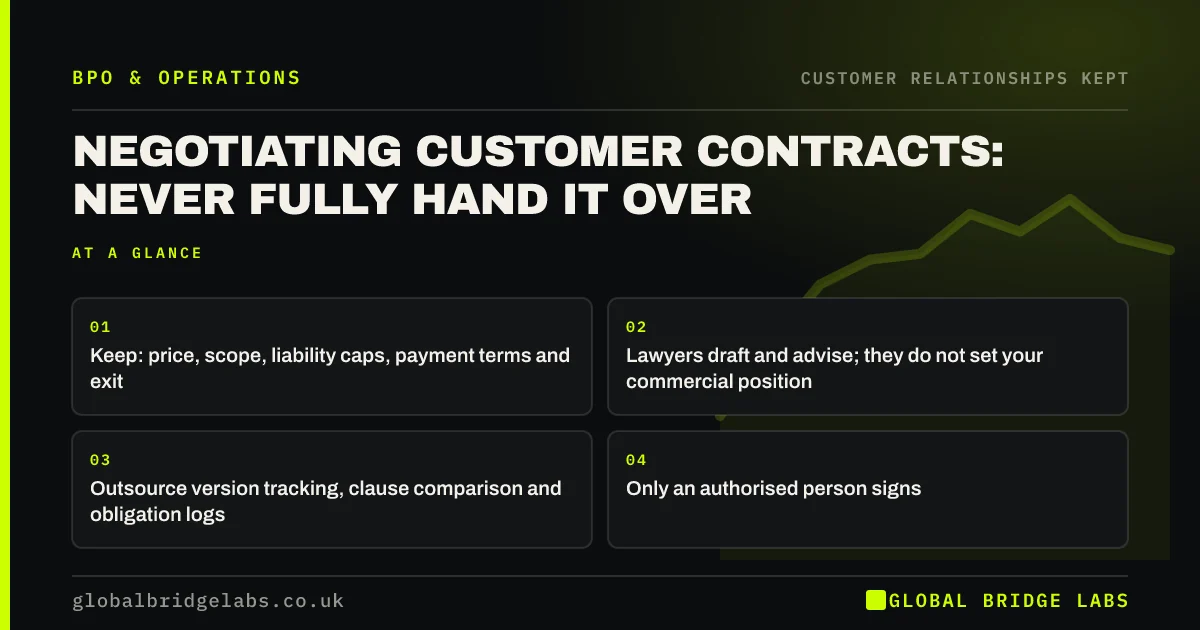
In customer contract negotiation, a solicitor can draft and advise and an outsourced team can track versions and obligations, but the business must decide the commercial terms: price, scope, liability, payment terms, service levels and exit. These terms set your risk and margin for years. A named person with authority negotiates them and signs.
- Keep: price, scope, liability caps, payment terms and exit.
- Lawyers draft and advise; they do not set your commercial position.
- Outsource version tracking, clause comparison and obligation logs.
- Only an authorised person signs.
Want your contract obligations tracked after signing? Message us on WhatsApp.
Chat on WhatsApp →Why must the business decide contract terms?
Because each term trades risk against revenue. Accepting unlimited liability to win a contract, agreeing 90-day payment terms or committing to a service level you cannot meet are business decisions with lasting consequences. A lawyer explains the risk; the business decides whether to accept it.
Which terms matter most?
Focus negotiation time on the terms that change your risk or margin.
- Price, indexation and payment terms.
- Scope and change control.
- Liability caps and indemnities.
- Service levels and penalties.
- Term, renewal and termination.
- Ownership of work and data.
What can be outsourced?
Comparing a customer's draft against your standard terms, highlighting changes, keeping version control, preparing a negotiation summary, and after signing, logging obligations, renewal dates and service level commitments. This saves senior time without handing over decisions.
When should you walk away?
When the terms would expose the business to losses it could not survive, or the margin no longer justifies the risk. Decide your limits before negotiating: maximum liability, longest payment terms, minimum price. Without them, the deal pressure decides for you.
What does this look like in practice?
A pattern we see: a business accepts a large client's standard terms without reading the liability clause, then discovers it carries uncapped risk. A short clause comparison prepared before the call lets the owner negotiate the two or three terms that matter.
Contract negotiation checklist
- Set your limits before negotiating.
- Compare the draft against your standard terms.
- Take legal advice on high-risk clauses.
- Decide commercial terms yourselves.
- Log obligations and renewal dates after signing.
Next step
Write your limits for liability, payment terms and minimum margin on one page. Use it in every negotiation.
Message us on WhatsApp, or book a 30-minute consultation.
Chat on WhatsApp →Sources and further reading
- Late commercial payments: charging interest and debt recovery · GOV.UK
- Companies Act 2006, section 44: execution of documents · legislation.gov.uk
Frequently asked questions
Who should negotiate contracts in a small business?
A named person with authority, usually the owner or a director, supported by legal advice on risky clauses. They decide the commercial terms such as price, scope, liability and payment terms. Admin such as clause comparison and version tracking can be handled by others.
Can contract negotiation be outsourced?
Parts of it. Solicitors can draft and advise, and an outsourced team can compare drafts, track versions and log obligations. The commercial decisions and the final agreement should stay with someone in your business who carries the authority and the risk.
What are the most important terms in a customer contract?
Price and payment terms, scope and change control, liability caps and indemnities, service levels and penalties, term and termination, and ownership of work and data. These determine your margin and risk for the life of the contract.
Written by

Global Bridge Labs (GBL) is a UK–Sri Lanka partner for social media, websites and BPO. Everything here comes from client delivery, not theory.