On this page
Key takeaways
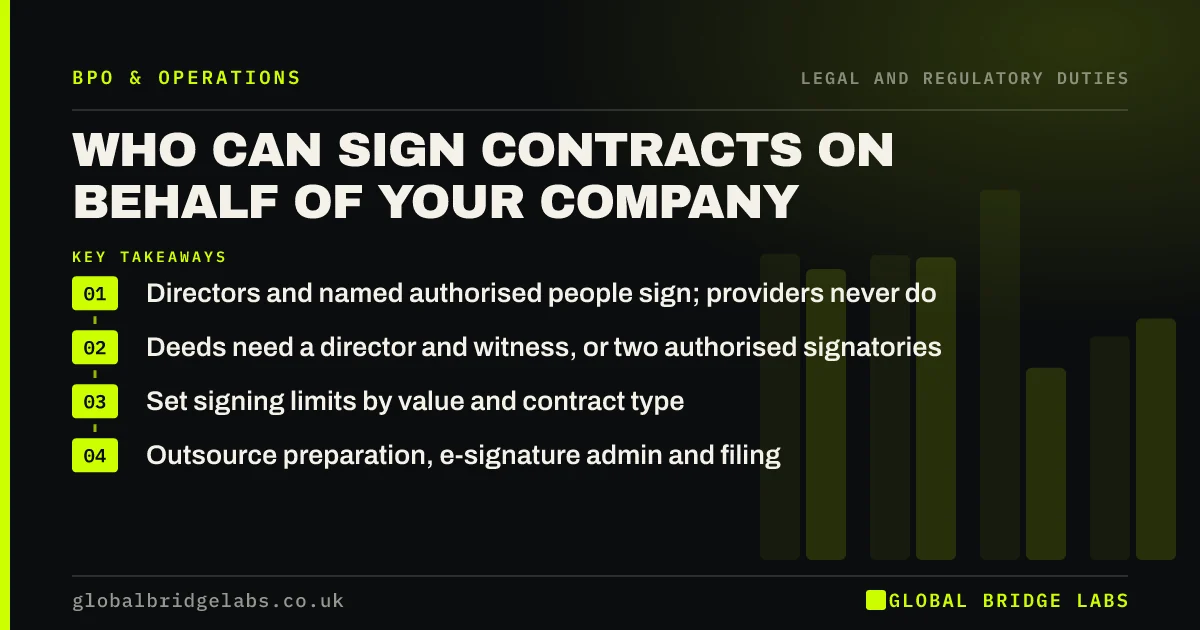
Who can sign contracts on behalf of a company? Directors, and anyone the company has authorised, within limits. An outsourced provider should never sign for you. Under the Companies Act 2006, a company can execute a document by two authorised signatories or by one director with a witness. Write a signing authority list so staff and providers know the limits.
- Directors and named authorised people sign; providers never do.
- Deeds need a director and witness, or two authorised signatories.
- Set signing limits by value and contract type.
- Outsource preparation, e-signature admin and filing.
Want a one-page signing authority list? Message us on WhatsApp.
Chat on WhatsApp →Why can't signing be outsourced?
Because signing binds the company to obligations, sometimes for years. A person who appears to have authority can bind the company even if they lack it internally, so it matters who looks like they can sign. Keeping signing with named people in the business protects you from commitments nobody approved.
How do you set signing authority?
Write a short list that the board approves.
- Who can sign which types of contract.
- Value limits for each person.
- Contracts that need two signatures.
- Contracts that need board approval first.
What can be outsourced around signing?
Preparing documents from approved templates, sending them through an e-signature platform, chasing counterparties, filing signed copies and logging key dates. The provider runs the workflow; the signature belongs to an authorised person.
Are electronic signatures valid?
Generally, yes, for most commercial contracts in England and Wales, provided the signatory intends to sign. Deeds and some documents have extra requirements, such as witnessing. Take advice for property, guarantees and other formal documents.
What does this look like in practice?
A pattern we see: a manager signs a three-year supplier agreement without the owner knowing. A signing authority list, shared with staff and suppliers, prevents unauthorised commitments.
Signing authority checklist
- List who can sign and up to what value.
- Require two signatures above a limit.
- Keep the list approved by the board.
- Use e-signature with an audit trail.
- File every signed contract centrally.
Next step
Ask your managers what they believe they can sign. If answers differ, write the list this week.
Message us on WhatsApp, or book a 30-minute consultation.
Chat on WhatsApp →Sources and further reading
- Companies Act 2006, section 44: execution of documents · legislation.gov.uk
- Being a company director · GOV.UK
Frequently asked questions
Who can sign a contract on behalf of a limited company?
A director, or another person the company has authorised to sign. Under the Companies Act 2006, a document can be executed by two authorised signatories or by one director in the presence of a witness, and anyone with actual or apparent authority can bind the company.
Can an employee sign contracts for the company?
Yes, if the company has authorised them, and sometimes if they appear to have authority. Set written limits on who can sign what, share them internally, and require higher approval for large or long contracts.
Can an outsourced provider sign documents for my business?
They should not. Signing binds your company, so it should stay with directors or named authorised people. A provider can prepare documents from approved templates, manage e-signature workflows, chase counterparties and file signed copies.
Written by

Global Bridge Labs (GBL) is a UK–Sri Lanka partner for social media, websites and BPO. Everything here comes from client delivery, not theory.