On this page
- 01Key takeaways
- 02Why should credit decisions stay in the business?
- 03What credit work can be outsourced?
- 04What should a credit policy say?
- 05When should a provider escalate?
- 06What does this look like in practice?
- 07Credit limit checklist
- 08Next step
- 09Sources and further reading
- 10Frequently asked questions
Key takeaways
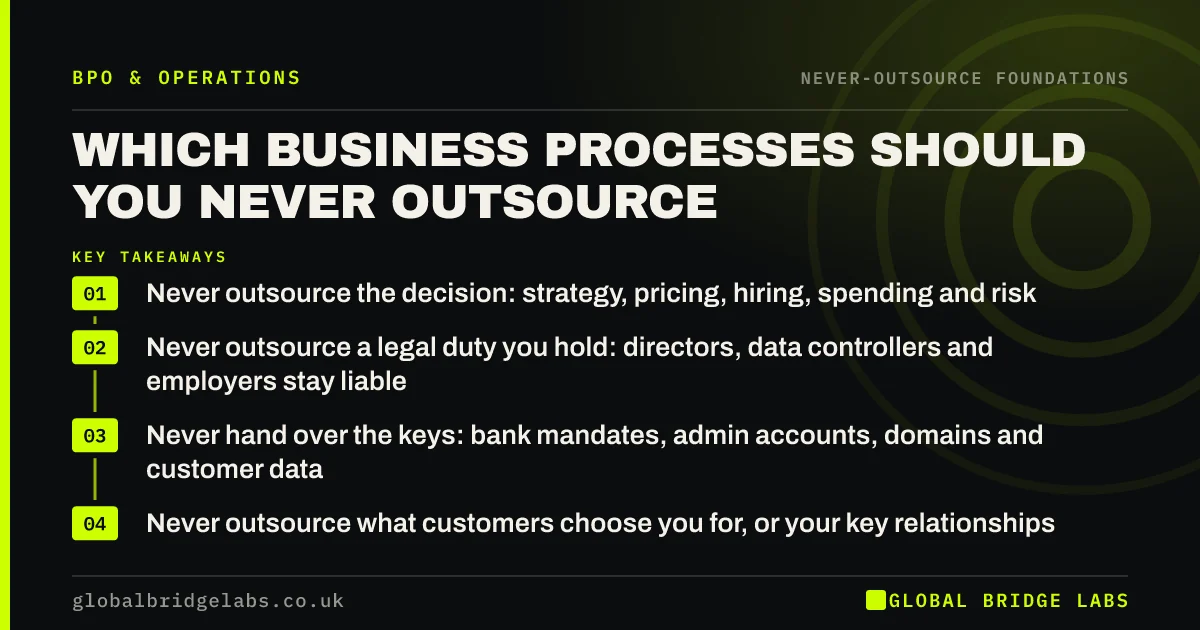
A customer credit limit decision sets how much a customer can owe you at once. An outsourced credit team can run credit checks, gather references, monitor accounts and chase overdue invoices. The decision to grant, raise or stop credit should stay with a named person in the business, because it balances sales against the risk of not being paid.
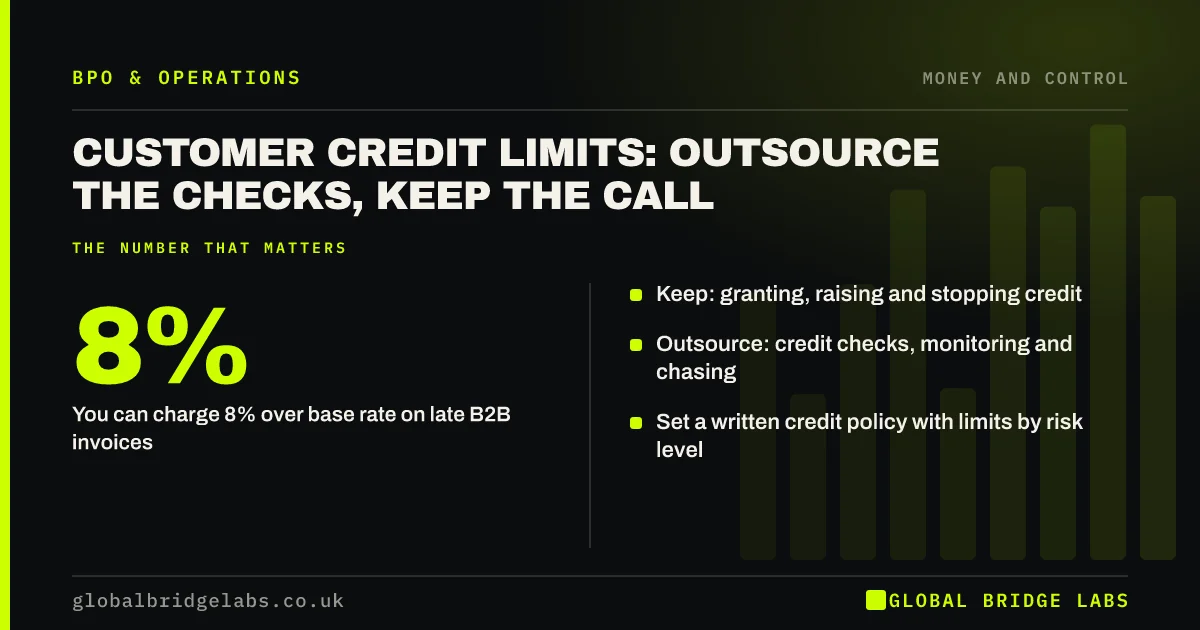
- Keep: granting, raising and stopping credit.
- Outsource: credit checks, monitoring and chasing.
- Set a written credit policy with limits by risk level.
- You can charge 8% over base rate on late B2B invoices.
Want credit checks and chasing run for you, with limits staying yours? Message us on WhatsApp.
Chat on WhatsApp →Why should credit decisions stay in the business?
Because a credit limit is a loan to your customer. It affects your cash, your risk if they fail and your relationship if you stop supplying. Sales teams want higher limits; a provider may want to protect its collection rate. The business must weigh both against its own risk appetite.
What credit work can be outsourced?
The information and follow-up around each decision.
- Running credit reference checks on new customers.
- Checking Companies House filings and accounts.
- Monitoring accounts against their limits.
- Sending reminders and chasing overdue invoices.
- Preparing a monthly aged debt report.
What should a credit policy say?
Your standard payment terms, how new customers are checked, starting limits by risk level, who can approve higher limits, when supply stops, and when interest or compensation is charged under the Late Payment of Commercial Debts legislation. A written policy lets an outsourced team act consistently.
Want a one-page credit policy template? Message us on WhatsApp.
Chat on WhatsApp →When should a provider escalate?
When an order would take a customer over its limit, when a customer misses a promised payment, when a credit check shows a deterioration, or when a key account falls overdue. Each needs a business decision, not an automatic response.
What does this look like in practice?
A pattern we see: no written limits, so every order is accepted until a large customer stops paying. With limits set by the owner and monitoring outsourced, over-limit orders reach a manager before they ship.
Credit limit checklist
- Write a credit policy with standard terms.
- Set starting limits by risk level.
- Name who can approve higher limits.
- Outsource checks, monitoring and chasing.
- Review aged debt and limits monthly.
Next step
List your ten largest customers and their current balances. If you do not know their limits, set them this month.
Message us on WhatsApp, or book a 30-minute consultation.
Chat on WhatsApp →Sources and further reading
- Late commercial payments: charging interest and debt recovery · GOV.UK
- Find and update company information · Companies House
Frequently asked questions
How do you set a credit limit for a customer?
Check their credit report and filed accounts, consider how much they will order and how long you can afford to wait for payment, then set a starting limit by risk level. Review it after a few months of payment history and whenever their circumstances change.
Can credit control be outsourced?
Yes. Credit checks, account monitoring, reminders, chasing and aged debt reporting outsource well. The decisions on granting, raising or stopping credit, and on legal action, should stay with a named person in your business who understands the customer relationship and your risk appetite.
Can you charge interest on late payments in the UK?
Yes, for business-to-business debts. Under the Late Payment of Commercial Debts legislation, you can usually claim statutory interest at 8% above the Bank of England base rate, plus fixed compensation, unless your contract sets a different substantial remedy.
Written by

Global Bridge Labs (GBL) is a UK–Sri Lanka partner for social media, websites and BPO. Everything here comes from client delivery, not theory.