On this page
- 01Key takeaways
- 02Should a business publish a complaints procedure?
- 03What should a complaints procedure say?
- 04Which businesses have specific complaints rules?
- 05Do you need to mention ADR?
- 06Does a complaints page attract complaints?
- 07When is a full policy too much?
- 08What does this look like in practice?
- 09Complaints procedure checklist
- 10Next step
- 11Sources and further reading
- 12Frequently asked questions
Key takeaways
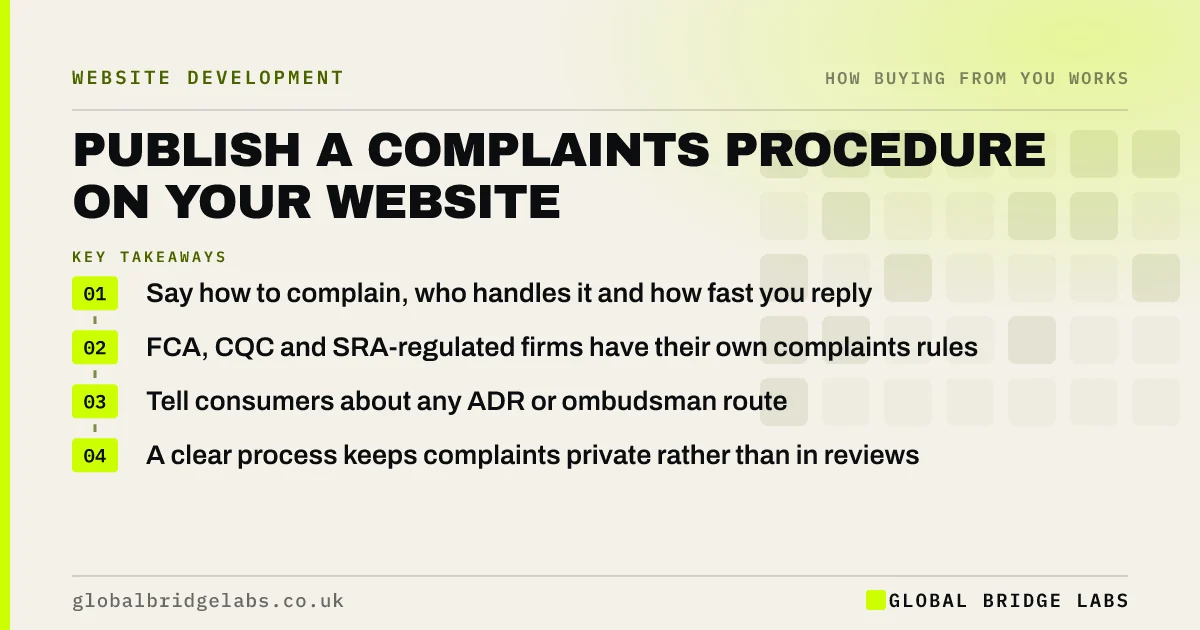
Publish a short complaints procedure: how to complain, who handles it, how fast you acknowledge and respond, and what happens if the customer is still unhappy. Regulated firms, such as FCA, CQC and SRA-regulated businesses, have specific complaints rules. For everyone else, a visible process turns complaints into private conversations instead of public reviews.
- Say how to complain, who handles it and how fast you reply.
- FCA, CQC and SRA-regulated firms have their own complaints rules.
- Tell consumers about any ADR or ombudsman route.
- A clear process keeps complaints private rather than in reviews.
Want a complaints procedure template? Message us on WhatsApp.
Chat on WhatsApp →Should a business publish a complaints procedure?
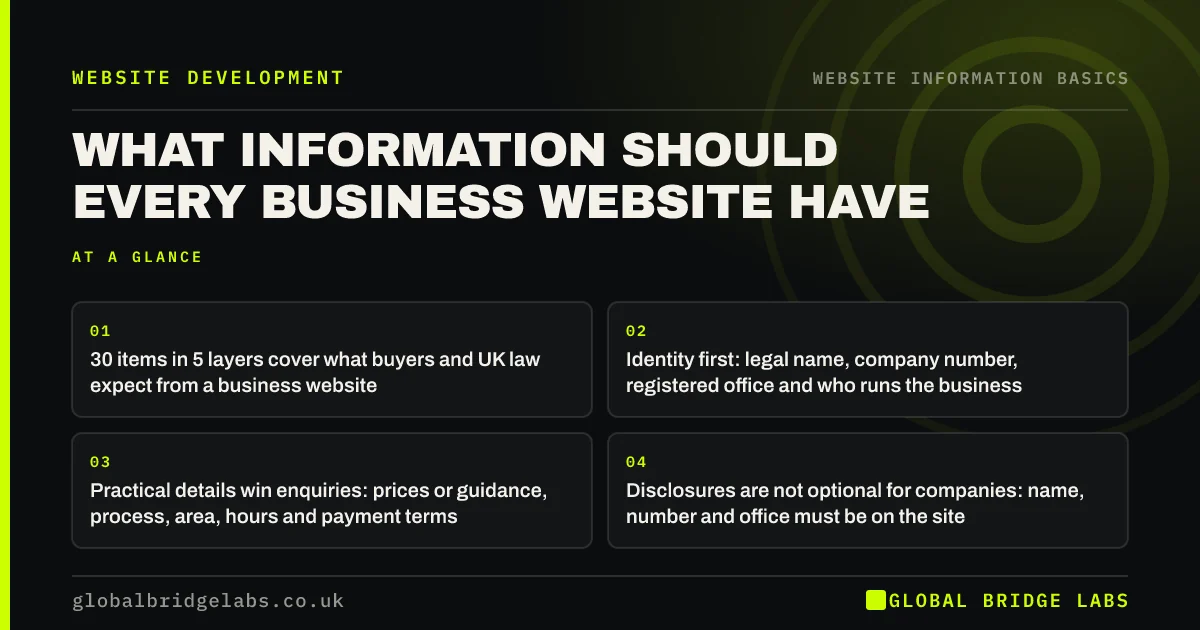
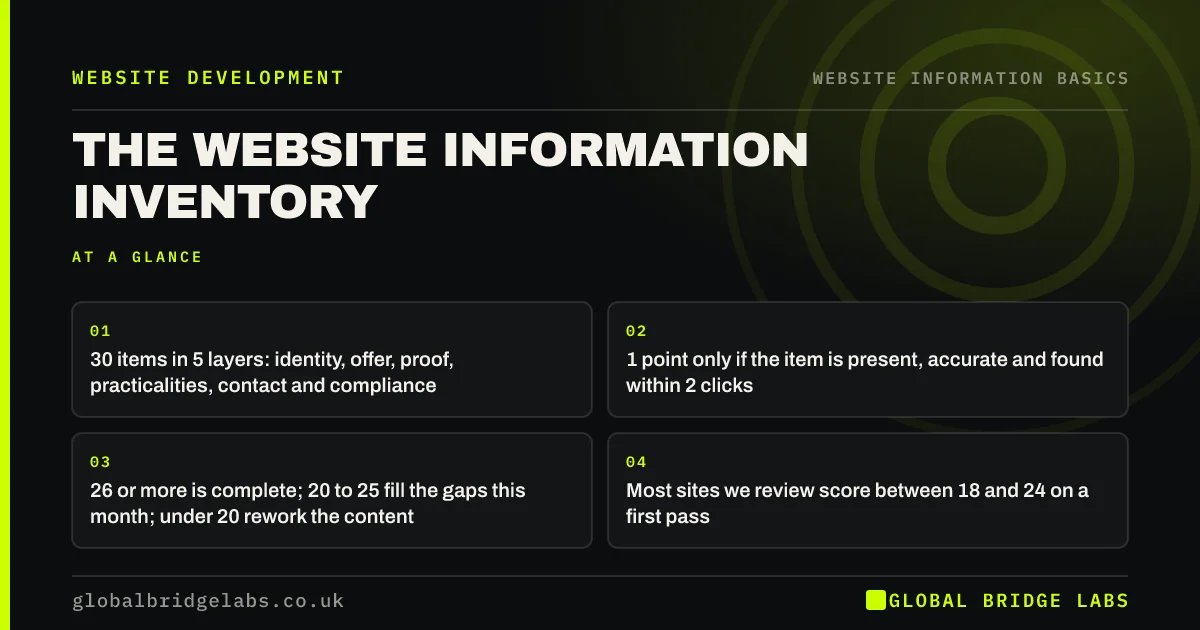
Yes. A short published complaints procedure tells unhappy customers how to reach someone who can fix the problem, before they post a review. Global Bridge Labs (GBL) treats it as item 24 of the 30-item inventory. Many regulated businesses are required to have and publicise one.
What should a complaints procedure say?
It should say how to complain, what details to include, who will handle it, how quickly you will acknowledge and respond, and what the customer can do if they remain unhappy. Keep it to one page and avoid legal language. Offer more than one channel, such as email and phone.
- How: email address, form or phone number.
- What to include: order or job reference and what went wrong.
- Acknowledgement: for example within 2 working days.
- Response: for example a full reply within 10 working days.
- Next step: escalation, ADR scheme or ombudsman.
Which businesses have specific complaints rules?
Firms regulated by the FCA must follow its complaints handling rules and tell customers about the Financial Ombudsman Service. CQC-registered providers must operate an effective complaints system. Law firms must tell clients about their complaints procedure and the Legal Ombudsman. Check your regulator's requirements.
Do you need to mention ADR?
Under the ADR Regulations 2015, when a consumer complaint cannot be settled internally, you must tell the consumer the name and website of a relevant ADR provider and whether you will use it. If you are obliged to use ADR, for example through a sector scheme, you must say so on your website and in your terms.
Does a complaints page attract complaints?
No, it channels complaints that would happen anyway. Without a clear route, unhappy customers often post a review or contact you through sales channels. A published process signals confidence and gives you the chance to fix things privately, which most customers prefer.
When is a full policy too much?
A full policy is too much for a very small business with few complaints. A short paragraph on the contact page, with a named person and a response time, is enough. Regulated firms still need whatever their regulator requires, however small they are.
What does this look like in practice?
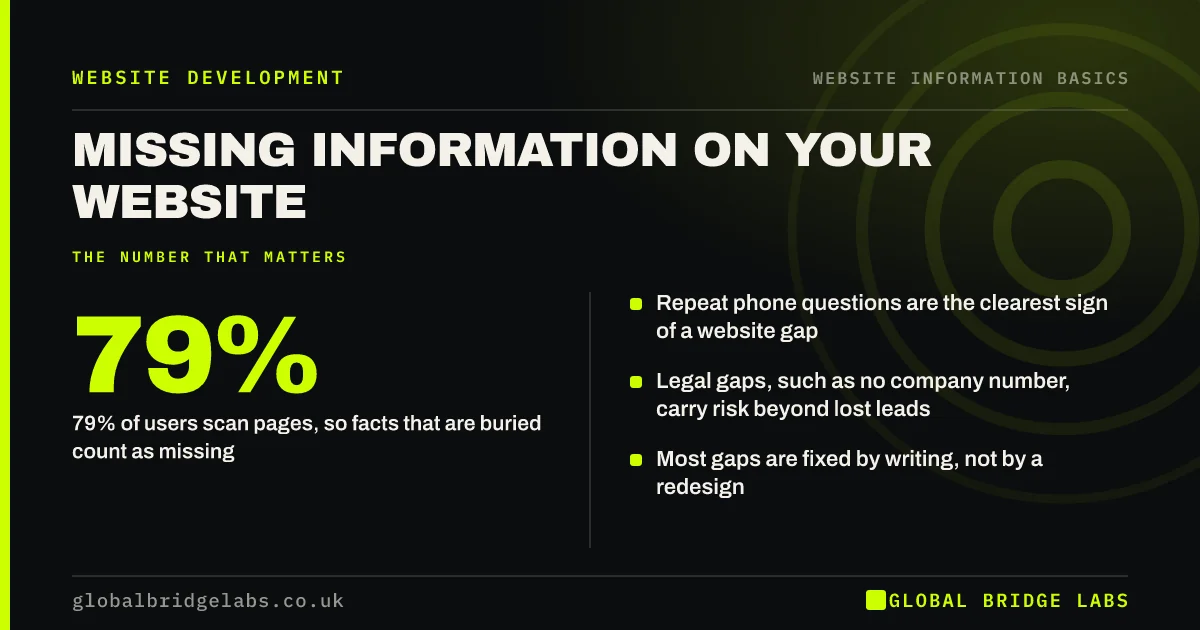
A pattern we see: a firm's only visible contact route is a sales form, so complaints arrive mixed with enquiries and wait days for a reply. Adding a short complaints section with a direct email and a two-day acknowledgement promise gets them to the right person and keeps them off review sites.
Complaints procedure checklist
- Give a direct complaints contact.
- Say what details to include.
- Promise acknowledgement and response times.
- Name who handles complaints.
- Explain ADR or ombudsman routes.
- Check your regulator's rules.
Next step
Write a five-line complaints procedure using the headings above and add it to your contact page this week.
Message us on WhatsApp for a complaints procedure template, with no pitch.
Chat on WhatsApp →Sources and further reading
- Our approach to resolving complaints · Financial Ombudsman Service
- Regulations for service providers and managers · Care Quality Commission
- UK Customer Satisfaction Index · Institute of Customer Service
Frequently asked questions
Is a complaints procedure a legal requirement?
For many regulated businesses, such as FCA-regulated firms, CQC-registered providers and law firms, yes. For others it is not a general legal requirement, but consumer law requires ADR information when a complaint cannot be resolved, and a clear procedure is good practice.
What should a complaints procedure include?
It should include how to complain, what details to give, who handles complaints, acknowledgement and response times, and what to do if still unhappy, such as an ADR scheme or ombudsman. Keep it short and in plain language.
Where should I put my complaints policy on my website?
Link it from the footer and the contact page, and mention it in terms and conditions. Customers looking to complain usually start at the contact page, so make sure the route is visible there.
Written by

Global Bridge Labs (GBL) is a UK–Sri Lanka partner for social media, websites and BPO. Everything here comes from client delivery, not theory.