On this page
- 01Key takeaways
- 02What does candidate screening involve?
- 03How do you keep outsourced screening fair?
- 04What stays with the hiring manager?
- 05What data rules apply to screening?
- 06What does this look like in practice?
- 07Screening checklist
- 08Next step
- 09Sources and further reading
- 10Frequently asked questions
Key takeaways
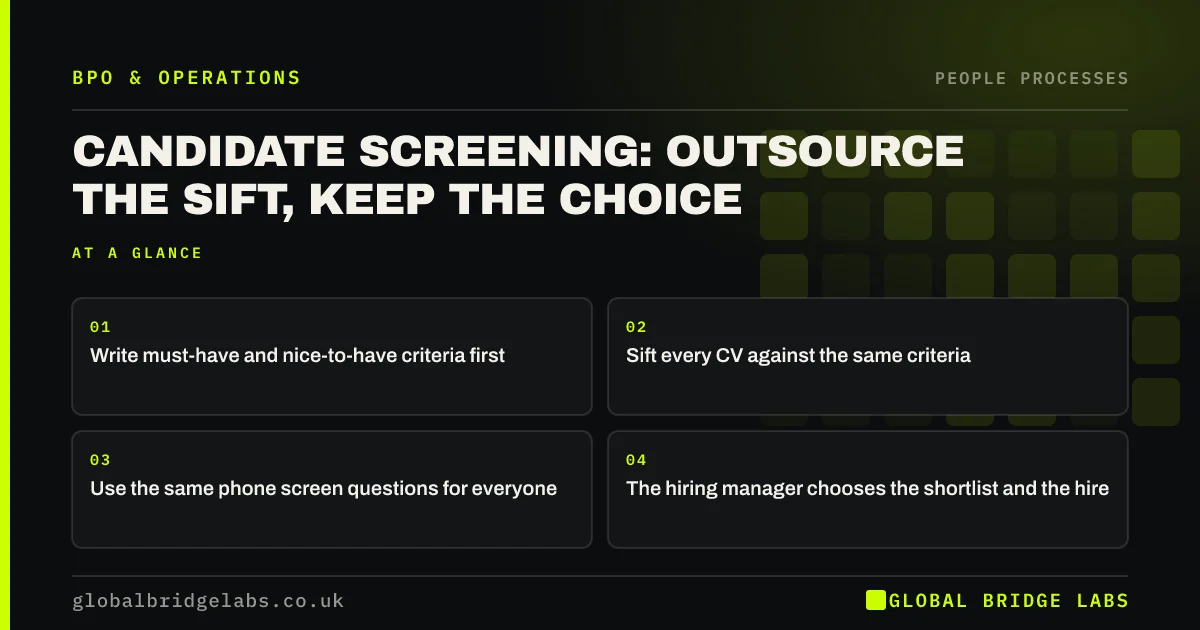
Candidate screening outsourcing works when the criteria are written before the advert goes out. A managed team can sift CVs against those criteria, run short phone screens with set questions and produce a longlist with notes. The hiring manager decides the shortlist and the hire. Screening must follow the Equality Act 2010 and UK GDPR.
- Write must-have and nice-to-have criteria first.
- Sift every CV against the same criteria.
- Use the same phone screen questions for everyone.
- The hiring manager chooses the shortlist and the hire.
Drowning in applications? Message us on WhatsApp about screening support.
Chat on WhatsApp →What does candidate screening involve?
Checking each application against the essential criteria, scoring it against the desirable ones, running a short phone screen to confirm availability, salary expectations and key experience, and producing a longlist with notes. For a popular role this can take days, which is why good candidates are often lost to slower responses.
How do you keep outsourced screening fair?
Use criteria linked to the job, apply them the same way to every candidate, and record the reason for each decision. Avoid criteria that could indirectly discriminate, such as unnecessary length of experience. Under the Equality Act 2010, the employer is responsible for discrimination in recruitment, including by anyone acting on its behalf.
- Job-related criteria only.
- Same criteria and questions for all.
- A recorded reason for each decision.
- Reasonable adjustments offered on request.
What stays with the hiring manager?
Writing and approving the criteria, reviewing the longlist, choosing the shortlist, interviewing and deciding who to hire. Right to work checks also remain the employer's duty, although the admin of collecting documents can be supported.
- New starter admin: get employees productive from day one
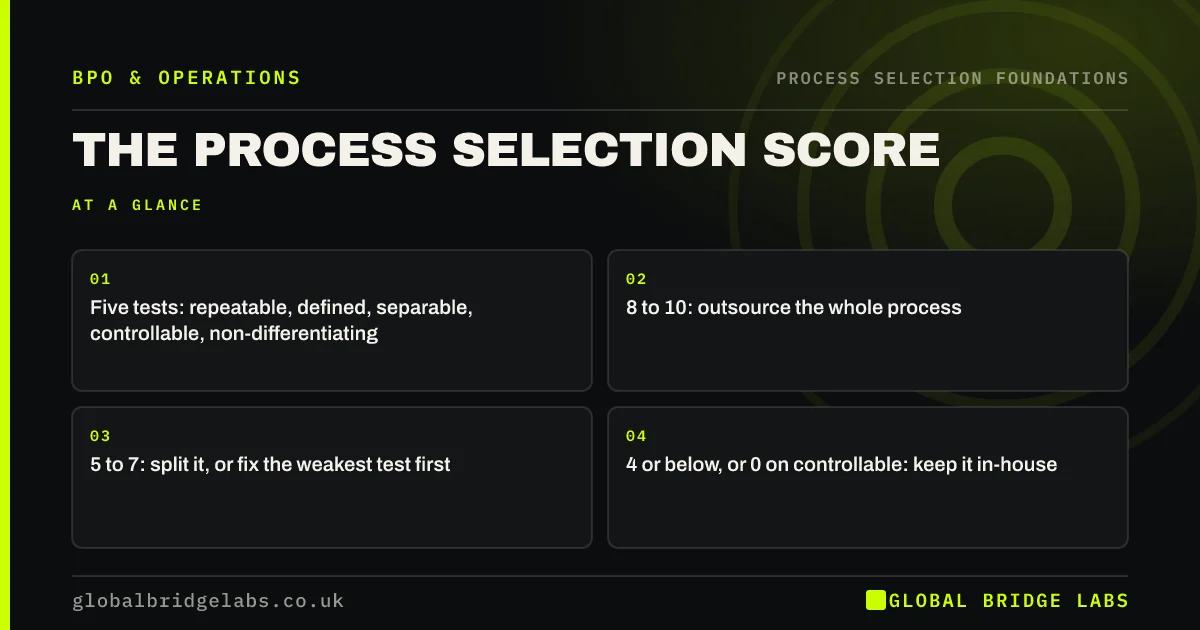
- Outsource, split, fix or keep: four process verdicts
Want a screening scorecard for your next role? Message us on WhatsApp.
Chat on WhatsApp →What data rules apply to screening?
Candidates must be told how their data is used, including that a provider is involved. Keep CVs only for a set period after the role is filled, and be careful with automated filtering: UK GDPR gives people rights where significant decisions are made solely by automated means.
What does this look like in practice?
A pattern we see: hiring managers screen the first 20 CVs carefully and the last 80 in a rush. Consistent screening against written criteria gives every applicant the same chance and finds candidates who would otherwise be missed.
Screening checklist
Agree these before the advert goes live.
- Essential and desirable criteria written.
- Phone screen questions agreed.
- Turnaround for the longlist.
- Candidate privacy notice updated.
- Retention period for CVs.
- Adjustment requests handled promptly.
Next step
Tell us about the role you are hiring for and how many applications you expect. We will suggest a screening approach and turnaround.
Message us on WhatsApp, or book a 30-minute consultation.
Chat on WhatsApp →Sources and further reading
- Equality Act 2010 · legislation.gov.uk
- Check a job applicant's right to work · GOV.UK
- Employment information · Information Commissioner's Office
Frequently asked questions
Can CV screening be outsourced?
Yes. A managed team can sift applications against written criteria, run short phone screens with set questions and produce a longlist with notes. The hiring manager should approve the criteria, choose the shortlist, interview and make the hiring decision.
How do you make candidate screening fair?
Use criteria that relate directly to the job, apply them the same way to every candidate, ask every candidate the same screening questions, record the reason for each decision and offer reasonable adjustments. The employer is responsible under the Equality Act 2010, even when screening is outsourced.
Can candidate screening be fully automated?
Be cautious. UK GDPR gives individuals rights where significant decisions are based solely on automated processing. Automated tools can help sort applications, but a human should review decisions, and candidates should be told how their data is used.
Written by

Global Bridge Labs (GBL) is a UK–Sri Lanka partner for social media, websites and BPO. Everything here comes from client delivery, not theory.